






 by
by 

Too Little, Too Much: Finding the Sleep Sweet Spot for Healthy Aging
Certified™: October 2026
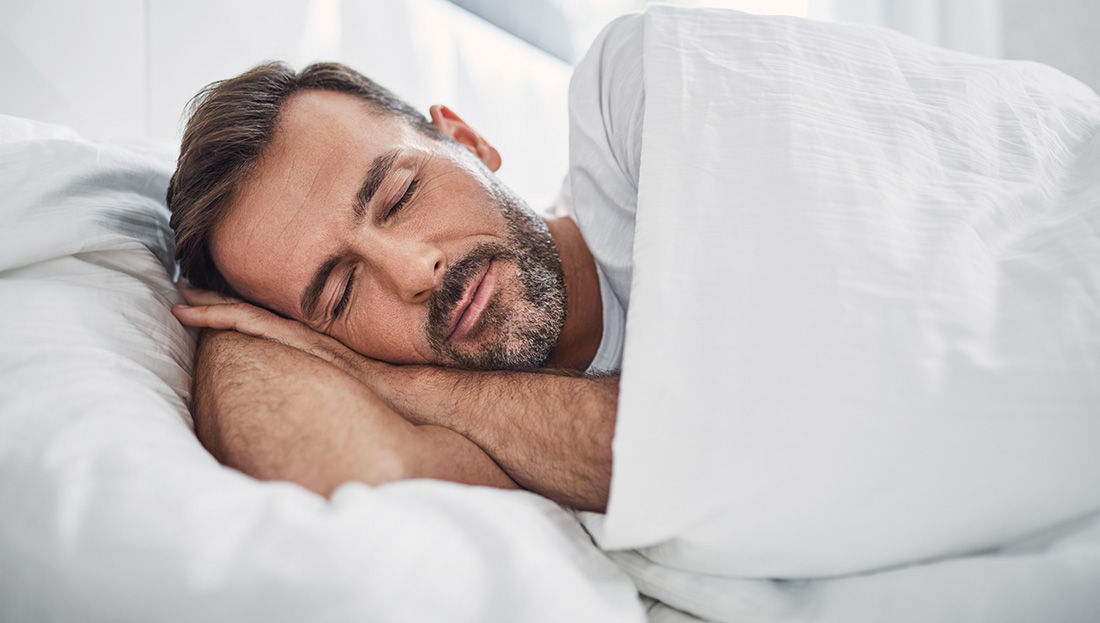
Most conversations about sleep focus on getting enough. We hear about the consequences of short nights, chronic sleep loss and trying to function on too few hours. But a growing body of research suggests that sleep duration may have a sweet spot, particularly when viewed through the lens of healthy aging.
A large new study published in Nature offers a closer look at where that sweet spot may lie. Using data from adults ages 37 to 84 in the UK Biobank, researchers found that biological aging measures across several organ systems were most favorable among people who reported sleeping roughly 6.4 to 7.8 hours. Sleep durations beyondthe ends of that spectrum—say, less than six hours or more than eight—were associated with signs of faster biological aging, along with higher risk for a range of health conditions and death from any cause.
The findings add another layer to what we already know about sleep as one of the ACE 7 Core Drivers of Healthy Living. Sleep supports much more than feeling rested for the next day’s workout. It is closely connected to systems throughout the body and may provide useful information about a person’s overall health as they age.
A healthy-aging perspective is especially useful here. Aging is a normal part of life. For health and exercise professionals, the goal is to help clients support health, function, independence and quality of life throughout the lifespan.
Looking Beyond Calendar Age
To examine the relationship between sleep and aging, researchers from the MULTI Consortium used what are known as biological aging clocks. These machine-learning tools estimate biological age using information such as medical imaging, proteins circulating in the blood and metabolites, which are molecules involved in the body’s metabolic processes.
Biological age gives researchers a way to study differences that chronological age alone cannot capture. Two people may both be 60 years old, for example, while various aspects of their physiology follow different aging trajectories.
This study took that idea a step further by looking at 23 biological aging clocks representing different organs and biological systems. The broader UK Biobank includes roughly half a million participants, and the sleep analysis focused on self-reported sleep duration. Participants were asked how many hours they typically slept during a 24-hour period, including naps.
As study leader Junhao Wen, Ph.D., assistant professor of radiology at Columbia University Vagelos College of Physicians and Surgeons, explains, the researchers wanted to understand sleep beyond the brain. Their results, he says, showed that “too little and too much sleep are associated with faster aging in nearly every organ.”
The Sleep Sweet Spot
Across several organ systems, the lowest biological age estimates were seen among people who reported sleeping about 6.4 to 7.8 hours per day. The exact amount varied somewhat by organ and sex, which is one reason the researchers did not identify a single “ideal” number of hours for everyone.
For the rest of their analysis, the researchers grouped participants more broadly: fewer than six hours of sleep was considered short sleep, six to eight hours served as the reference range and more than eight hours was considered long sleep. That broader range is probably the more useful way to think about the findings.
What makes the findings especially interesting is that the same general pattern showed up across different measures of the body, including medical imaging, blood proteins and molecules involved in metabolism. That consistency strengthens the idea that sleep duration may be connected with healthy aging throughout the body, not just in the brain.
Sleep Duration and Health Beyond the Aging Clocks
The researchers also looked at whether short and long sleep were associated with future health outcomes. Short sleep showed particularly broad associations, including depression and anxiety, obesity, type 2 diabetes, high cholesterol, hypertension, ischemic heart disease and arrhythmias. Both short and long sleep were also associated with several pulmonary and digestive conditions, and both were linked with a higher risk of death from any cause.
It’s important to note that these findings describe associations within a large population and do not show that sleeping a particular number of hours directly prevents or causes disease. That distinction is especially important when considering long sleep. The researchers noted that sleeping longer may sometimes accompany underlying illness or other changes in health, which means extended sleep could serve as a signal that something else is going on.
The researchers also found that short and long sleep may be connected with health in different ways. In their analysis of late-life depression, short sleep appeared to have a more direct association, while the relationship with long sleep appeared to involve biological aging in the brain and other parts of the body. As Wen explains, “there may be different biological pathways between long and short sleepers” even when the health outcome is similar.
What the Study Can—and Cannot—Tell Us
The findings come with some important limitations. Sleep duration was self-reported, so participants may not have accurately estimated how much they slept. The study also included primarily people of European ancestry, which limits how broadly the results can be applied.
Researchers also could not establish cause and effect. Underlying health conditions may influence sleep duration, particularly among people who sleep for longer periods. And because the study focused on duration, it did not fully capture other important aspects of sleep, such as quality, timing or how often sleep is interrupted. Taken together, these limitations make sleep duration most useful as one part of a larger picture of health.
Practical Application: Bringing Sleep Into the Client Conversation
For health and exercise professionals, one of the most useful applications of this research may be giving sleep a more prominent place in conversations about healthy living.
Ask clients about their usual sleep patterns just as you ask about physical activity, stress, work demands and other factors that influence daily life. How much are they typically sleeping? Has that changed recently? Do they generally feel rested? Are poor nights of sleep affecting their energy, exercise experience or ability to follow through on other healthy behaviors?
These conversations can help clients recognize patterns without moving beyond your scope of practice. The study’s 6.4-to-7.8-hour range should not become a target that every client is expected to hit. Individual sleep needs vary, and a single number rarely tells the full story.
Long sleep deserves the same thoughtful approach. A client who regularly sleeps nine or 10 hours should not simply be encouraged to sleep less based on these findings. That said, persistent short or long sleep, a noticeable change in sleep duration or ongoing sleep difficulties may be worth discussing with an appropriate health care professional.
Sleep information can also provide useful context for exercise programming and recovery. If a client frequently arrives after very little sleep, for example, you can explore how that pattern is affecting energy, concentration, perceived exertion and the overall exercise experience. That awareness can help clients see how sleep interacts with the other behaviors and circumstances that influence their health.
Supporting Aging Well
This study strengthens the connection between sleep and healthy aging by showing that sleep duration is associated with biological processes throughout the body. It also reinforces the value of looking beyond a single number and considering sleep as part of a broader pattern of health.
For health and exercise professionals, that means asking about sleep, paying attention to meaningful changes and helping clients understand how their sleep habits fit into the larger goal of maintaining health, function, independence and quality of life as they age.


More Articles
- Certified™: October 2026
The ACE Workout Builder for Stronger Bones
by Daniel J. Green and Christopher S. Gagliardi
- Certified™: October 2026
The Health Coach Elevator Pitch Makeover: How to Describe What You Do (and Why it Matters)
by Meg Root
Health and Fitness Expert
Health and Fitness Expert