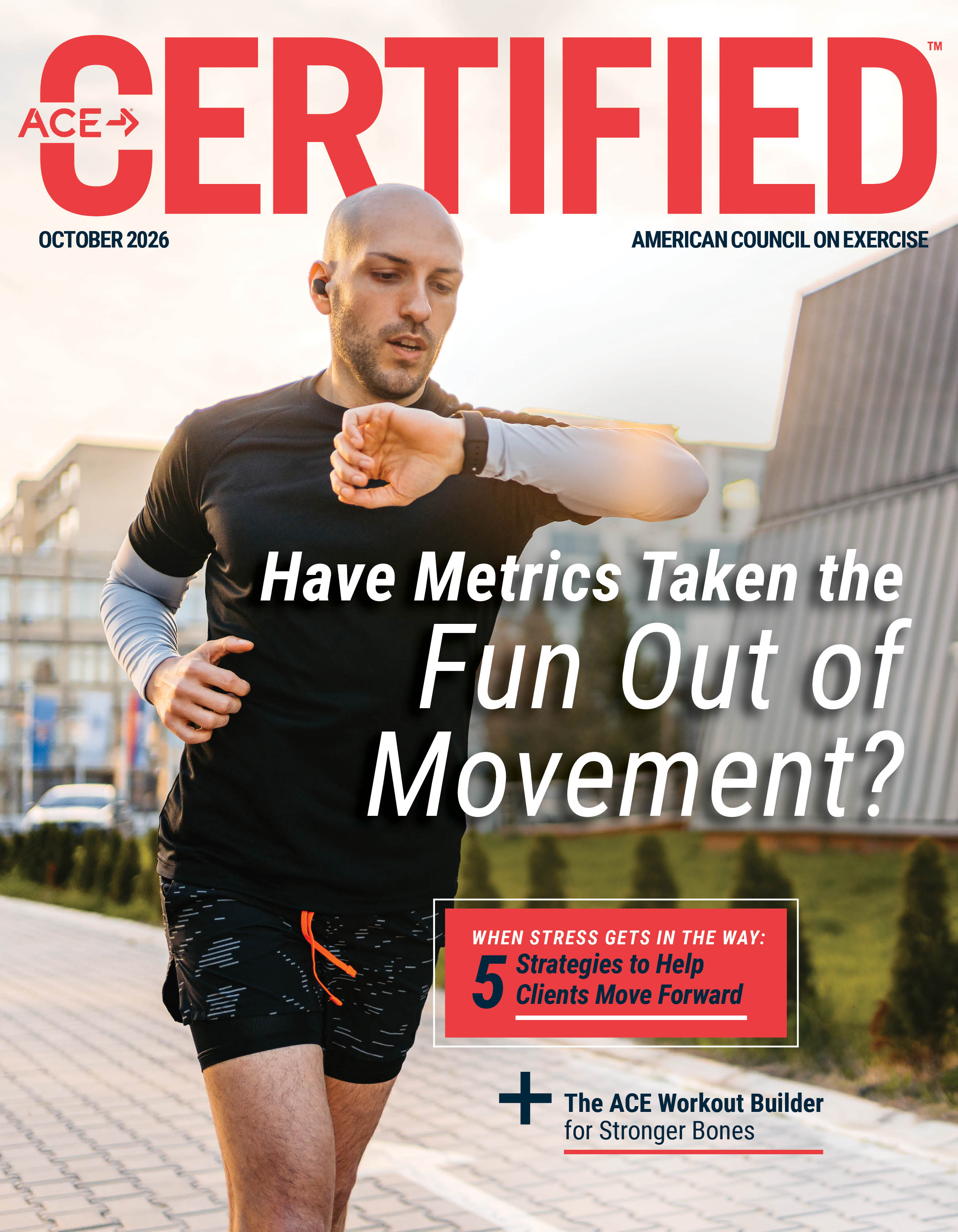
I recently went on a Saturday morning hike with a couple of friends, who we’ll call Jack and Jill. Along the way, Jill’s phone kept announcing our mileage, loudly enough that Jack grumbled to me, “It’s so annoying…. I just wanted to get away from my computer and my phone for a couple of hours.”
When we got back to the car, Jack and I started taking off our backpacks and knocking the mud off our boots, but Jill looked at her phone and began walking the perimeter of the parking lot. When she finally got in the car, she said, “We were at 3.8 miles. No way I’m falling just short of 4!”
For Jack and I, the outing was about spending time outside, getting a little exercise and hanging out with our friends. When we stopped for water breaks, we’d chat for a second and admire the view, as Jill took out her phone to check our elevation gain, speed and distance.
Of course, no one is wrong in this scenario. We just wanted different things out of the experience. For Jack and I, the intrusion of technology on the meditative experience of hiking was the new-school version of someone blasting their boombox at the beach back in the ‘80s. For Jill, this was a workout worth tracking.
As a health coach or personal trainer, part of your job in this increasingly technological world is to figure out where each of your clients falls on the spectrum from Jack to Jill and then help them determine what role technology and metrics will play in their program. It can be challenging and will take some trial and error but finding that sweet spot and tailoring your approach accordingly can make the difference in a client achieving long-term success.
The Downside of Data
Data can rob some people of the intrinsic joy we can get from just moving our bodies. Does every walk need to hit a certain pace? Does every hike or bike ride need to be a certain distance? For many clients, getting outside may be the goal. They may be relearning how to move for the sake of moving and be intimidated by chasing numbers.
Other clients may find tremendous motivation in the metrics. For them, setting and achieving goals is a driving force and the reason they exercise.
Metrics can become problematic when they turn from being a tool into becoming the goal, explains Erin Nitschke, EdD, Dean of Academic Innovation and Graduate Studies at Lionel University and an ACE Certified Health Coach and Personal Trainer. In the scenario above, Jill walked that extra 0.2 miles to hit her workout goal—no harm in that. But what if, 2 miles into our hike she pushed us all to reach the 3-mile mark before heading back to the car, turning our 4-mile round trip into a 6-miler? One of us may have been pushed too hard in pursuit of a number instead of listening to our bodies, enjoying the day and maybe, if we’re lucky, reaching a flow state that we don’t want interrupted by notifications and announcements.
When we are overly reliant on data points and metrics, Nitschke says, “we lose some of the greatest benefits of exercise, like stress reduction, creativity and social engagement.” And those less tangible benefits aren’t necessarily showing up as a number on your watch dashboard. The value of having a great conversation with a friend or loved one as you walk around the neighborhood, or the stress relief that comes with enjoying the view from a mountain ridgeline, cannot be measured but are no less important for overall health and well-being.
Another potential downside of the metrics comes when people begin to let technology make decisions for them. Nitschke tells a story of a client telling her that they were exhausted, didn’t sleep well and were super stressed, but their watch said they were ready to train. The client wanted to push aside what they were feeling physiologically and psychologically in favor of listening to their watch—what Nitschke calls an “inherently non-empathetic and inhuman tool.” She says she’s also seen the opposite, where a client was feeling fantastic but skipped a workout because their “recovery score” was low that day.
There’s another risk related to becoming too wrapped up in the numbers. Nitschke has seen this with clients who tend to be highly driven or perfectionistic, as well as those who may have a history of having a negative relationship with food or exercise. Data can become a form of self-judgement, she says, instead of just another source of information. When clients start thinking they “should” do more because their watch is telling them to, this can reinforce negative habits that they worked to overcome.
For Pete McCall, a fitness instructor at the Rancho La Puerta resort in Mexico and an ACE Certified Personal Trainer, another downside comes from becoming too focused on minor details that may not have a significant impact on long-term health. “It's much more important,” he says, “to first focus on making exercise a consistent habit—that it’s done almost daily without a lot of prompting.”
It’s also important to look at the whole picture, McCall explains. “Monitoring only one or two data points won't provide a complete picture of what is happening within the body.” Individual metrics can be useful for tracking progress toward a specific goal, but they are most meaningful when considered alongside other aspects of a client’s health and behavior. As the ACE 7 Core Drivers of Healthy Living illustrate, physical activity, nutrition, stress management and restorative sleep are all part of an interconnected system that influences health and well-being. A client may be focused on improving a particular measure, such as heart rate variability or VO2max, but changes in that metric may be connected to sleep, stress, training habits or other behaviors. Helping clients recognize those connections can give the data greater context and help them better understand how progress in one area may relate to changes elsewhere.
Where Metrics Matter
Some people simply love pursuing the numbers. They are motivated by their daily step count or the amount of weight lifted during a resistance-training session, use heart rate variability to gauge the intensity of their workouts and use total sleep time to modify their bedtime routine.
Metrics provide a clear and easily understood way to gauge progress. A client who feels discouraged because they are not losing weight as quickly as they had hoped may find renewed motivation by seeing how much stronger they are now than they were six months ago. This is why tracking a variety of variables can pay dividends over time.
Data can also serve an important purpose for someone just beginning their journey with physical activity and exercise. Having a client who is new to exercise track their steps over the course of a week, for example, can provide a baseline upon which to build. Data can also reveal patterns that clients may not otherwise recognize. If a client’s recovery score is poor every Monday, adjustments could be made to their weekend sleep routine or physical-activity levels.
Data can also be invaluable for clients with certain health conditions. For example, consider a client who has hypertension. They’re probably going to benefit from an understanding of how regular walking might influence their blood pressure over time.
If you have clients training for an endurance event, you can utilize heart-rate zones to avoid over- or undertraining or to develop training cycles. Nitschke brings up an important point here: You, as the health coach or personal trainer, can use numbers gleaned from a client’s wearable to evaluate patterns or draw conclusions that help you develop or modify an exercise program without throwing every number at the client.
“There are some things that we need to inform our coaching practice because we’re not working in a guessing game here,” she explains. “This is an evidence-based field. And to lean into evidence, we have to gather evidence. But I don't think it’s necessary to spit out all of these data printouts and have clients get so involved in it because then I think you’re really getting in the weeds and that can become distracting. You don’t want them to begin focusing on all the numbers versus how they’re feeling, how they’re sleeping, what their energy’s like, their strength and how they’re feeling during their workouts.”
Asking the Right Questions
Dr. Nitschke says that professionals should lean into their curiosity as they explore what level of technology and tracking might work best for a particular client. She recommends beginning with this one question, which may kick off a deeper conversation that provides important insights: “How do you feel when you look at your wearable device?”
One client, like my friend Jack (assuming he owns one), may say, “That thing stresses me out and I feel guilty when the numbers aren’t where they should be,” while another, like Jill, may say, “Super motivated! Closing my rings each day gets me excited.”
“It’s not the metrics these devices provide that can become a problem, but how clients relate to the information that’s being given,” Nitschke explains. “So, I want to know, ‘Does it light your fire or make you feel guilty?’”
A similar question you might consider asking is, “How would you feel if you arrived at the gym, only to realize you’d left your watch at home?” You might be surprised how many clients think a workout “doesn’t count” if it isn’t tracked.
Also, as mentioned above, pay attention to what your clients say about technology during sessions. Are they letting the device drive their decision making? Does it add stress to activities that are supposed to be stress-reducing? Or do they excitedly share progress they’re seeing the numbers? As a health coach or exercise professional, you can use all this information to shape future conversations, make program modifications and create accountability.
Which Metrics Are Worth Tracking?
While your approach to using metrics can be personalized for each client, Pete McCall says there are some very important data points that clients may consider tracking consistently:
- Body weight and lean muscle mass: The availability of scales with built in bioelectrical impedance analysis technology means that it is easy to monitor body weight and body composition at home. The goal is to have lean tissue increasing while body fat goes down. Skeletal muscle is an important metabolic and endocrine organ, and a growing body of evidence links maintaining adequate muscle mass with better health outcomes and a lower risk of premature mortality. “This is where a personal trainer can have a significant impact on a client and is probably the most important data to monitor.”
- Recovery heart rate: Getting the heart rate up is easy; the hard part is making a rapid recovery. Being fit means being able to recover quickly from high-intensity exercise intervals. Paying attention to how fast the heart rate falls and breathing returns to normal after a high-intensity interval is helpful, as a decrease in these numbers demonstrates an improvement.
- The amount of weight lifted or distance run: These are signs of real progress. Is it possible to lift more weight or run, walk or cycle for more distance? Tracking weight, reps and sets provides good data points for showing clients how much progress they're making.
- Resting heart rate: As an individual becomes fitter, the left ventricle should become capable of moving more blood volume per contraction, helping the heart to work much more efficiently. “Tracking resting heart rate is a simple way for a client to see progress.”
- Sleep quality: “Improving sleep hygiene can have an almost immediate impact on an individual's health.”
McCall reinforces that health coaches and exercise professionals ought to focus on the data that matters to each client. “If the goal is to add strength, track lean muscle mass and the amount of weight lifted in one or two compound movements (e.g., squat or bench press). If the goal is to lose weight, track lean muscle mass, body fat and resting heart rate to demonstrate progress.” It’s all about finding what’s of value to the client and what will help them progress on their journey.
McCall also says that doing things the old-fashioned way can be appealing to a lot of clients. For example, waist, hip and other circumference measurements can be done with ribbons. Showing a client who is working to lose weight how much shorter a waist-circumference ribbon is after six months of training can be powerful, especially for numbers-averse clients. And don’t forget the power of photos. “Small changes are hard to see day-to-day, but progress photos can provide important motivation to build adherence,” he says.
In Conclusion
No matter what metrics a client chooses to focus on, McCall and Nitschke agree that it’s the long-term patterns that matter most. People have a tendency to look at numbers in isolation—how many steps they got that day, how much weight they lifted during a session or how many hours they slept last night—when long-term behavior change is all about consistency. Used well, technology can hold a mirror up to our behaviors, but looking at step count or sleep score on a particular day doesn’t really tell us much. It’s the long-term patterns that reveal changes in both behavior and outcomes.
“The first priority should be to help a client establish exercise as a habit,” McCall says. “Once an individual is exercising consistently, two to three times per week for three to four months in a row, then it would be a good idea to introduce data as a way to track specific progress.”
When asked which variables are most important to track, Nitschke responded with one word: “Consistency.” The question isn’t how much weight a person lifts during a single workout, but how frequently and how consistently they are getting to the gym or being active. If there is a dip in strength, then exploring other metrics may help elucidate why that might be taking place and allow you to help the client take a scientific approach that evaluates one variable at a time. On the other hand, if there is an increase in performance, that should be recognized and celebrated.
Looking at the numbers in a holistic way that considers multiple variables of health and well-being is a great approach but always be sure that you’re honoring each client’s perspective on technology and letting that drive what you measure and monitor. Like Jack and Jill, we all want different things out of physical activity, so work with each of your clients to determine what will best motivate them to keep moving.








 by
by