In an effort to help you more efficiently earn continuing education credits while you explore
CERTIFIED™, you can now take the quiz as you read. Get the latest, science-based information
while you earn 0.2 CECs.
It’s well known that high-intensity interval training (HIIT), which typically involves alternating between brief periods of challenging cardiorespiratory activity and longer bouts of lower-intensity recovery, can deliver many benefits to adults, including increased caloric expenditure, improved aerobic efficiency, elevated aerobic capacity, improved cognitive function and increased lean muscle mass. However, as a health and exercise professional, you may be unsure if the physically demanding work intervals of HIIT are appropriate for older adults. More specifically, can HIIT be tolerated by individuals over the age of 50, and is it an advisable mode of exercise for adults in the later years of the human lifespan?
Age alone should not be the deciding factor. Training history, current health status, medications, movement skill, balance, musculoskeletal capacity, recovery and personal preference all matter. A fit 72-year-old who has exercised consistently for decades may be able to tolerate high-intensity intervals quite well, while a 58-year-old who is returning to exercise after a long inactive period may need weeks or months of lower-intensity conditioning before HIIT is appropriate. For older adults, the question is less, “Is this person too old for HIIT?” and more, “What version of interval training is appropriate for this person today?”
This article examines the researched benefits of HIIT for this population, as well as the safety concerns and best practices for incorporating HIIT workouts into the training programs of active older adult clients. The evidence base continues to grow, and new research supports the notion that HIIT can be a safe, efficient and beneficial option for many older adults, including some with stable chronic health conditions, but it should be individualized, progressed gradually and integrated into a broader program that also includes strength, balance, mobility and recovery.
HIIT: When Science and Popularity Converge
Before it became a standard feature of many training programs, interval training was primarily used by conditioning coaches to help athletes prepare for the metabolic demands of running events and sports that required short periods of sprinting at an all-out effort. For this reason, early research on HIIT largely focused on how it could be applied to athletes training for a specific sport or position. Because it is such a physically demanding activity, many believed that HIIT was too challenging for the average exerciser.
Fortunately, that began to change in the early 2000s. According to Martin Gibala, PhD, author of The One-Minute Workout, exercise scientists who were trying to identify time-efficient exercise solutions for deconditioned populations began studying the benefits of HIIT for non-athletes. Even as researchers began to validate HIIT’s numerous health benefits, in addition to the already-known performance outcomes, high-intensity formats of exercise started to increase in popularity. In the subsequent two decades, HIIT has become a standard mode of exercise in most fitness facilities, with a variety of formats offered by personal trainers working with individual clients and instructors teaching in group fitness studios.
One reason HIIT has become so widely used is that it is a format, not a single workout. HIIT can be performed using a cycle ergometer, rowing machine, treadmill, step, hill, water-based exercises, suspension trainer or with body-weight movements. It can feature 10-second bursts, 1-minute intervals or longer 4-minute work periods, depending on the individual and the goal. For older adults, this distinction is essential. High intensity does not have to mean sprinting, jumping or moving with poor control. It means working at a high intensity relative to one’s current capacity, while choosing a mode that supports safety, confidence and quality movement.
The Benefits of Lifelong Exercise
In the late 1960s and early 1970s, a number of factors—a rise in the popularity of running and jogging, the emergence of dance exercise and the increased visibility of bodybuilding, to name a few—combined to make exercise a popular recreational pastime. These were the early days of the modern fitness era, when making time for exercise became a fundamental part of many lives. That context is important because the adults who first started exercising during this time have been exposed to, or even participated regularly in, physical activity for most of their adult lives. Now in their 70s, 80s or beyond, many lifelong exercisers may have retained a level of cardiorespiratory fitness and skeletal-muscle function that supports participation in higher-intensity workouts when those workouts are appropriately screened, individualized and progressed.
For example, one study of lifelong exercisers in their 70s found that these individuals had extensive capillary density in muscle tissue, along with the enzymes required for efficient energy metabolization. The study focused on groups of older adults who had participated in casual but consistent exercise for approximately 50 years, older adults who had regularly trained for competitive running events since the 1970s and older adults who were not physically active. The study also included a group of younger adults so researchers could compare tissue samples between age groups. Researchers reported that more than 50 years of aerobic exercise fully preserved skeletal muscle capillarization and aerobic enzymes, regardless of intensity.
That is powerful evidence for the long-term value of physical activity. It also helps explain why some active older adults can handle and even enjoy challenging intervals. However, this research should not be interpreted to mean that every older adult should perform maximal sprints or that a high-intensity interval workout is appropriate simply because a client is motivated. Lifelong exercise may preserve important physiological qualities, but today’s exercise programming should still be based on current readiness, not only on a client’s exercise history.
What the Most Recent Evidence Says
A considerable amount of HIIT-related research has been published in the past few years, including studies focusing on HIIT and older adults. Below is sampling of three such studies:
A 2024 systematic review and meta-analysis in Sports Medicine - Open included 44 randomized controlled trials with 1,863 participants ages 60.5 to 81.2 years. Compared with non-exercise control conditions, HIIT significantly improved resting heart rate, systolic blood pressure, cardiorespiratory fitness, body-fat percentage, muscular strength, muscular endurance and balance. Compared with other exercise conditions, including moderate-intensity continuous training and resistance training, HIIT showed significant advantages for resting heart rate, systolic blood pressure and cardiorespiratory fitness, but not for every outcome measured.
Another 2024 meta-analysis, published in Archives of Gerontology and Geriatrics, compared HIIT and moderate-intensity continuous training in adults age 60 and older. The researchers reviewed 29 trials with 1,227 participants and found that HIIT and moderate-intensity continuous training produced similar changes in most fitness and health markers. In higher-quality controlled trials, however, cardiorespiratory fitness gains were greater with HIIT. It’s worth noting that while the newer literature does not support presenting HIIT as automatically superior to moderate-intensity training for all outcomes, it does support HIIT as a time-efficient option that may provide added benefit for cardiorespiratory fitness in some older adults.
A 2025 systematic review and meta-analysis in BMC Sports Science, Medicine and Rehabilitation also supports a practical, cautious approach. The authors analyzed 11 randomized controlled trials in older adults and found that HIIT improved six-minute walk test performance, VO2peak and quality of life, while gait speed did not change significantly. The authors noted substantial variation in HIIT protocols and emphasized the value of multidisciplinary support from health professionals when HIIT is used as part of care for older adults.
To be clear, the latest evidence doesn’t say that HIIT is a magic shortcut or that it’s the best choice for every client on every day. Rather, it is an evidence-supported tool that can be used with older clients. Used appropriately, it can improve cardiorespiratory fitness and several cardiometabolic or functional outcomes. Used without screening, coaching or adequate progression, it can create avoidable risk.
HIIT for Chronic Health Conditions
So, it’s one thing to put a fit, lifelong exerciser through an intense interval workout, but what about clients who may just be starting their fitness journey or are returning after not being active for a period of time? Or what about those who are dealing with a chronic health condition—is HIIT appropriate for these individuals, too? While it may seem that HIIT is too physically demanding for older individuals or those living with chronic health conditions, research suggests that HIIT may be appropriate and beneficial for some of these clients when their condition is stable, the exercise mode is appropriate and the program is supervised or coordinated with the client’s medical team, as needed.
Hypertension, or high blood pressure, is a common risk factor for developing further cardiovascular disease that could result in an early death. As arterial stiffness increases, it is more challenging for the heart to perform its function of pumping blood around the body. It is widely accepted that low- to moderate-intensity cardiorespiratory exercise can help improve aerobic capacity and reduce numerous risk factors, including hypertension, that could lead to heart disease. Evidence is also accumulating that HIIT can improve systolic blood pressure and cardiorespiratory fitness in older adults, but caution is warranted. HIIT may be effective, not universally superior, and clients with uncontrolled or unstable cardiovascular signs and symptoms should be referred for medical clearance before progressing to vigorous exercise.
Additional research suggests that individuals with stable coronary artery disease may benefit from HIIT as a component of cardiac rehabilitation. In a 2023 multicenter randomized controlled trial published in the European Journal of Preventive Cardiology, 382 patients with stable coronary artery disease completed either twice-weekly low-volume HIIT or moderate-intensity steady-state exercise for eight weeks. The HIIT protocol consisted of 10 one-minute intervals of vigorous exercise at more than 85% of maximum capacity, interspersed with one-minute recovery periods. Cardiorespiratory fitness improved more in the HIIT group, and only one serious adverse event was considered possibly related to HIIT.
That finding is encouraging, but it should be interpreted in context. Cardiac rehabilitation takes place in a supervised clinical setting, and participants in the trial were clinically stable. For exercise professionals working outside clinical rehabilitation, this means HIIT may be part of the continuum of care for some clients with cardiovascular disease, but it should be used only when the client has appropriate medical clearance, the professional is working within scope of practice and the exercise plan matches the client’s current capacity and signs and symptoms.
There also is encouraging research for individuals with metabolic conditions such as type 2 diabetes. For example, studies using an all-extremity ergometer—a non-weight-bearing cycling ergometer with moving arms—have shown that HIIT can be delivered in a way that reduces balance and impact demands while still challenging the cardiovascular and metabolic systems. This is especially relevant for older adults who may not be comfortable sprinting on a treadmill or performing rapid changes of direction, but who can safely work hard on stable equipment.
The practical takeaway is that chronic health conditions do not automatically rule out HIIT, but they do change how HIIT should be screened, introduced and progressed. A client with well-managed hypertension, good movement control and a consistent exercise base is different from a client with unstable angina, uncontrolled blood pressure, unexplained dizziness, recent falls or worsening shortness of breath. The label “older adult” tells you very little. The client’s health status, medication profile, functional ability and exercise response tell you much more.
Safety Comes First
Before using HIIT with an older client, start with the basics: Preparticipation health screening, informed consent, a clear understanding of the client’s goals and values, and a realistic assessment of movement capacity. Ask about cardiovascular, pulmonary, metabolic, neurological and musculoskeletal conditions. Ask about recent changes in symptoms, recent surgeries or procedures, unexplained falls, dizziness, chest pressure, unusual shortness of breath and new or changing medications. When a client’s responses suggest elevated risk, pause and refer to the appropriate healthcare provider before initiating vigorous exercise.
Medication use deserves special attention. Many older adults take medications that affect exercise response, including beta blockers, which attenuate heart rate at rest and during exercise. For a client using these medications, age-predicted maximum heart-rate formulas may be unreliable for recommending or evaluating intensity. Heart-rate monitors can still be useful for observing trends, but they should not be the only tool. Ratings of perceived exertion, breathing, movement quality, talk-test responses, recovery time and the client’s signs and symptoms all provide important information.
For most active older adults, a 0-to-10 rating of perceived exertion scale is easy to understand. Low-intensity recovery might feel like a 1 or 2. Moderate work might feel like a 3 or 4. The higher-intensity portions of a HIIT session might feel like a 5, 6 or, for well-conditioned clients, occasionally a 7 or more. The goal is hard or very hard work, not panic, pain or loss of control. During a challenging interval, a client may be able to speak only a few words at a time. During recovery, breathing should gradually settle enough that the client can speak comfortably before the next work interval begins.
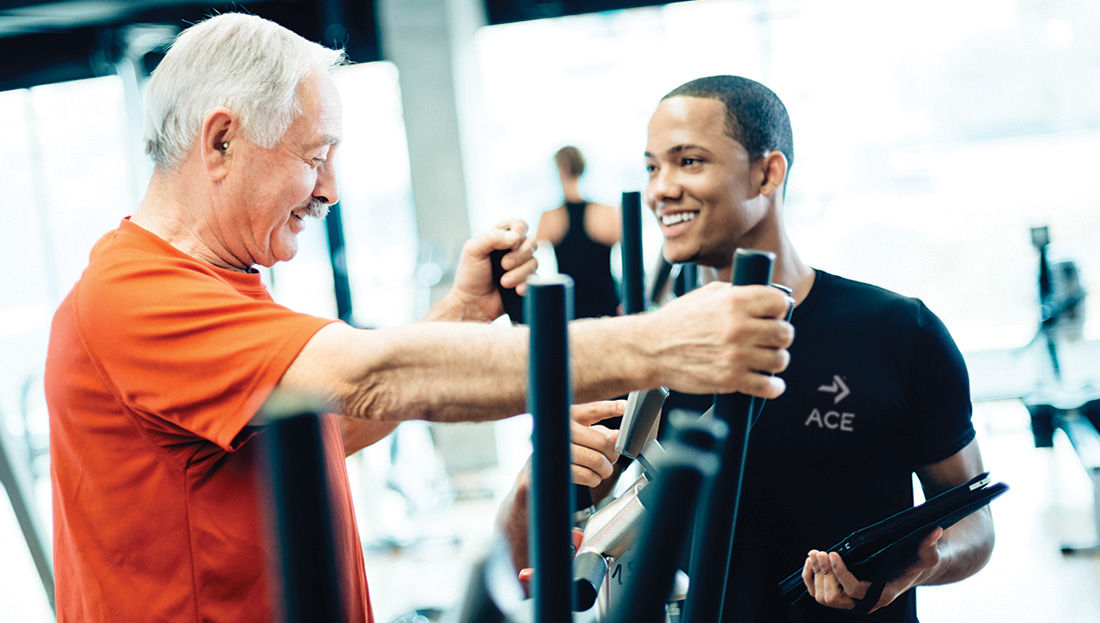
Balance, joint health and movement skill are just as important as cardiovascular tolerance. Treadmill running, jumping, fast lateral movements and rapid transitions may be inappropriate for clients with peripheral neuropathy, severe osteoarthritis, vestibular issues, osteoporosis with high fracture risk or a history of falls. That does not mean those clients cannot perform interval training. It means the mode should change. A recumbent bike, stationary cycle, all-extremity ergometer, aquatic setting, step-up with hand support or incline walking protocol may allow the client to work at a meaningful intensity while reducing avoidable risk.
Recovery also is a safety variable. Older adults can improve fitness at any age, but recovery capacity varies widely. Poor sleep, high stress, inadequate nutrition, dehydration, illness, pain flare-ups and heavy resistance training performed too close to a HIIT session can all affect readiness. Monitor how clients feel later in the day and the following day, not just during the workout. A successful HIIT session should leave the client challenged and confident, not depleted for days.
Putting HIIT Into Practice
Robert Linkul, MS, owner and founder of Training the Older Adult in Shingle Springs, Calif., designs group fitness workouts that cater specifically to the needs of active older adults. Working with a clientele that has an average age of 68, Linkul believes that age should not be a limiting factor when it comes to helping his clients experience results.
“We use intervals of truly challenging work and inform our clients to exercise to a point of ‘discomfort,’” he explains. “We do not have clients wear heart-rate monitors or ask them to achieve specific levels of intensity; however, we do ask them to elevate their efforts to ‘higher’ levels. We see a great benefit in training strength and conditioning components at the same time. Our clients love it and we can achieve great results in short periods of time.”
Start With Low Volume
While the evidence suggests that many older adults and some of those with stable chronic health conditions can tolerate HIIT, it’s a good idea to begin with a low-volume protocol when working with a deconditioned individual, a new client or anyone whose current response to vigorous exercise is unknown. Low volume means fewer intervals, shorter work periods and longer recoveries. The first goal is not to prove how hard the client can work. The first goal is to determine whether the client can work hard briefly, maintain excellent movement quality, recover comfortably and feel successful.
A practical starting point is to use short intervals of 10 to 30 seconds at a challenging but controlled intensity, followed by one to three minutes of easy movement. For a client who is new to HIIT, one or two high-intensity intervals may be enough for the first session. A more prepared client might perform three or four intervals. Over time, you can add intervals, slightly increase the work duration, increase the intensity or shorten the recovery, but avoid changing all those variables at once. Progression should be based on the client’s response, not on the desire to fit a popular format.
When using heart rate, remember that heart rate lags behind effort during short intervals. A 20-second interval may feel very challenging before the monitor reflects the intensity. For that reason, perceived exertion and movement quality should guide the early phase of a program. If a client is gripping the equipment excessively, losing posture, stumbling, holding their breath or showing facial distress, the interval is too intense or the mode is not appropriate.
Choose an Appropriate Exercise Mode
The exercise mode should match the client. A stationary or recumbent cycle is often a good starting point because it provides stability and allows the client to adjust effort quickly. A rowing machine can be effective for clients with the mobility and technique to use it well, but it may not be appropriate for those with low-back pain or limited hip flexion. An elliptical trainer can reduce impact, though clients with balance concerns may need additional support. Walking intervals can be performed by increasing grade before speed, which may be safer for many older clients than running. Aquatic exercise can provide a high-effort, low-impact option for clients with joint pain or obesity. Step-ups, sit-to-stands or loaded carries can also be used in interval formats, but you should be clear about whether the client’s primary goal is cardiorespiratory conditioning, muscular endurance, power or functional performance.
Consider REHIT
Reduced-exertion high-intensity training, or REHIT, provides one example of how little high-intensity work may be needed to create a stimulus. In one eight-week workplace study, participants performed two 20-second sprints within a session lasting less than nine minutes and experienced greater improvements in cardiorespiratory fitness and several cardiometabolic markers than participants assigned to 30-minute moderate-intensity continuous training. This does not mean every older adult should perform supramaximal sprints. Rather, it illustrates a useful principle: HIIT does not need to be long to be effective, and the total amount of high-intensity work should be carefully dosed.
Warm Up Thoroughly
For active older adults, begin each HIIT session with a thorough warm-up that gradually increases temperature, joint range of motion and breathing rate. Five to 10 minutes is a reasonable minimum for many clients, and some will need more. The warm-up can include easy aerobic activity, mobility work and rehearsal of the movement pattern that will be used for intervals. The cool-down should be long enough for breathing, heart rate and perceived exertion to return toward baseline. Abruptly stopping after intense work can be uncomfortable for clients who are prone to lightheadedness.
Start With One Session Per Week
Frequency matters. Many active older adults will do well with one HIIT session per week at first, especially if they are also performing resistance training, recreational activities or group fitness classes. Well-conditioned clients may progress to two HIIT sessions per week, but those sessions should not be placed on back-to-back days. A day or two of lower-intensity activity, mobility work or rest between HIIT sessions can improve adaptation and reduce the risk of overuse or excessive fatigue.
Hold Off on Going Full Tabata
Over time, it may be appropriate to apply a standard format such as the Tabata protocol, which features 20 seconds of high-intensity exercise followed by 10 seconds of passive recovery for eight cycles in four minutes. However, before challenging a client with a full four-minute Tabata cycle, think about breaking it up into one-minute segments of two cycles of 20- and 10-second intervals followed by two to three minutes of lower-intensity active recovery. Clients can work up to completing the four-minute interval over time, if the format supports their goals and they can maintain movement quality.
The point is that you can take established HIIT protocols, such as Tabata, and regress them to shorter periods of time and gradually introduce clients or group classes to the format before progressing to longer periods of high-intensity work. For some clients, the “regressed” version may remain the best version. A 10-minute interval block that leaves a client feeling capable, energized and consistent is more valuable than a trendy workout that creates fear, pain or excessive soreness.
HIIT Within a Multicomponent Older Adult Program
HIIT should not be viewed as a replacement for other forms of exercise that are essential for healthy aging. The International Exercise Recommendations in Older Adults from the International Conference on Frailty and Sarcopenia Research emphasize that exercise programs and recommendations should be individualized according to risk factors, medical history, musculoskeletal limitations, functional ability, tolerance and personal preferences. The same recommendations note that if significant deficits in muscle strength or balance are identified, those deficits should ideally be addressed before aerobic training is initiated or progressed.
This guidance is especially relevant for HIIT. A client who cannot rise from a chair with control, maintain balance during basic stepping patterns or recover from moderate exercise is not ready for aggressive intervals. For that client, resistance training, balance training, gait work and gradually progressed aerobic activity may be the best path toward a future HIIT program. In other words, strength and balance are not separate from conditioning; rather, they are likely prerequisites for performing conditioning safely.
For active older adults who are ready for HIIT, the best weekly program often includes a blend of training modes. Resistance training supports muscle mass, strength, power and bone health. Balance and mobility work support confidence and reduce fall risk. Moderate-intensity aerobic activity builds an endurance base and helps clients accumulate health-promoting movement volume. HIIT can then be layered in as a targeted stimulus for cardiorespiratory fitness, metabolic health, enjoyment and time efficiency.
This is where health and exercise professionals can provide tremendous value. A client may hear about HIIT from a friend, fitness app or online video and assume that the only “real” version involves burpees, sprinting or breathless exhaustion. You can explain that HIIT is scalable. You can teach the client how to distinguish effort from strain. You can choose exercises that match their body and goals. You can watch for warning signs, adjust recovery and help them progress in a way that builds confidence.
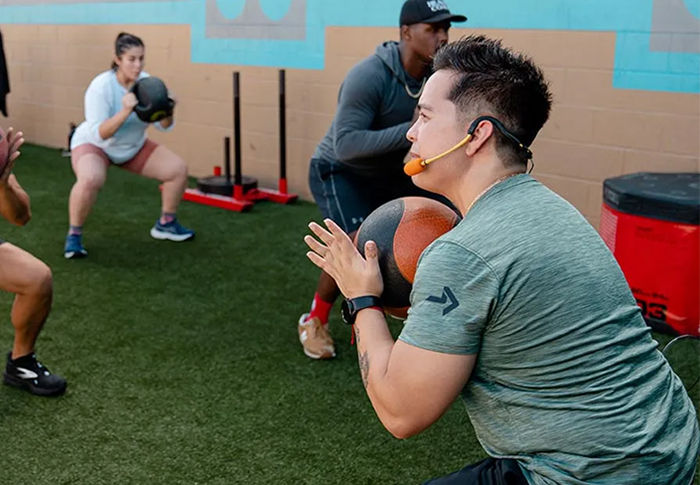
In a group setting, the same principles apply. Offer multiple intensity and impact options. Cue effort rather than speed. Remind participants that the goal is to work hard for their bodies today. Encourage longer recovery when needed. Avoid language that shames people for choosing a lower-impact option or stopping early. For active older adults, autonomy and confidence are not luxuries; they are central to adherence.
The Bottom Line
If clients are willing and able, age should not be a factor that automatically limits them from experiencing the benefits of high-intensity exercise. Current evidence supports HIIT as a viable option for many older adults, and it may be especially useful for improving cardiorespiratory fitness in a time-efficient way. But HIIT for active older adults should never be a copy-and-paste version of a workout designed for competitive athletes or younger exercisers.
The safest and most effective approach is to start with the individual in front of you. Screen carefully, choose the right mode, and use perceived exertion and signs and symptoms to determine intensity, not just age-predicted heart rate. Begin with low volume, keep recovery generous and progress gradually. Integrate HIIT with resistance training, balance, mobility and moderate-intensity activity. And, when appropriate, coordinate with the client’s healthcare team.
HIIT can be challenging, empowering and fun for active older adults. When the program is individualized and you respect the difference between hard work and excessive strain, HIIT can help your older clients improve fitness, build confidence and continue doing the activities they love.
How to Utilize High-intensity Interval Training (HIIT) With Older Adult Clients
In this video, ACE Certified Personal Trainer Pete McCall demonstrates how to take established high-intensity interval training (HIIT) protocols, such as Tabata, and regress them to shorter periods of time and gradually introduce clients to the format before progressing to longer periods of high-intensity work. If your clients are willing and able, age should not be a factor that limits them from experiencing the benefits of high-intensity exercise.
Sign up to receive CERTIFIED™
CERTIFIED™ is a free online monthly publication from ACE designed to equip certified fitness professionals and health professionals alike with the knowledge they need to continue growing.
Author
Pete McCall
Health and Fitness Expert
Pete McCall is the author of Ageless Intensity: High Intensity Workouts to Slow the Aging Process, Smarter Recovery: A Practical Guide to Maximizing Training Results, and Smarter Workouts: The Science of Exercise Made Simple. McCall is a personal trainer and fitness instructor at the exclusive Rancho La Puerta Resort and Spa in Tecate, Mexico, helping guests learn how to use strength training to achieve longevity. McCall holds a master’s degree in exercise science and health promotion, is a Certified Strength and Conditioning Specialist (CSCS) through the National Strength and Conditioning Association and has spent a large portion of his career educating personal trainers around the world as a workshop instructor and speaker. In addition to three books, Pete has authored numerous articles for fitness trade publications, exercise-science blogs and textbook chapters.
In an effort to help you more efficiently earn continuing education credits while you explore
CERTIFIED™, you can now take the quiz as you read. Get the latest, science-based information
while you earn 0.2 CECs.
Sign up to receive CERTIFIED™
CERTIFIED™ is a free online monthly publication from ACE designed to equip certified fitness professionals and health professionals alike with the knowledge they need to continue growing.







 by
by