







 by
by 


Mix It Up: What New Research Suggests About Exercise Variety and Lifespan

Certified™: June 2026
As a health and exercise professional, you likely spend a lot of time helping clients answer one deceptively simple question: “How much physical activity is enough?”
It is an important question, and decades of research have helped shape practical, evidence-based answers. We know that regular physical activity is associated with better physical and mental health, reduced risk of chronic disease and lower risk of premature death. But for many clients, “more exercise” is not always the most useful message. It can feel vague, overwhelming or disconnected from the realities of their lives.
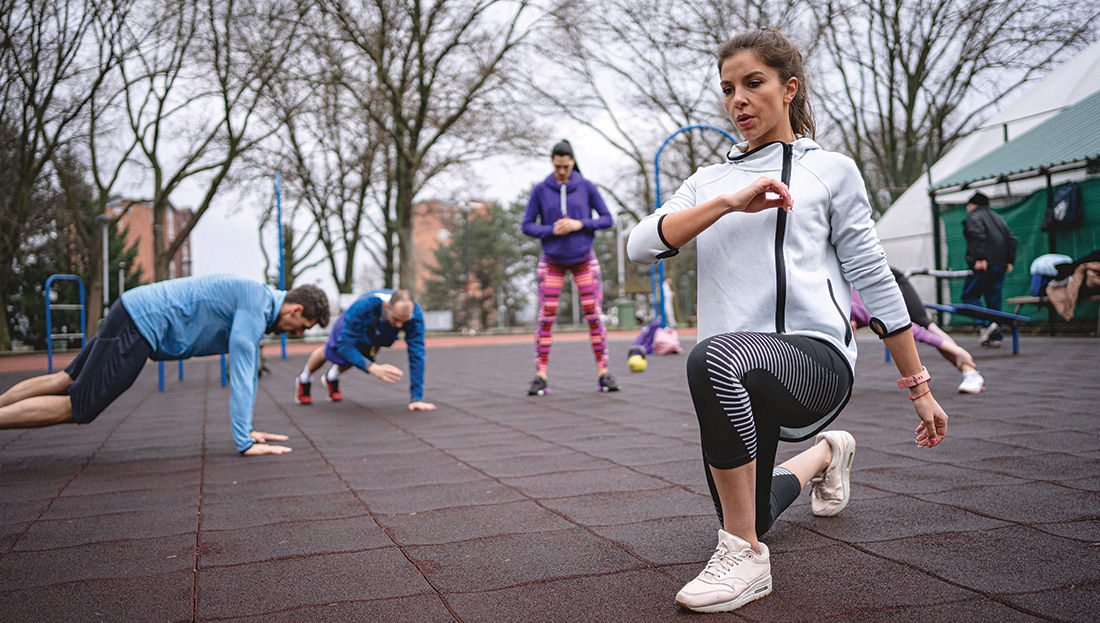
A new study published in BMJ Medicine offers some interesting insights. The research suggests that, while total physical activity still matters, the variety of activities a person does may also be linked to longevity. In other words, doing a mix of activities—rather than simply doing more of the same—may offer benefits beyond total activity volume alone.
For health and exercise professionals, the idea is not new; it echoes the long-standing concept of cross-training, which has been part of exercise programming for decades. Still, the study offers a useful reminder that clients can easily fall into the habit of repeating the same activity week after week, and that intentionally mixing things up may help make movement more balanced, engaging and sustainable. What this research underscores is that a week that includes walking, resistance training, climbing stairs, recreational sports, stretching or outdoor work may not just be more interesting. It may also be a meaningful way to support long-term health.
What the Researchers Studied
The study drew on data from two long-running cohort studies: the Nurses’ Health Study and the Health Professionals Follow-Up Study. Together, the analysis included more than 111,000 adults who were free of major chronic disease at the start of the study and who provided complete physical activity information. Participants reported their leisure-time physical activity every two years, with follow-up spanning more than three decades.
The researchers examined several common physical activities, including walking, jogging, running, bicycling, lap swimming, rowing, calisthenics, tennis, squash or racquetball, climbing stairs, and weight training or resistance exercise. They also considered some activities that were added later or measured in only one cohort, such as lower-intensity exercise, outdoor work and other vigorous activities.
To estimate total activity, researchers used MET hours per week. METs, or metabolic equivalents, are a way to estimate energy expenditure by comparing the energy cost of an activity with resting metabolism. To assess variety, the researchers created a physical activity variety score based on the number of individual activities participants consistently performed. Stair climbing counted if participants reported at least five flights per day, while other activities counted if they were performed for at least 20 minutes per week. This approach allowed the researchers to look not only at whether people were active, but also at whether they were active in multiple ways over time.

Variety Was Linked to Lower Mortality
Over more than three decades of follow-up, the researchers found that higher total physical activity was associated with a lower risk of death, which is consistent with decades of evidence on the benefits of regular movement. The more notable finding was that variety also appeared to matter. After accounting for total activity level, people with the greatest variety in their physical activity had a 19% lower risk of death from all causes than those with the least variety, along with lower risks of death from cardiovascular disease, cancer, respiratory disease and other causes.
The researchers concluded: “Overall, these data support the notion that long-term engagement in multiple types of physical activity may help extend the lifespan.”
Importantly, this research doesn’t mean that variety automatically ensures a longer life, or that every client needs a complicated training plan. This was an observational study, so it cannot prove cause and effect. But it does suggest that a diverse movement routine may be one useful ingredient in a long-term approach to health.
More Was Not Always Better
Another important finding was that the associations between physical activity and mortality were not linear. In plain language, the benefits did not simply keep increasing in a straight line as people did more and more activity.
For total physical activity, the lower risk of death from cardiovascular disease, cancer and respiratory disease largely plateaued after about 20 MET hours per week, which is roughly equivalent to five hours of brisk walking or a shorter amount of more vigorous activity. This does not mean additional activity has no value for fitness, function, performance, enjoyment or quality of life. But it does suggest that, for mortality risk, there may be a point where the biggest gains have already been achieved.
Many people mistakenly assume that if some exercise is good, a lot more must always be better. For some clients, that belief can fuel discouragement, overtraining or an all-or-nothing mindset. This study offers a more encouraging message: Consistency, variety and a reasonable amount of activity may matter more than chasing ever-higher totals.
What Types of Activity Were Associated With Lower Risk?
With the exception of swimming, most individual activities were associated with lower all-cause mortality when the highest activity groups were compared with the lowest groups. The strength of the association varied by activity, with walking, racquet sports, rowing, calisthenics, resistance training and running showing some of the strongest associations (Table 1).
Table 1. Individual Physical Activities Associated With Lower Risk of Death From Any Cause
|
Activity |
Associated Lower Risk of Death From Any Cause |
|
Walking |
17% |
|
Tennis, squash or racquetball |
15% |
|
Rowing or calisthenics |
14% |
|
Weight training or resistance exercise |
13% |
|
Running |
13% |
|
Jogging |
11% |
|
Stair climbing |
10% |
|
Bicycling |
4% |
The swimming finding deserves careful interpretation. The study did not find that swimming was harmful. Rather, higher levels of swimming were not associated with lower all-cause mortality in the same way as most other activities. The researchers noted that self-reported swimming duration may not accurately capture intensity or true energy expenditure. Someone swimming vigorous laps and someone moving more casually in the water may report similar time, even though the physiological demand is quite different.
Bottom line: You don’t want to steer clients away from swimming. Swimming can be an excellent option for cardiorespiratory fitness, joint-friendly movement, enjoyment and function, especially for clients who prefer or tolerate aquatic activity well. The better takeaway is that self-reported activity categories are imperfect, and that one study should not be used to elevate or dismiss any single mode of exercise.
Why Variety Matters
The study was not designed to prove why variety was linked to lower mortality, but the idea makes sense when viewed through the lens of exercise programming.
Different types of activity challenge the body in different ways, which helps explain why a varied routine can be useful. Walking may support aerobic fitness, cardiometabolic health and daily energy expenditure, while resistance training supports muscular strength, power, bone health and physical function. Activities such as stair climbing, rowing, calisthenics and recreational racquet sports may add intensity, coordination, agility, reaction time or social connection. This aligns with prior evidence showing that aerobic and resistance training can produce different benefits, while combining modalities may support improvements across multiple domains.
There is also the human side of variety. A client who has several ways to be active is less vulnerable to disruption. Bad weather may interrupt outdoor walking, but not resistance training at home. A sore knee may limit jogging, but not upper-body resistance work or aquatic exercise. Travel may interrupt gym workouts, but not stair climbing or body-weight movement. Variety gives clients more options, which can help them stay active when schedules, weather, motivation, travel or physical limitations change.
What This Research Means for Your Clients
This research reinforces a message that is both evidence-informed and highly practical: Help your clients build a movement portfolio—a flexible mix of activities that together support the client’s health, fitness, function and enjoyment.
That does not mean, of course, that every client needs to walk, run, cycle, lift weights, play tennis and climb stairs every week. Rather, it reinforces a foundational principle of sound exercise programming: Most people benefit from a well-rounded routine that includes multiple components of fitness, including cardiorespiratory activity, muscular strength, mobility, balance and coordination. You can help clients identify where their current routine is too narrow and add variety in a purposeful, realistic way. The goal is not to add variety for its own sake, but to choose activities that complement what the client is already doing and support their goals, preferences and abilities.
This study also supports a more positive framing of physical activity. Instead of asking clients to do more, you might ask, “What is one other kind of movement you would enjoy or be willing to try?” That question opens the door to autonomy, curiosity and collaboration.
Practical Guidance on Talking About the Study’s Findings With Your Clients
As a health and exercise professional, the practical value of this study is not in making promises about longevity. It is in using the findings to support thoughtful, individualized programming and client education.
Because this was an observational study, avoid telling clients that adding more activity types will cause them to live longer or prevent disease. A more accurate statement would be: “In this study, people who regularly engaged in a greater variety of physical activities had a lower risk of death over time, even after researchers accounted for total physical activity.” That language is clear, motivating and within the evidence.
In practice, the key is to start where the client is and introduce variety progressively. A previously inactive client may begin with walking two days per week and a short, well-coached resistance-training session once or twice per week. A more active client may benefit from building a weekly rhythm that includes aerobic activity, resistance training, mobility work and something recreational or social.
A client who has only been walking does not need to suddenly add vigorous intervals, racquet sports and heavy resistance training in the same week. For many clients, the first step may be as simple as adding one new activity type at a low dose and building from there. Your role is to monitor the client’s response and adjust activity choices based on their goals, health status, movement skills, recovery capacity and any relevant guidance from their healthcare team.
For clients with known medical conditions, new or unexplained symptoms, or activity restrictions from a healthcare provider, variety should be introduced in alignment with appropriate medical guidance and within the professional’s scope of practice.
The larger lesson is encouraging: A healthy movement routine does not have to be extreme, monotonous or built around one “best” exercise. It can be broad, flexible and enjoyable, and it can evolve as a client’s life changes.
For the people you serve, that may be the most useful message of all: Do what you can, do it consistently and, when you are ready, mix it up.

More Articles
- Certified™: June 2026
Better Choices, Better Health: How Exercise Supports Safer Decision-Making
by Sabrena Jo, PhD, and Daniel J. Green
- Certified™: June 2026
ACE-Supported Research: Hot or Cold? What Works Best for Exercise Recovery
by Vaughn Hendrickson, MSc, and Lance Dalleck, PhD, with Daniel J. Green
- Certified™: June 2026
Stop Chasing Motivation: A Behavior-First Way to Build Exercise Adherence
by American Council on Exercise
Contributor
Contributor
- Certified™: June 2026
How to Safely Use High-Intensity Interval Training With Older Adult Clients
by Pete McCall
Health and Fitness Expert
Health and Fitness Expert