




Connection in Motion: How Movement Fosters Relationships, Support and Belonging
Certified™: May 2026

Humans are inherently social. Our relationships, communities and sense of belonging don’t just influence how we feel—they shape how we live, move and sustain our health over time. From daily habits to long-term well-being, the presence—or absence—of supportive connections plays a powerful role in determining outcomes.
Within the ACE 7 Core Drivers of Healthy Living, building supportive connections is recognized as a foundational lifestyle behavior. It reflects the understanding that health is not created in isolation, but through the quality of our interactions, relationships and environments. When individuals feel connected, supported and valued, they are more likely to engage in and sustain the behaviors that drive long-term health.
This ACE framework reinforces the fact that healthy living is not the result of a single behavior. Rather, it’s the interaction of seven interconnected drivers that work together to support overall well-being. Progress in one area often strengthens progress in others, creating a reinforcing cycle of positive change.
Among these drivers, physical activity holds a uniquely powerful position. Movement not only improves physical and mental health directly, but it also serves as a powerful catalyst for social connection. Whether through walking groups, exercise classes, sports teams or community programs, physical activity creates shared experiences that foster relationships, build belonging and strengthen social support. In turn, these supportive connections enhance motivation, consistency and overall health.
“The relationship between positive social connections and physical activity is a reciprocal and mutually beneficial one,” explains Amy Bantham, DrPH, MPP, MS, CEO and founder of Move to Live More, “with deeper social ties promoting higher physical activity levels and physical activity fostering meaningful social connection. Social connectedness is both disease-preventing and health-promoting, supporting healthier and more active lives.”
This article explores the concept of building supportive connections through the lens of the ACE 7 Core Drivers of Healthy Living, with a particular focus on how physical activity supports social connection and how supportive relationships enhance engagement in healthy behaviors.
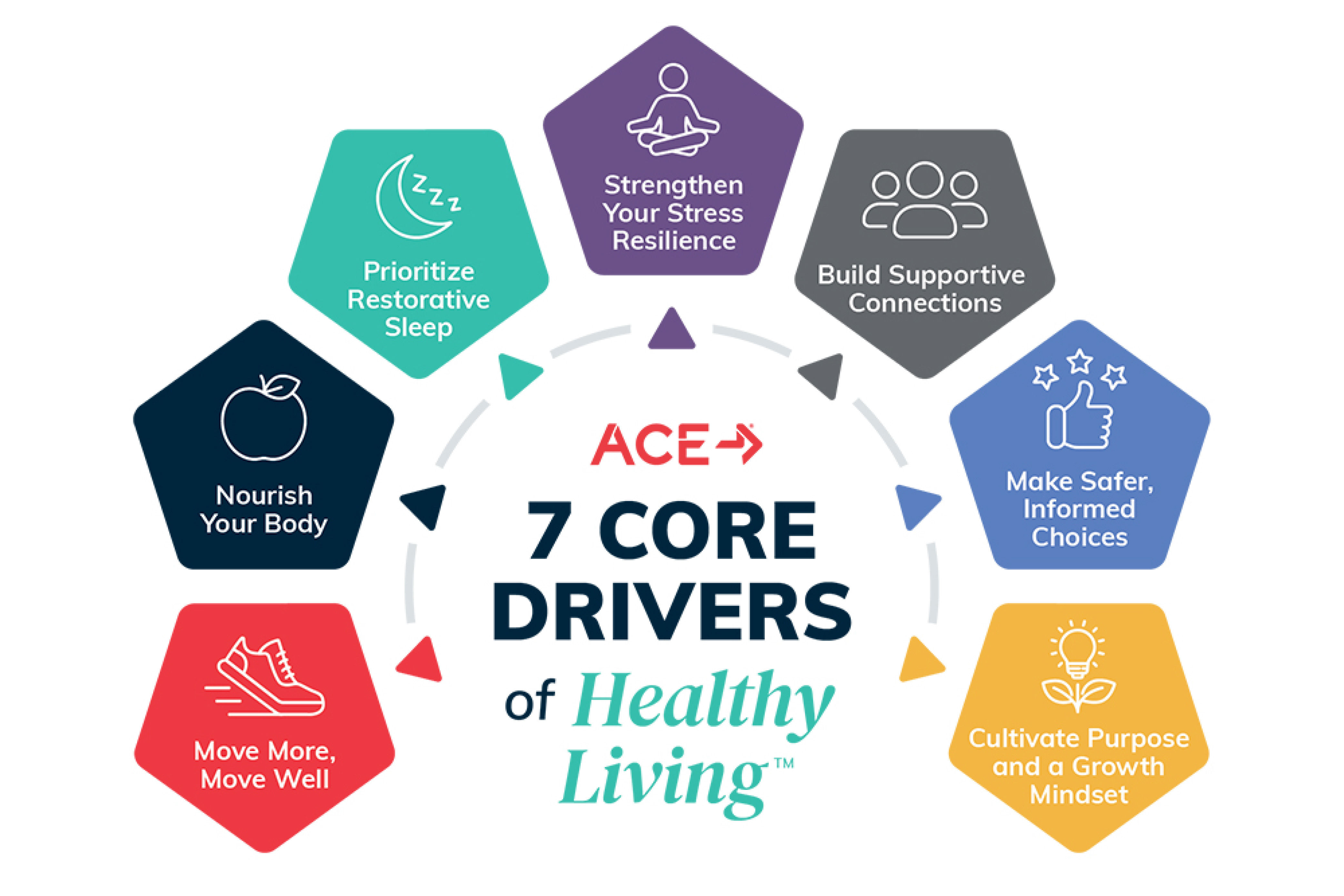
ACE 7 Core Drivers of Healthy Living
1. Move More, Move Well – Engage in regular physical activity and exercise that supports strength, mobility and long-term vitality.
2. Nourish Your Body – Choose balanced, healthy nutrition patterns that fuel daily living and overall well-being.
3. Prioritize Restorative Sleep – Get quality sleep that promotes recovery, cognitive function, emotional balance and immune health.
4. Strengthen Your Stress Resilience – Use effective coping skills and strategies that support emotional well-being and adaptability.
5. Build Supportive Connections – Cultivate positive relationships and a sense of community that enhance motivation and health.
6. Make Safer, Informed Choices – Make decisions that reduce health risks and promote long-term well-being.
7. Cultivate Purpose and a Growth Mindset – Clarify personal purpose and values, and foster a mindset that supports consistency, resilience and lasting behavior change.
The ACE Perspective on Supportive Connections
ACE defines supportive connections as the cultivation of positive relationships, community and belonging that enhance motivation and health. This driver acknowledges that behavior change does not occur in isolation. Social environments that include families, peer groups, workplaces and communities shape how individuals move, cope with stress, make decisions and sustain healthy habits over time.
In many ways, the people we surround ourselves with shape our lifestyles. “Research shows that social support plays a significant role in shaping physical activity behaviors, and physical activity can spread within social networks,” explains Dr. Bantham. “A systematic review of 14 studies examining factors influencing physical activity participation among school-aged children found that peer influence was the most frequently cited interpersonal factor influencing physical activity. Friends, coaches and exercise professionals all play a critical role in creating safe, supportive and structured environments that encourage athletes and participants of all ages to be physically active.”
In addition, research consistently demonstrates that social connection is a critical determinant of both mental and physical health. Strong relationships are associated with a lower risk of depression, reduced stress, improved immune function and lower mortality risk. Conversely, loneliness and social isolation are linked to poorer health outcomes and reduced quality of life.
From an ACE perspective, supportive connections are not limited to emotional closeness alone. They include encouragement, accountability, shared experiences and a sense of belonging, all of which help individuals feel supported as they pursue healthier lifestyles.
Physical Activity as a Catalyst for Supportive Connections
Physical activity creates natural opportunities for social interaction and shared experience. Unlike many health behaviors that occur privately, such as preparing healthy food at home or getting a good night’s sleep, movement often happens in communal spaces such as gyms, parks, recreation centers, sports fields and neighborhoods. These environments allow individuals to connect around a shared goal of movement, enjoyment or personal growth.
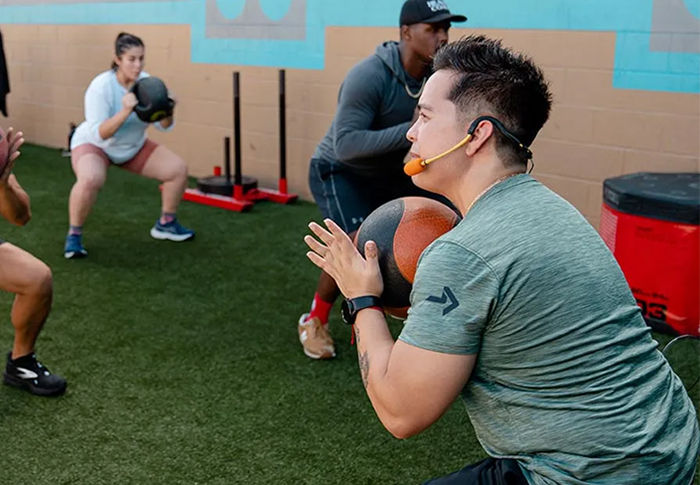
Participating in group-based physical activity increases social interaction and fosters meaningful connections. Group exercise programs and team sports provide regular opportunities for people to see one another, share challenges, celebrate progress and offer encouragement. These interactions contribute to improved mood and a sense of belonging and greater social support.
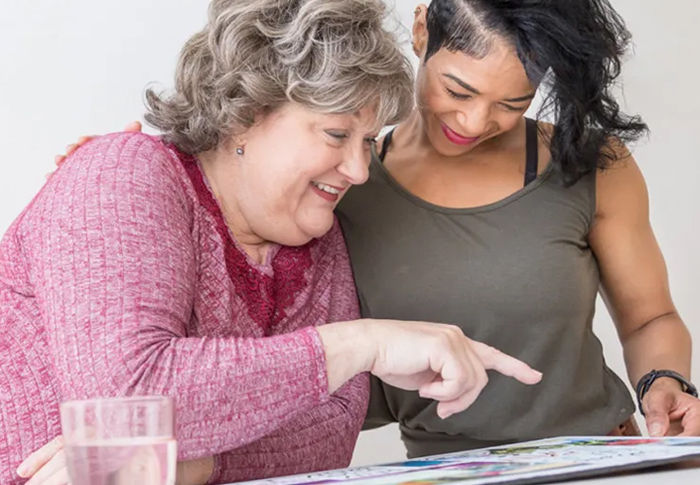
A study examining group-based physical activity among older adults found that individuals who shared experiences, knowledge and encouragement within a group increased their overall physical-activity levels and maintained those improvements long term. This highlights how supportive connections not only emerge through movement but also reinforce continued engagement in physical activity.
Shared Experience, Belonging and Motivation
One of the most powerful ways physical activity enhances supportive connections is through shared experience. Exercising together creates a sense of “we,” where individuals feel part of something larger than themselves. Shared effort and accomplishment foster trust and connection among participants.
Community-based events such as walking groups or running programs demonstrate how shared movement can reduce loneliness and build belonging. Research on participants who attend community-based 5K runs in public parks found that social rewards—including encouragement, friendship and support—played a significant role in participants’ enjoyment and continued participation.
Research shows that feeling supported and connected to others plays an important role in how physical activity improves mental health, which in turn boosts motivation. Feeling like you belong and having meaningful social connections matter more than just being around other people while exercising. In other words, the mental health benefits of physical activity are strongest when people feel supported, valued and included.
Because of this, health and exercise professionals may help individuals choose activities and exercise settings where they feel encouraged and supported, rather than simply recommending group exercise for everyone. To learn more about creating a supportive motivational climate in group exercise settings, check out the ACE RRAMP Approach™.
From an ACE perspective, these social rewards enhance motivation and help individuals sustain healthy behaviors. Feeling connected increases confidence, enjoyment and willingness to show up consistently, even when motivation fluctuates.
The ACE Perspective on Healthy Living
ACE views healthy living as the result of seven core drivers—how we move, eat, sleep, manage stress, connect with others, make informed choices, and cultivate purpose and a growth mindset, all of which interact dynamically to support long-term behavior change.
Community-Level Support and the ACE Framework
Supportive connections extend beyond individual relationships to include community-level structures. ACE recognizes that environments matter. Communities that provide safe, inclusive and accessible opportunities for physical activity create conditions that support both movement and connection.
Public health research supports this view. Social support interventions such as walking groups, buddy systems and community exercise programs have been shown to increase physical activity and strengthen social networks.
Team sports and group exercise programs also support the development of interpersonal skills such as communication, cooperation and accountability. A systematic review examining sports participation found improvements in social outcomes, including sense of belonging and social identity, alongside mental health benefits.
These findings reinforce the ACE perspective that supportive connections are not merely a social benefit, but a core component of holistic health.
Collectively, these interventions align closely with the ACE 7 Core Drivers of Healthy Living in simultaneously supporting movement, connection, stress resilience and long-term behavior change.
Health Outcomes Associated With Supportive Connections
Strong social connections help protect people’s health and can even help them live longer. A report from the World Health Organization on social connection reveals the following findings:
- People with strong relationships are more likely to survive over time compared to those who feel isolated. Older adults with larger social networks have a lower risk of death.
- Social support and connection lower inflammation in the body, which is linked to many diseases. People with strong relationships tend to have better physical health, better mental health and a higher quality of life.
- Social support can reduce the risk of heart disease and stroke and help people manage chronic illnesses more successfully. It also protects against depression and suicidal thoughts.
- Being socially connected can improve brain health and lower the risk of memory loss and dementia. While some research shows mixed results, strong social engagement and regular contact with others are generally linked to better cognitive health.
- Overall, communities with higher levels of trust and connection tend to have better health outcomes and lower death rates. In short, strong relationships are one of the most important factors for long-term health and well-being.
Clearly, strong social connections are not just nice to have—they are essential for long-term health. Supportive relationships help people live longer, lower their risk of disease, protect their mental health and keep their brains healthier as they age. Whether through family, friends or community involvement, feeling connected and supported plays a powerful role in overall well-being. Building and maintaining meaningful relationships is one of the most important steps individuals can take to support a healthy and fulfilling life.
Practical Applications for Health Coaches and Exercise Professionals
As a health and exercise professional, you play a critical role in helping your clients build supportive connections as part of a healthy lifestyle. Here are some practical strategies to help your clients build stronger connections:
- Encourage group-based movement, such as classes, clubs or team activities, and facilitate group health coaching sessions
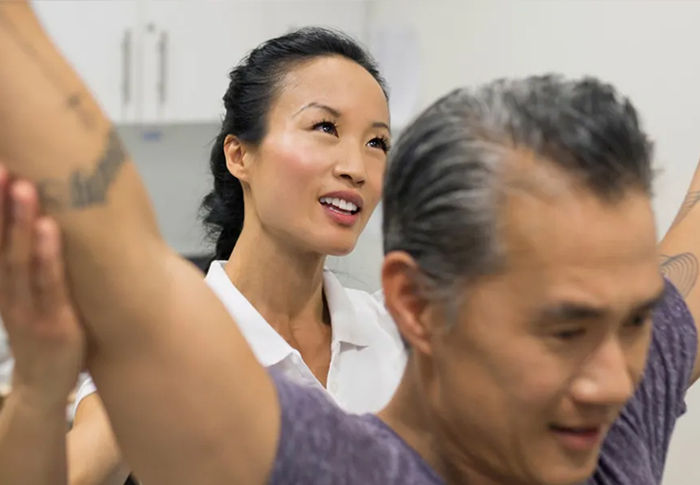
- Facilitate social interaction by allowing time for conversation and connection before or after sessions
- Create inclusive environments that welcome individuals of all abilities, backgrounds and experience levels
- Highlight the social benefits, not just physical outcomes, when discussing exercise with clients
- Connect clients to community resources, such as local walking groups or recreation programs
- By intentionally supporting connection, you can enhance your clients’ motivation, adherence and overall well-being.
Dr. Bantham, who is also a collaborator in ACE’s Community Physical Activity Leader (CPAL) program, reminds us that movement doesn’t have to be all about tough workouts and competitive challenges: “Exercise professionals can lead with fun! When I designed the Move to Live More small group training for individuals new to physical activity, I prioritized enjoyment, community and small wins. Participants work hard, but they also play—engaging in games and partner exercises that build connection alongside fitness. High-fives, laughter and camaraderie are central to the experience; when participants have fun, they’re far more likely to keep coming back.”
Progress, Not Perfection: The ACE Philosophy
A central principle of the ACE 7 Core Drivers is that healthy living is about progress, not perfection. Supportive connections help reinforce this message. When individuals feel supported, they are more likely to persist through setbacks, adapt routines and maintain engagement over time. Social support reduces all-or-nothing thinking and normalizes challenges, creating a compassionate environment for growth and change.
| One more thing: If you’re an ACE Certified Professional, we’ve created a helpful worksheet for you to use with your clients. This activity is collaborative between the exercise professional/coach and client. The purpose of this activity is to pick a starting point from a menu of options based on how important each activity is to the client, as well as the client’s goals, interests, values and level of confidence. Working together on this should feel like a meaningful conversation between you and your client. |
Final Thoughts: Supportive Connections are a Foundation for Healthy Living
Building supportive connections is not just a complementary aspect of healthy living—it is foundational. While physical activity improves health on its own, its impact is amplified when it brings people together in meaningful ways.
When people move together, something powerful happens. Exercise becomes more than a task—it becomes a shared experience that fosters trust, encouragement and a sense of belonging. These connections fuel motivation, reinforce consistency and make healthy behaviors more sustainable over time.
Supportive relationships also strengthen resilience. They help individuals navigate setbacks, stay engaged during challenging periods and maintain perspective when progress feels slow. In this way, connection is not simply a benefit of healthy living—it is a driver of it.
The ACE 7 Core Drivers of Healthy Living remind us that health is not built in isolation. It is shaped through the dynamic interaction of movement, mindset, recovery and relationships. Among these, supportive connections serve as a unifying force that links behaviors together and creates the conditions for lasting change.
For health and exercise professionals, the implication is clear that fostering connection is not optional—it’s essential. By intentionally creating environments where people feel supported, included and connected, you can help your clients not only move more, but live better and with greater purpose.



More Articles
- Certified™: May 2026
Using HRV to Better Understand Recovery, Resilience and Training Load
Contributor
- Certified™: May 2026
Mobility vs. Flexibility: Why the Difference Matters for Movement and Performance
Health and Fitness Expert
- Certified™: May 2026