In this series, ACE experts answer your health and exercise questions. From high-intensity interval training to youth fitness, you’ll find detailed answers to many of the questions that may come up in your work with clients. If you have questions you’d like to ask our experts, please email us at Christine.Ekeroth@acefitness.org.

The Expert: Dominique Adair, MS, RD, is the clinical director at Knownwell Health, a weight-inclusive, patient-centered healthcare organization. With over 30 years of experience, she supports clinicians in treating patients through in-person and digital counseling. An internationally recognized expert in nutrition, metabolism and fitness, Adair is a sought-after speaker and media resource, appearing on CNN and Discovery TV's "Ultimate Goals." An avid hiker and cyclist, she splits her time between New York City and the Caribbean.
Q: My client just asked me if they should try fibermaxxing, but I’m not sure what to tell them. Are they supposed to take fiber supplements or can they get enough fiber from food?
A: Fibermaxxing is a social media–driven nutrition trend that encourages people to intentionally load up on high-fiber foods—often well beyond standard recommendations—in hopes of improving gut health, digestion, satiety and overall wellness. In real life, it usually looks like trying to pack as many fiber-rich plant foods as possible into a single day: fruits and vegetables, beans and lentils, whole grains, nuts and seeds. Unlike many diet fads, it’s often framed as an “add more” approach rather than a restrictive one, which can make it feel both simple and virtuous.
It’s also not hard to understand why increasing fiber intake has become such an area of focus for many people. Fiber supports regular bowel movements, helps nourish beneficial gut microbes and can help blunt blood sugar spikes after meals. It also contributes to fullness, which can support weight management, and certain types of fiber can help lower low-density lipoprotein (LDL) cholesterol. Large reviews have consistently linked higher fiber intake with meaningful reductions in risk for cardiovascular disease, type 2 diabetes and certain cancers.
Here’s the nuance your clients may be missing when they get their nutrition advice from influencers: More fiber is not automatically better, and the rate at which it is increased in the diet is an important consideration. Most adults are not even close to meeting their fiber needs in the first place. Recommendations are commonly expressed as about 14 grams per 1,000 calories, which works out to roughly 25 grams per day for women and 38 grams per day for men, depending on age and energy needs. When someone who has been living on refined grains and highly processed convenience foods suddenly decides to “fibermaxx,” their gut may protest, not because fiber is “bad,” but because the digestive system and microbiome need time to adapt.
So, is there such a thing as too much fiber? Practically speaking, yes. There is no official tolerable upper intake level for dietary fiber, but that doesn’t mean unlimited fiber is consequence-free—especially if intake jumps sharply or if a person is relying heavily on fiber-fortified products and supplements. For most people, the first sign they’ve overdone it is discomfort caused by bloating, excess gas, abdominal pressure or cramping. Some people swing toward constipation (particularly if they increase fiber without increasing fluids), while others notice looser stools. Feeling overly full, sluggish during training sessions or simply “not right” in the gastrointestinal (GI) tract after increasing fiber intake is often the most useful clue that a person has gone too far, too fast. The fix is usually not to ditch plants; it’s to back off slightly, build up more gradually and make sure hydration keeps pace with fiber. If a client has ongoing GI symptoms, a history of gut disease or symptoms that don’t resolve with a more moderate approach, that’s a smart moment to suggest they talk to a registered dietitian nutritionist (RDN) or their healthcare provider.
Instead of “fibermaxxing,” here’s a better message to share with your clients, one that RDNs and credentialed experts have been repeating for decades: Aim for a plant-dominant eating pattern that prioritizes variety, including a wide range of colors. When you encourage clients to “eat the rainbow,” you’re steering them toward a broader spectrum of vitamins, minerals and phytochemicals that support overall health. Reds like tomatoes and strawberries include compounds such as lycopene and anthocyanins that are associated with cardiovascular support, while oranges and yellows such as carrots and squash deliver beta-carotene, a precursor to vitamin A that supports vision and immune function. Greens like spinach and broccoli contribute folate, vitamin K and antioxidant compounds that support bone and overall metabolic health, and blues and purples like blueberries and eggplant add anthocyanins that are widely studied for anti-inflammatory effects. Even whites and browns—think garlic and mushrooms—can add unique bioactive compounds such as organosulfur (including those derived from allicin) and polyphenols that support cardiometabolic health.
The bonus, of course, is that this approach naturally delivers both types of fiber your body needs. Soluble fiber helps slow digestion and can support healthier blood sugar and LDL cholesterol levels, while insoluble fiber adds bulk and helps keep bowel movements regular. That’s why the most useful takeaway for clients isn’t to “win” at fiber for a day—it’s to build a sustainable pattern of eating that consistently features a wide variety of minimally processed plant foods. That’s not a fad. It’s an evidence-based strategy associated with lower chronic disease risk, and it often has a simple side benefit: When people genuinely fill up on plants, they tend to crowd out ultra-processed foods that don’t do them any favors.
Q: Every time I turn around, someone is telling me to eat more protein, and food companies are adding protein to everything from water to cereal. Is all this protein really necessary for good health and building muscle?
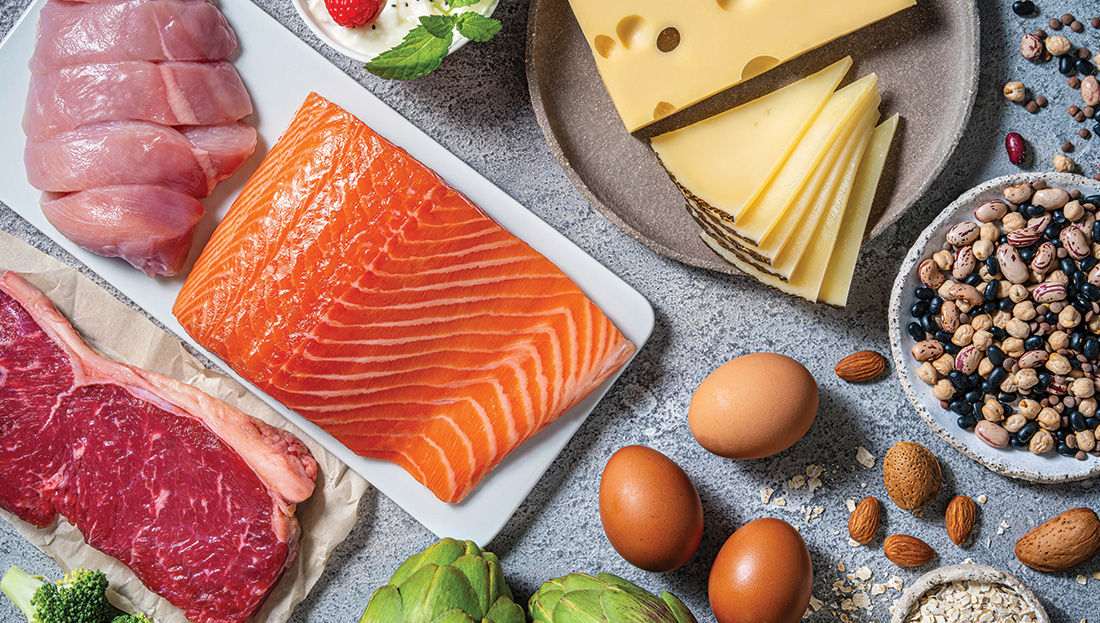
A: Protein has become the macro of the moment because it sits at the intersection of what people want (fat loss, muscle gain, better aging) and what sells (supplements, snack foods and “protein-packed” everything). If you work with clients, you’re hearing the same refrain in consults and on the training floor: “Am I eating enough protein?” That question is worth taking seriously because protein is essential for tissue repair, immune function and preserving lean mass, but the internet’s loudest message (“more is always better”) leaves out the part that matters most: context.
A few forces are driving the craze. Fitness culture and social media have made protein synonymous with results, and food marketing has followed suit, slapping “high-protein” on everything from chips to cereal. At the same time, weight-loss approaches have leaned on higher-protein eating because it can support satiety and help preserve muscle during a calorie deficit, which is a legitimate goal when fat loss is the priority. Add in the very real conversation about aging and headlines about preventing frailty and you’ve got a perfect storm where protein starts to look like a magic lever for longevity. Now layer on the surge in GLP-1 receptor agonists and other obesity medications, along with the continued use of meal replacements and bariatric surgery, where rapid reductions in energy intake are common and the risk of lean mass loss is even more pronounced. When appetite drops and weight comes off quickly, protecting muscle becomes even more important, and protein often moves to the top of the nutrition checklist.
So, how much do people actually need? The baseline reference point in the U.S. is the Recommended Dietary Allowance, set at 0.8 grams per kilogram of body weight per day for healthy adults. This is roughly the “meets basic needs” number, not a universal performance target. Think of it as the floor for most healthy, nonpregnant adults, not the ceiling.
From there, needs become more individualized, which is where you can help clients get out of the all-or-nothing thinking. For active adults, especially those doing consistent strength training, current sports-nutrition guidance is generally 1.2 to 2.0 grams per kilogram per day to support training adaptation, repair and remodeling. But “more” still has a point of diminishing returns. Research in healthy adults shows that once total daily protein intake is up around 1.6 grams per kilogram, adding more protein (via supplements) doesn’t keep increasing resistance-training gains in fat-free mass. At the same time, it’s important to recognize that protein still contributes calories; once protein needs for tissue maintenance and metabolic function are met, additional intake provides no added benefit and, like any excess energy, is converted to fat and stored, with surplus nitrogen ultimately excreted. And practically speaking, extremely high intakes can crowd out other nutrient-rich foods, especially the fruits, vegetables and whole grains most people could stand to eat more of, which is a tradeoff your clients probably don’t want to make.
Older adults are another group where “just hit the RDA” can be an under-shoot. Protein metabolism changes with age, and the PROT-AGE study group recommends that adults over 65 aim for at least 1.0 to 1.2 grams per kilogram of body weight per day to help maintain and regain lean mass and function, with higher targets often appropriate when older adults are exercising or managing illness. If you’re coaching older clients, this is where protein becomes more about preserving independence, supporting recovery and maintaining day-to-day functionality.
There are also situations where the “right” protein target moves up or down based on health status. Anyone with compromised kidney function should not treat high-protein eating as a casual experiment; protein needs in chronic kidney disease can differ by stage and this is a clear lane for medical guidance and referral to an RDN. On the other hand, people who have had bariatric surgery are often advised to prioritize protein because volume is limited and deficiency is a real risk. Many programs recommend roughly 60 to 80 grams per day (about 1.0 to 1.5 grams per kilogram of ideal body weight) after surgery, with adjustments based on procedure type and individual tolerance. And for clients using GLP-1 receptor agonists or other new-generation obesity medications, the conversation isn’t just “eat less.” These therapies can reduce fat-free mass along with fat mass, which is why clinicians often emphasize a protein-rich diet and regular resistance training as part of whole patient care.
Here's the takeaway you can give clients: Protein is essential, but so is balance. Too little protein can compromise recovery, strength and function; too much can be unnecessary for most people and, in specific health situations, inappropriate. Start with evidence-based ranges based on the specific needs of your clients. Encourage them to choose protein from minimally processed, nutrient-dense sources—whether that’s lean animal proteins, beans and lentils, tofu and tempeh, dairy, seafood or a mix—and remind them that the best “protein plan” is the one that still leaves room for fiber-rich plants. When in doubt, and especially when health conditions or medications are a consideration, partnering with an RDN is your best option.
Q: Alcohol has always been framed as “OK in moderation,” but now I’m seeing more warnings about cancer and overall health risks. Is alcohol truly toxic, and what does that mean for people who drink occasionally?
A: If you’re hearing more clients ask whether alcohol is “toxic,” you’re not imagining a cultural shift. The science has been pointing in that direction for a long time, and public health messaging is finally getting more direct. The 2020–2025 Dietary Guidelines for Americans are clear on two points that often get lost in the wellness noise: If you don’t drink, there’s no health-based reason to start, and if you do drink, drinking less is better than drinking more. For adults who choose to drink, the guidelines define moderation as up to two drinks in a day for men and up to one drink in a day for women, on days alcohol is consumed.
What we’ve known for decades is that alcohol isn’t just “empty calories” or a harmless way to unwind. Ethanol in alcoholic beverages, and acetaldehyde, a compound your body makes when it breaks ethanol down, have been classified as carcinogenic to humans (Group 1). This is the same category used for exposures like tobacco smoke and asbestos. That classification isn’t based on a single study; rather, it reflects a large body of evidence, including well-established biological mechanisms. One of the biggest concerns is acetaldehyde itself. This toxic byproduct of alcohol metabolism can damage DNA and proteins, creating the kind of cellular injury that increases cancer risk over time.
The cancer links are also not speculative. The most recent U.S. Surgeon General’s advisory on alcohol and cancer risk summarizes strong evidence for a causal relationship between alcohol consumption and at least seven types of cancer, including breast (in women), colorectal, liver, mouth, throat, esophagus and larynx. This is an important framing shift: “Type of alcohol” isn’t the protective factor people want it to be. Beer, wine and spirits can all contribute—it’s the ethanol that matters.
This view is also supported by the science reviewed by the World Health Organization (WHO) and its cancer research arm. Based on decades of research in humans and laboratory studies, alcohol itself and acetaldehyde are classified as known causes of cancer. Importantly, this research has not identified a level of alcohol intake at which cancer risk disappears; meaning there is no completely risk-free level of alcohol intake. Yes, risk increases as intake goes up, but evidence suggests that even low levels of drinking can contribute to cancer risk over time.
So, what’s new in 2025 isn’t that alcohol is suddenly dangerous. It’s that the messaging is getting sharper, and the “moderate equals safe” assumption is being more rigorously challenged. In January 2025, the U.S. Surgeon General issued an advisory calling alcohol the third-leading preventable cause of cancer in the United States, after tobacco and obesity, and urging increased awareness of alcohol’s cancer risks. The advisory also calls for updating warning labels to better reflect cancer risk and explicitly raises the question of whether recommended drinking limits should be reconsidered given that cancer risk can occur at or below current guideline levels.
That last point is important. “Moderate” is a population guideline, not a personal safety guarantee. The Surgeon General’s advisory notes that risk increases as alcohol intake increases, and for certain cancers (including breast, mouth and throat cancers), evidence suggests risk may start to rise around one or fewer drinks per day. It also highlights that some alcohol-related cancer deaths occur even among people drinking within the current guideline limits. And if you’re looking for a concrete example of what “small amounts” can mean, the advisory summarizes data showing the odds of mouth cancer increased by about 40% at an intake around 12 grams of alcohol per day (which is just under one U.S. standard drink), sustained over time.
It also helps to define what “a drink” actually is, because most pours are not standard. The National Institute on Alcohol Abuse and Alcoholism defines a U.S. standard drink as 14 grams (0.6 ounces) of pure alcohol, which is roughly 12 ounces of regular beer, 5 ounces of wine or 1.5 ounces of 80-proof spirits. When you put that into real-world context (oversized wine glasses, heavy-handed cocktails, high "alcohol by volume" beers), many people who believe they’re drinking “one or two” are often consuming more than they think.
From a coaching standpoint, the clearest bottom line is still true: The less you drink, the lower your risk. If a client chooses to drink, “moderate” generally means lower risk than heavy intake, but it does not mean risk-free, especially when we’re talking about cancer. Your job isn’t to moralize alcohol; it’s to help clients make an informed decision that matches their health history, their goals and their willingness to accept risk.
Alcohol can also quietly interfere with the goals your clients care about most: weight management and performance. From an energy standpoint, alcohol provides about 7 calories per gram—nearly as calorie-dense as fat—but without the nutrients that support satiety and recovery or training adaptation. For many people, drinking also loosens dietary restraint and increases overall energy intake, independent of the alcohol calories consumed, which helps explain why alcohol can make adherence feel harder even when someone’s “not drinking that much.” Alcohol also impacts sleep; while it may make it easier to fall asleep at first, it tends to disrupt sleep quality and normal sleep architecture, which can amplify cravings and lower motivation the next day.
On the performance side, the timing matters as much as the total. Alcohol can impair motor skills and hydration status and can interfere with recovery processes that support consistent training. Research in humans has also shown that alcohol consumed after exercise can reduce post-exercise muscle protein synthesis, which means it can blunt the repair-and-adaptation process clients are training for. And because alcohol suppresses vasopressin (an antidiuretic hormone), it increases urination and fluid loss, which is the opposite of what most bodies need after sweating through a hard session.
If your client’s goals include fat loss, improved sleep, muscle gain or peak training, reducing alcohol can make a noticeable difference, sometimes quickly. For many people, cutting back is straightforward. If it isn’t, or if you suspect overuse, encourage them to talk with a healthcare provider or qualified counselor. That’s not a failure of discipline; it’s a health decision, and support is available.








 by
by