







Strengthening Stress Resilience: How Adaptability Supports Healthy Living
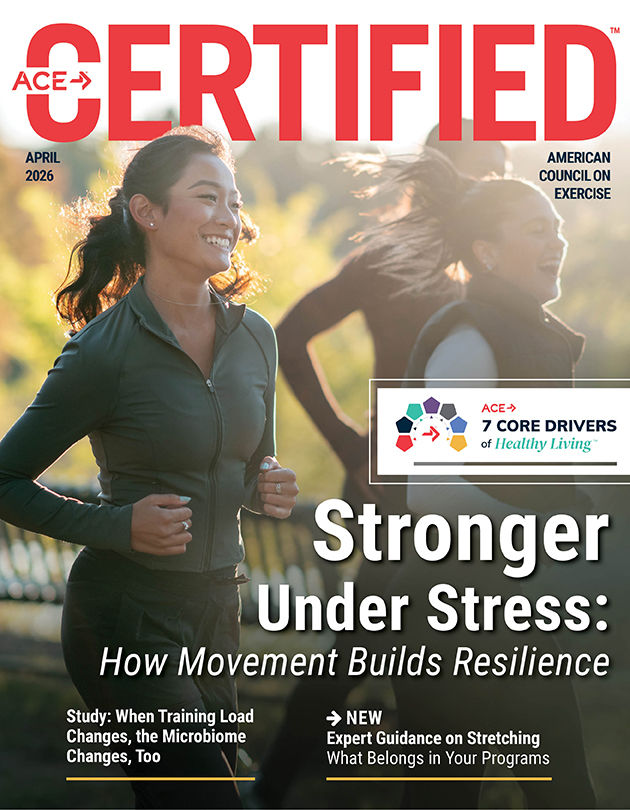
Certified™: April 2026

Stress is an unavoidable part of life, but individuals vary widely in how they respond to it. Some experience prolonged emotional distress, fatigue and disengagement, while others adapt, recover and continue to function effectively. This capacity to respond adaptively to stress is known as stress resilience and includes the ability to regulate emotional, cognitive and physiological responses to stressors and to recover efficiently after challenges.
Within the ACE 7 Core Drivers of Healthy LivingTM, strengthening stress resilience is a central driver that supports emotional well-being, adaptability and long-term behavior change. Stress resilience does not exist in isolation; it is shaped by how people move, sleep, eat, connect with others, make informed choices, and cultivate purpose and mindset. Among these drivers, physical activity and exercise play a uniquely powerful role. Regular movement strengthens resilience by improving stress physiology, emotional regulation and self-efficacy, while stress resilience, in turn, supports consistent participation in physical activity and exercise.
Understanding this bidirectional relationship allows health coaches and exercise professionals to design interventions that build both physical capacity and psychological adaptability.
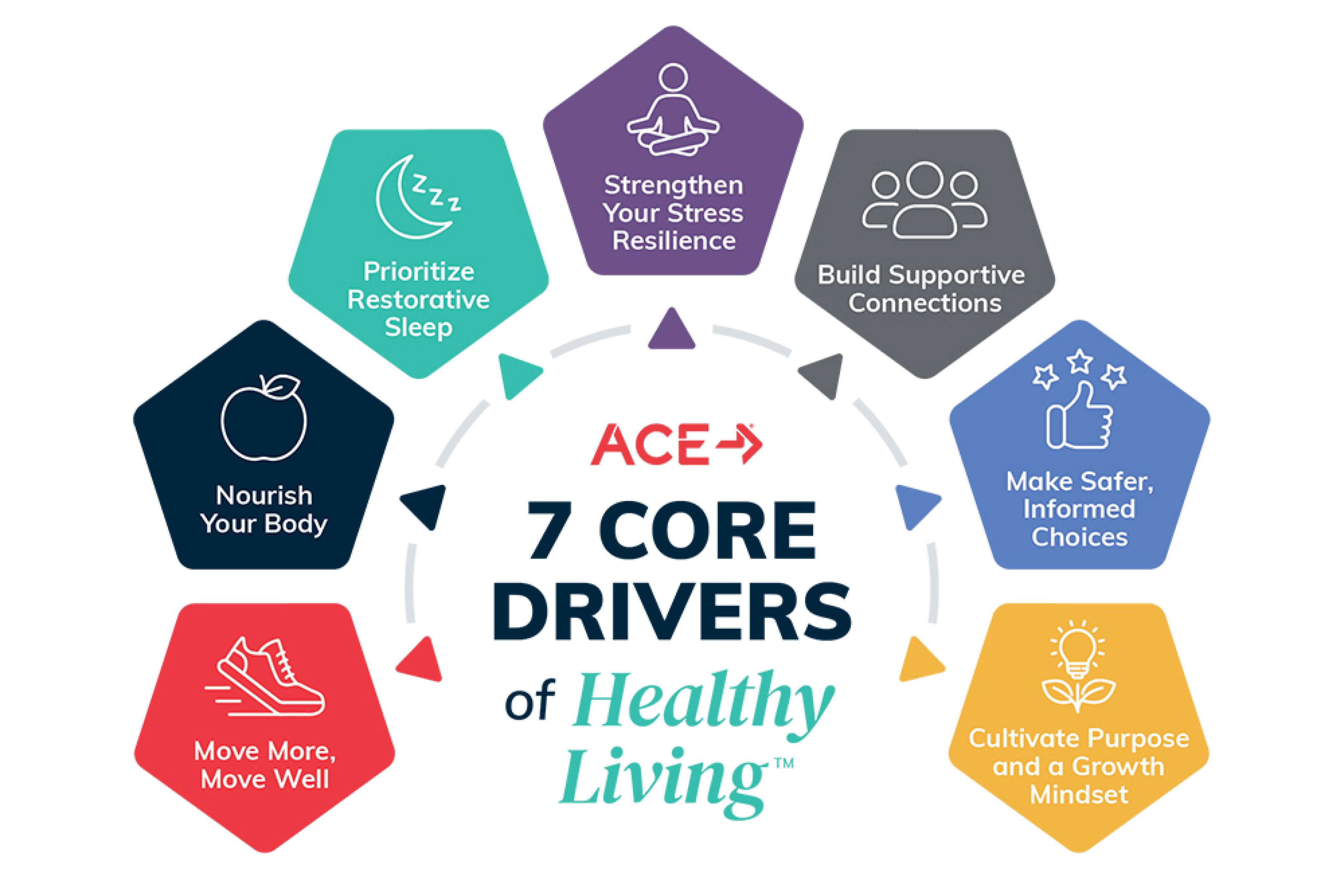
ACE 7 Core Drivers of Healthy Living
1. Move More, Move Well – Engage in regular physical activity and exercise that supports strength, mobility and long-term vitality.
2. Nourish Your Body – Choose balanced, healthy nutrition patterns that fuel daily living and overall well-being.
3. Prioritize Restorative Sleep – Get quality sleep that promotes recovery, cognitive function, emotional balance and immune health.
4. Strengthen Your Stress Resilience – Use effective coping skills and strategies that support emotional well-being and adaptability.
5. Build Supportive Connections – Cultivate positive relationships and a sense of community that enhance motivation and health.
6. Make Safer, Informed Choices – Make decisions that reduce health risks and promote long-term well-being.
7. Cultivate Purpose and a Growth Mindset – Clarify personal purpose and values, and foster a mindset that supports consistency, resilience and lasting behavior change.
What Is Stress Resilience?
Resilience refers to the ability to adapt positively when faced with stress, challenges or adversity. It does not mean avoiding disruption or being unaffected by difficult experiences. Instead, resilience involves being able to bend under pressure, recover after setbacks and return to healthy functioning over time. In this sense, resilience is both a process (how a person responds and adapts) and an outcome (the eventual return to stability or well-being).
Resilience is not a fixed personality trait that someone either has or does not have. It develops through a combination of personal characteristics, coping skills and supportive factors from one’s environment, such as family, community and culture. A person may show resilience in one area of life while struggling in another, and resilience can vary depending on the situation or context. In some cases, individuals may even experience personal growth following adversity, emerging stronger or with new skills rather than simply returning to their previous state.
Resilience involves several interrelated components:
- Emotional regulation, or the ability to manage emotional responses
- Cognitive flexibility, including reframing challenges and adjusting expectations
- Behavioral coping skills, such as problem-solving and action planning
- Physiological regulation, including efficient activation and recovery of stress-response systems
These components are malleable and can be strengthened through intentional lifestyle behaviors, including regular physical activity and structured exercise.
The ACE Perspective on Healthy Living
ACE views healthy living as the result of seven core drivers—how we move, eat, sleep, manage stress, connect with others, make informed choices, and cultivate purpose and a growth mindset, all of which interact dynamically to support long-term behavior change.
Why Stress Resilience Matters for Health
Chronic stress that exceeds an individual’s coping capacity contributes to a wide range of negative health outcomes, including cardiovascular disease, metabolic dysfunction, immune suppression, sleep disturbance, anxiety and depression. In contrast, resilient individuals demonstrate more efficient stress responses and faster physiological recovery, reducing cumulative wear and tear on the body.
From a behavioral standpoint, stress resilience supports decision-making, self-regulation and persistence. Individuals with higher resilience are better able to maintain healthy behaviors such as physical activity even during periods of increased stress or life disruption.
How Physical Activity Strengthens Stress Resilience
A growing body of research demonstrates that regular physical activity is one of the most effective non-pharmacological strategies for enhancing stress resilience. Physical activity is a form of controlled, manageable stress that trains the body and brain to respond more efficiently to future stressors.
Neurobiological Adaptations
Regular exercise induces positive changes in brain regions involved in stress regulation, including the hippocampus, prefrontal cortex and amygdala. These changes are influenced in part by increased expression of brain-derived neurotrophic factor (BDNF), which supports neuronal growth, connectivity and emotional regulation.
Exercise also helps improve resilience by affecting how stress hormones are released and used in the body. Individuals who engage in regular physical activity exhibit more adaptive cortisol responses to psychosocial stress, which is characterized by appropriate activation of the stress response followed by efficient recovery. In general, people who are physically active tend to have healthier stress responses, meaning their bodies react when stress occurs but return to baseline more quickly afterward.
Autonomic Nervous System Regulation
Physical activity enhances parasympathetic nervous system activity and improves autonomic balance. This shift supports quicker transitions from heightened arousal to recovery states, making it easier to return to emotional equilibrium after stress. In practical terms, regular movement strengthens the body’s ability to relax after stressful situations rather than staying tense or overwhelmed.
Psychological and Emotional Benefits of Exercise
In addition to physiological adaptations, physical activity strengthens stress resilience through psychological pathways. Regular activity that includes aerobic exercise and mindfulness training (for example, yoga and tai chi) is associated with reductions in symptoms of anxiety and depression and improvements in perceived stress. These effects are observed across age groups and fitness levels and are evident even with moderate-intensity activity.
Exercise, particularly resistance training, also enhances self-efficacy—the belief in one’s ability to manage challenges. Successfully engaging in and sustaining physical activity reinforces a sense of competence and mastery, which generalizes to other life stressors.
How Stress Resilience Supports Physical Activity and Exercise
The relationship between stress resilience and physical activity is bidirectional. While exercise strengthens resilience, higher resilience also supports sustained engagement in physical activity.
Individuals with greater stress resilience demonstrate stronger self-regulation, reduced emotional reactivity and greater adaptability in the face of setbacks. These qualities support exercise adherence during periods of high stress, fatigue or competing demands. Rather than abandoning physical activity when routines are disrupted, resilient individuals are more likely to adapt their plans by modifying exercise intensity, duration or modality while maintaining consistency.
Stress, Motivation and Behavior Change
Stress undermines motivation and behavior change by impairing executive function and increasing perceived effort. People who are just beginning a new exercise program are particularly vulnerable to the effects of stress on motivation. Life changes involving employment status, residence, relationships, family structure and chronic health conditions, as well as minor daily hassles, can weaken one’s attempts at healthy behavior change. High stress loads make physical activity feel more difficult and less rewarding, increasing the likelihood of avoidance.
By contrast, stress resilience supports persistence by buffering emotional fatigue and supporting adaptive coping strategies. This psychological stability helps individuals maintain healthy routines, including exercise, even when outcomes are uncertain or progress feels slow.
Types of Physical Activity That Support Stress Resilience
While all types of movement can contribute to resilience, research suggests that certain forms of activity may be particularly beneficial:
- Aerobic exercise, such as walking, cycling and swimming, is strongly associated with reductions in perceived stress and improvements in mood.
- Resistance training supports resilience by enhancing self-efficacy, body confidence and psychological strength.
- Mind–body exercise, including yoga and tai chi, integrates movement with breath control and attention, supporting emotional regulation and physiological calming.
Importantly, consistency appears to be more influential than intensity. Regular, sustainable movement produces greater resilience benefits than sporadic high-intensity training.
Practical Strategies to Build Stress Resilience Through Movement
As a health coach or exercise professional, you can support your clients' stress resilience by integrating the following strategies:
- Encourage manageable movement goals that build confidence and reduce overwhelm.
- Frame exercise as a practical way to cope with stress, not solely for fitness.
- Promote adaptability, allowing clients to adjust workouts during stressful periods.
- Highlight emotional benefits, helping clients notice improved mood and stress tolerance.
- Support social connection, as group-based activity enhances both resilience and adherence.
Stress Resilience as Part of an Integrated Lifestyle
Stress resilience is most robust when supported by complementary lifestyle behaviors, including restorative sleep, balanced nutrition, supportive relationships and purpose-driven goals. Physical activity interacts with these behaviors to create reinforcing cycles of adaptation and recovery.
Within the ACE 7 Core Drivers of Healthy Living framework, strengthening stress resilience is not about eliminating stress. Rather, it’s about expanding an individual’s capacity to respond effectively across changing life circumstances.
Progress, Not Perfection
A core principle of the ACE 7 Core Drivers of Healthy Living is that sustainable health is built through progress rather than perfection. Stress resilience develops over time through repeated experiences of effective coping, not through the absence of challenge.
When setbacks occur, resilient individuals view them as opportunities for learning rather than as failures. This mindset supports long-term engagement in physical activity and other health-supporting behaviors.
| One more thing: If you’re an ACE Certified Professional, we’ve created a helpful worksheet for you to use with your clients. This activity is collaborative between the exercise rofessional/coach and client. The purpose of this activity is to pick a starting point from a menu of options based on how important each activity is to the client, as well as the client’s goals, interests, values and level of confidence. Working together on this should feel like a meaningful conversation between you and your client. |
Final Thoughts: Building Resilience Through Movement
Stress resilience is a foundational component of emotional well-being, adaptability and sustained healthy living. Regular physical activity and exercise strengthen resilience by improving physiological stress regulation, emotional balance and self-efficacy. In turn, stress resilience supports consistent, flexible engagement in physical activity, even under challenging conditions.
By integrating movement with effective coping strategies and compassionate coaching, exercise and health professionals can help individuals build resilience that supports not only physical fitness, but also psychological strength and long-term well-being.



More Articles
- Certified™: April 2026
Blood Flow Restriction and Sprint Training: New Tools for Endurance Gains
- Certified™: April 2026
New Expert Guidance on Stretching: What Belongs in Your Programs
Contributor
- Certified™: April 2026
Supporting Long-Term Change and Redefining Progress in Health Coaching
Contributor