We Want to Hear From You!
The American Council on Exercise (ACE) supports and commissions evidence-based research to validate fitness trends, exercise techniques and behavior-change interventions. For example, we’ve examined the efficacy of the ACE Integrated Fitness Training® (ACE IFT®) Model, ACE Mover Method™, high-intensity interval training (HIIT), pickleball, cold water immersion and recovery, along with many other topics.
We’re currently planning our next batch of supported research studies and would like to hear from ACE Certified Professionals on what research topics would best guide day-to-day practice with clients:
- AI in Personal Training and Health Coaching?
- Novel exercise training strategies to improve longevity?
- Recovery techniques to improve exercise performance?
- Evidence-based strategies to improve metabolic health?
- Key fitness trends that need scientific support?
- Other topics? Please let us know.
Please send your responses to Chris.Gagliardi@acefitness.org. We look forward to hearing from you and deeply value your feedback.
Wildfires—and the hazardous air quality that can result from wildfire smoke—can occur at any time of year, and smoke can travel long distances to affect communities far from the fire itself. For example, in early June 2023, smoke from large Canadian wildfires (including Quebec) drifted into the Northeast U.S., creating widespread haze and triggering air-quality alerts across the region. And in January 2025, multiple fires in Los Angeles County (including the Palisades, Eaton and Hurst fires) prompted smoke advisories and unhealthy air-quality conditions—an important reminder that smoke risk isn’t limited to peak summer months. While we’ve previously focused on the cardiovascular and thermoregulatory challenges of exercising safely on a warming planet, it’s important to recognize that smoky air can pose its own significant barrier to outdoor physical activity whenever it appears. This article outlines strategies to help your clients perform outdoor activities safely and effectively when wildfire smoke is present.
The Health Risks of Wildfire Smoke
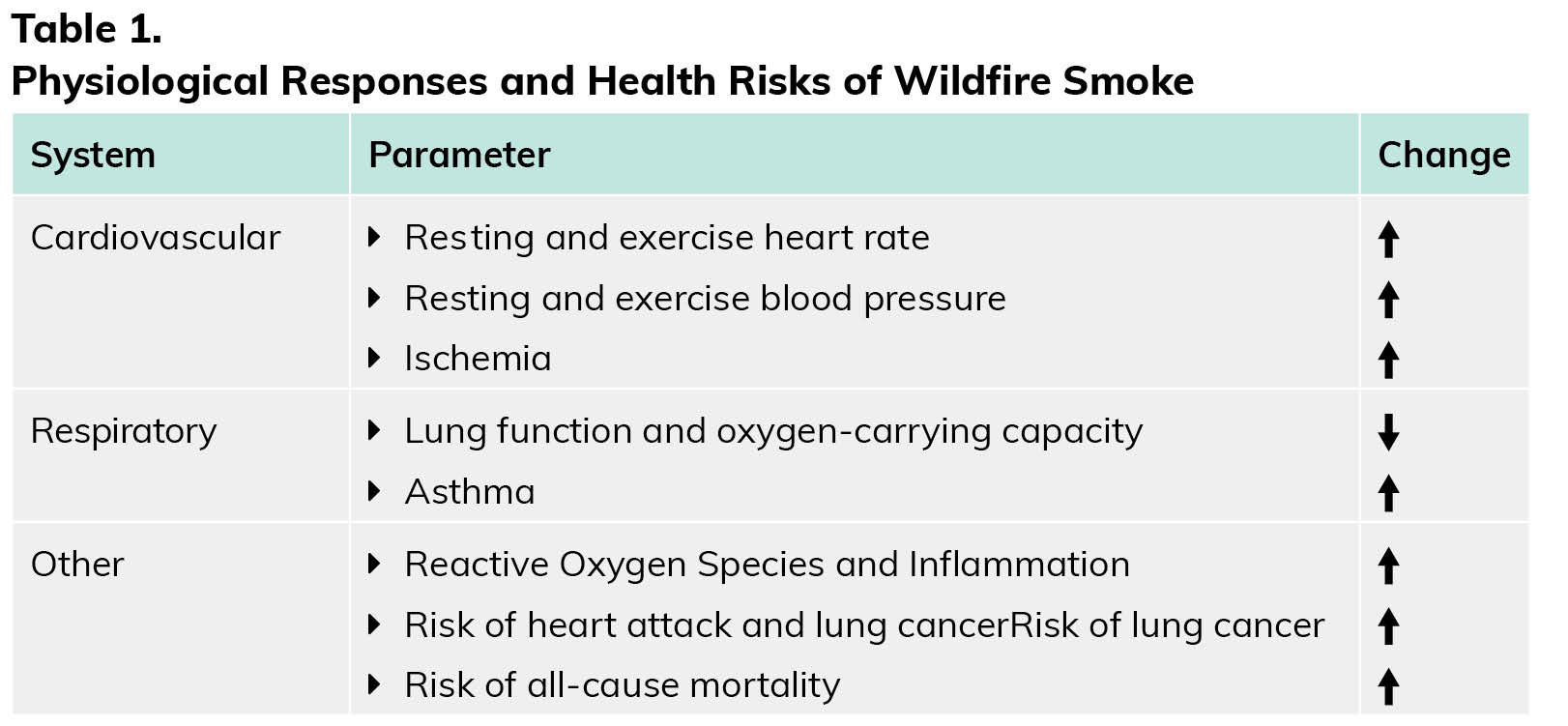
Wildfire smoke contains large quantities of airborne particles that are known as fine particulate matter (PM). These particles are small and referred to as PM2.5 because they are 2.5 micrometers in diameter or less. Short-term exposure to PM2.5 is a major health concern, as these inhaled particles are small enough to penetrate deeply into the lungs and enter the bloodstream, where they can cause systemic inflammation. Over time, this inflammation contributes to multiple chronic conditions, and chronic exposure to wildfire smoke has been linked to various health problems and even premature death. For example, one study estimated that long-term exposure to wildfire smoke contributed to approximately 11,415 nonaccidental premature deaths annually in the U.S. Table 1 details the common physiological responses and health risks attributable to wildfire smoke.
Children, women during pregnancy and their developing fetus, older adults, and those individuals with preexisting cardiovascular and respiratory conditions are most susceptible to PM2.5 from wildfire smoke. Traditionally, those individuals living in the Western part of the U.S. have been most at-risk to PM2.5 pollution; however, fine particulate matter from wildfire smoke impacts the entire contiguous U.S. In fact, recent studies have suggested that smoke exposure has increased 27-fold over the past decade.
Strategies to Exercise Safely in Wildfire Smoke
Clearly, wildfire smoke can pose real, near-term physiological strain and potentially longer-term health consequences—particularly for higher-risk clients such as older adults, women during pregnancy, children and those with preexisting cardiovascular or respiratory conditions. At the same time, many clients rely on physical activity for stress management, cardiometabolic health and routine—so telling them to avoid exercising or going outdoors may be unrealistic. In these situations, you can help your clients keep moving while reducing smoke exposure through smart programming choices and clear decision making. Practically, that means focusing on the “dose” of smoke a client receives and using evidence-informed tactics to keep that dose as low as possible—exactly what the following strategies are designed to do.
The overall physiological effects and health risks of wildfire smoke are determined by the degree of exposure (or dose) to which an individual is exposed. This dose is related to the concentration of PM2.5 in the air, the length of exposure and the amount of air breathed. Here are some specific strategies you can use to facilitate safe and effective exercise and mitigate risk from wildfire smoke.
1. Understand the dose-response phenomenon.
There is a dose-response relationship among three specific factors and the risk of health complications from wildfire smoke:
- Concentration of PM2.5
- Duration of exposure/total time of exercise or physical activity
- Ventilation rate as determined by exercise intensity
An increased dose of any one (or a combination) of these factors will increase risk. For instance, a higher concentration of PM2.5 will lead to increased oxidative stress and system-wide inflammation. Similarly, a client will likely experience worsening lung-function and shortness of breath if cycling vigorously for several hours when compared to walking at a moderate pace for 30 minutes. For health and exercise professionals, a good guide to follow is to consider that as exercise intensity progresses from moderate to vigorous, the exposure duration for clients should be reduced by 50%.
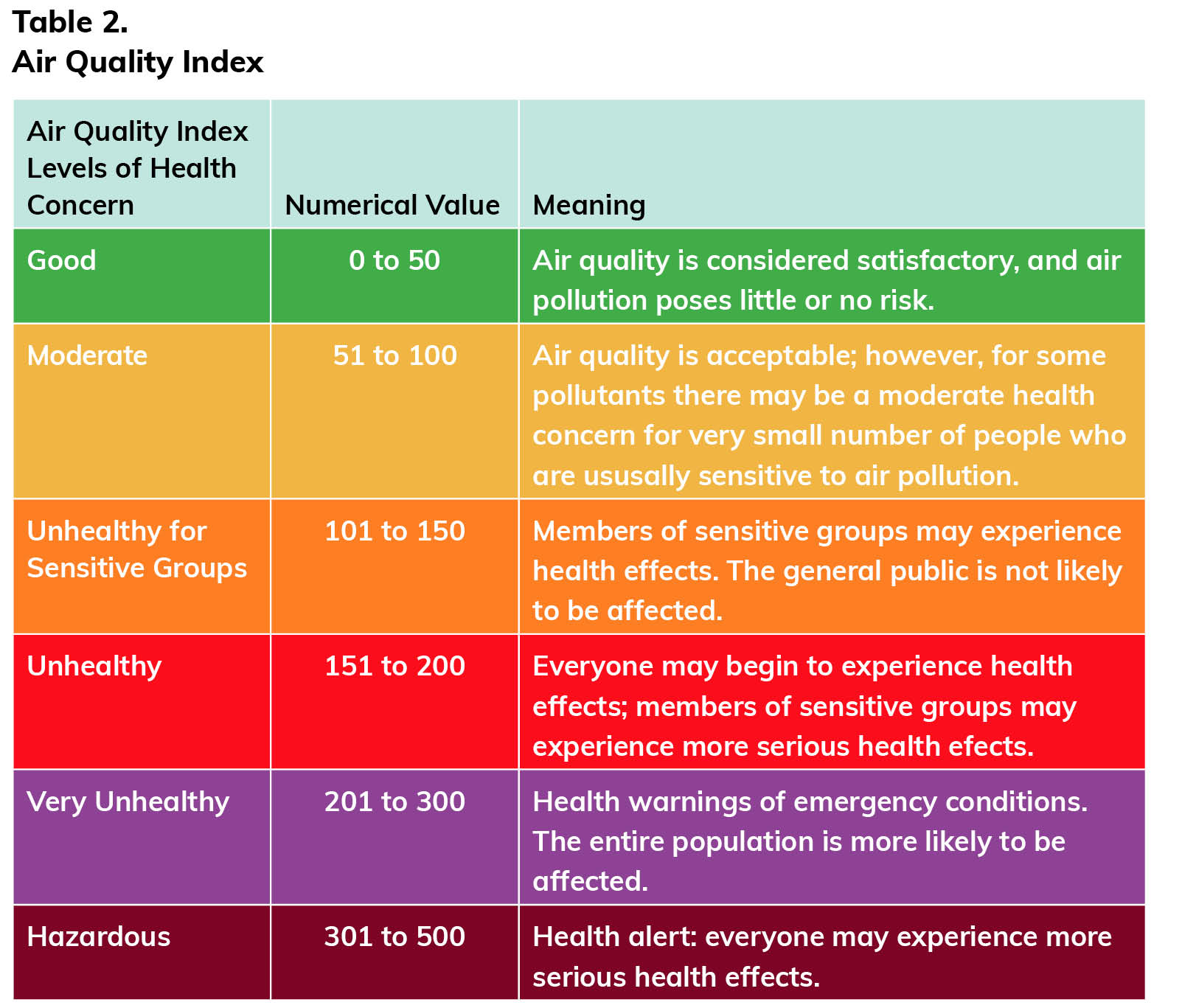
Of the three factors described above, you should be most aware of the concentration of PM2.5 because researchers have identified this component as the most critical to overall health risk. Fortunately, there are excellent and easily accessible resources from government agencies to help guide decision-making on safe thresholds for exercise (Table 2). The air-quality reading reflects the contribution of several pollutants, including PM2.5 levels. When the air-quality index is good (i.e., green) then outdoor exercise is safe. However, when the air-quality index is moderate or worse, then thoughtful decision-making is required that considers client health status and the nature of exercise (e.g., short and low- or moderate-intensity vs. long duration and/or higher intensity). Consulting with a client’s physician may be warranted.
Source: https://www.airnow.gov/
2. Time of day of exercise and the use of masks are important considerations.
Practical suggestions can minimize the harmful effects of wildfire smoke. Research has shown that inhalation of PM2.5 was higher during exercise in the morning when compared to the afternoon/evening. This is because as temperature heats up, the column of air near the ground expands, which dilutes the concentration of PM2.5. Afternoon winds can also clear out high mountain valleys or downtown areas where wildfire smoke has settled overnight. Considering these factors and when to exercise outdoors can help mitigate negative physiological responses and health risks.
Another option for clients may be to wear a protective mask during outdoor exercise when moderate (or higher) levels of wildfire smoke are present. Importantly, research has highlighted that polysulfone-based nanofiber masks may be an excellent countermeasure to prevent inhaling PM2.5 particles. Research has also concluded that face masks can be worn during exercise with no impacts on performance and minimal impacts on physiological variables. That said, it is important to note that N95 masks are the only readily available masks that will be protective against the PM2.5 found in wildfire smoke.
3. Counter wildfire smoke with antioxidants.
A free radical refers to atoms or groups of atoms that are highly reactive due to an unpaired valence electron (electrons in the outer shell of an atom that play key roles in interactions with other atoms or become paired within the same atom). Once formed, free radicals can create a domino effect of reactions, which may cause damage to biological cells. PM2.5 is a common air pollutant known to cause free radical formation.
Antioxidants are molecules that can scavenge and safely interact with free radicals. Specifically, antioxidants can help mitigate free radical–induced negative chain reactions and protect cell membranes from oxidative damage. Antioxidants can be either endogenous (originating within the body) or exogenous (originating outside of the body, via nutritional habits or supplementation, for example). The main exogenous antioxidants include vitamins C and E and beta-carotene (the precursor to vitamin A). Research highlights that antioxidant intake benefits individuals exercising in, and chronically exposed to, air pollution, including wildfire smoke. Common food sources for antioxidants are listed in Table 3.

4. Understand the risk-reward balance between wildfire smoke and physical activity.
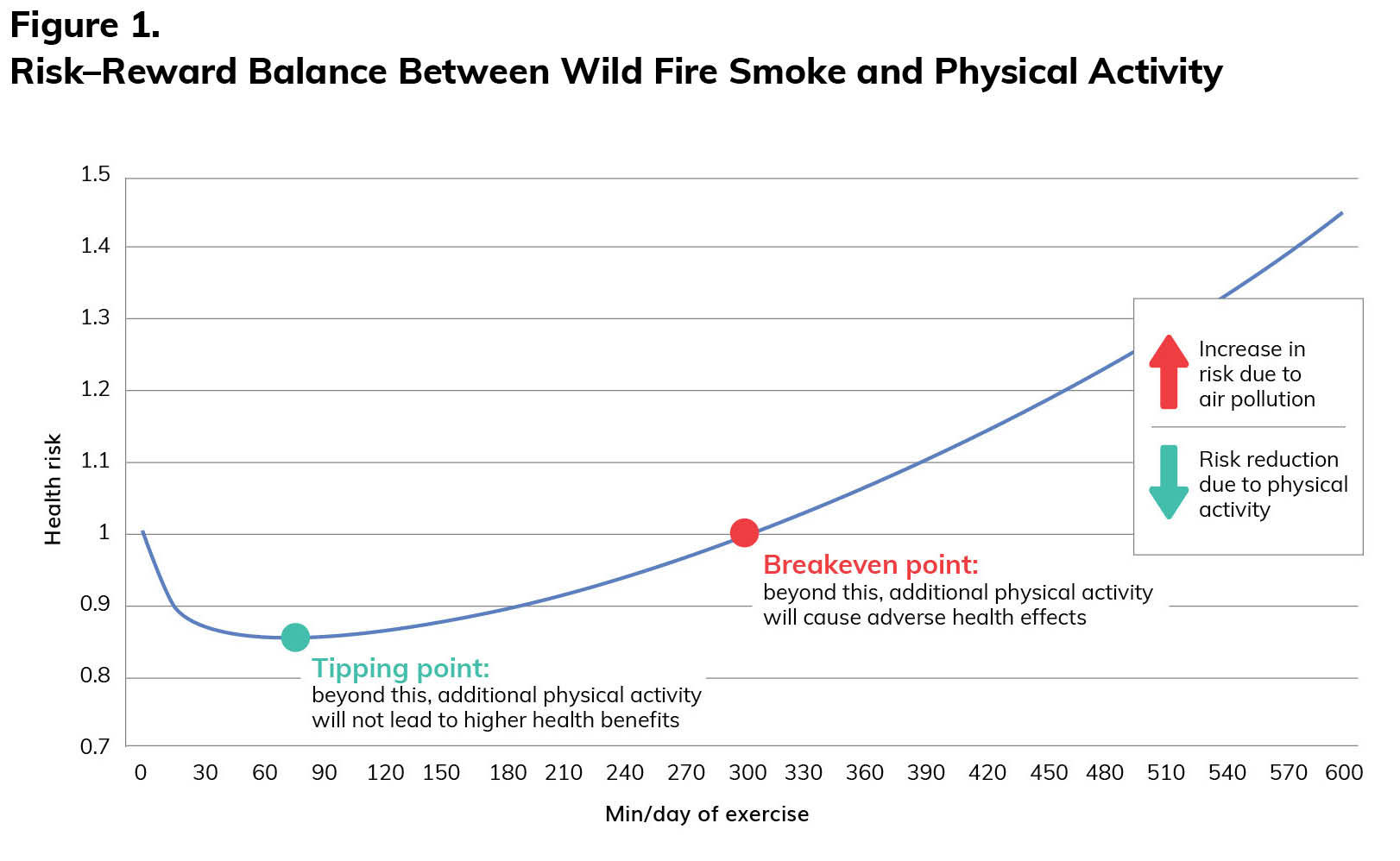
As highlighted earlier, exposure to wildfire smoke can lead to both unfavorable physiological responses and potentially long-term risks. Given that regular physical activity confers numerous health benefits, is there a point at which the risk of exercising in wildfire smoke outweighs the benefits of physical activity for our clients? Research has addressed this question and shown that modest daily doses of lifetime exercise optimize health benefits. It is only at higher daily durations of exercise that there is an increased health risk due to wildfire smoke. It is important to note that these higher volumes of daily physical activity are unlikely to be exceeded except in athletic populations. Figure 1 provides a visual representation of the risk-reward balance between air pollution and physical activity. Exercising indoors should be viewed as a practical option for both clients and exercise professionals when outdoor training isn’t appropriate because the risks outweigh the benefits. Research also suggests that wildfire smoke exposure can impair exercise performance and hinder recovery.
5. Wildfire smoke is frequently accompanied by hot weather.
Although they may occur any time of year, wildfires and wildfire smoke are most prevalent during the summertime months. As summers get longer and warmer and extreme heatwaves become more common, you may need to help clients take extra precautions when exercising outdoors. That includes managing not only wildfire-smoke exposure but also increased thermal stress.
Exercising in a hotter environment places clients at an elevated risk for heat injury and illness, along with greater chances for cardiac events, especially for older adults with underlying heart-disease conditions. Following a preventive physiological adaptation strategy can help your clients lower their risk of adverse events. It is well known that repeated exposure to hot and humid environmental conditions, which elicit an increase in both core temperature and sweating, leads to numerous physiological adaptations that ultimately reduce the deleterious effects of heat stress. The process of physiological heat adaptation is called acclimatization when obtained in a natural setting (e.g., training outdoors in hot weather), and acclimation when obtained in an artificial setting (e.g., in an indoor sauna). The mechanisms of heat adaptation, such as increased plasma volume and capillary density, not only improve heat tolerance, but also have the capacity to improve cardiorespiratory fitness and performance.
Evidence-Based Heat Adaptation Strategies
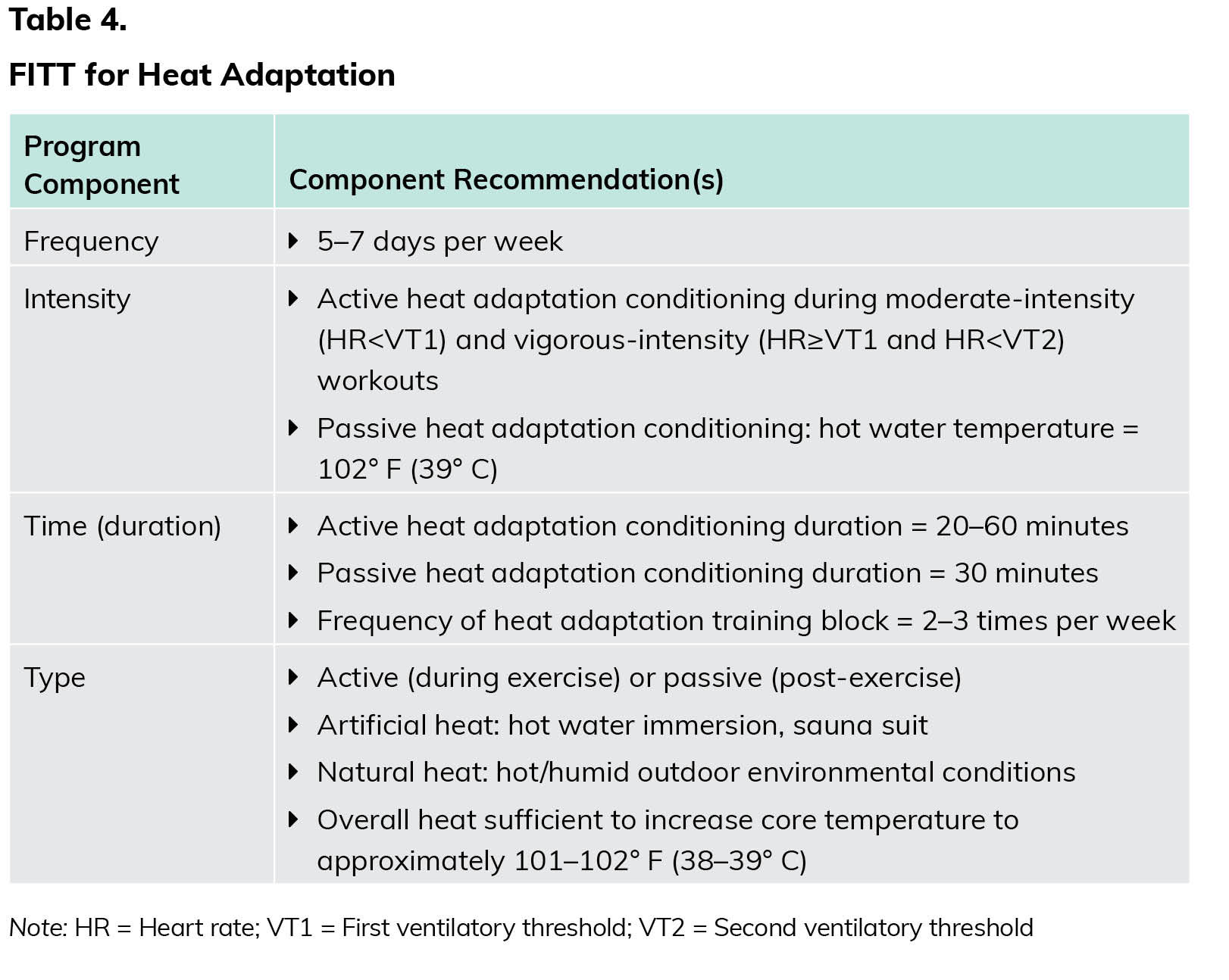
One of the great features of heat adaptation is that it can be obtained in a relatively short timeframe and then fairly easily maintained for months thereafter. As with any training paradigm, getting the various components of programming (e.g., frequency and intensity) correct is important for it to be effective, safe and well-tolerated. The FITT formula—which consists of frequency, intensity, time (duration) and type of exercise—is commonly used to design exercise programs. The same approach can be applied to heat adaptation, and these FITT recommendations are presented in Table 4.
Summary
Wildfire smoke poses a significant, yet preventable, health risk for Americans. Left unaddressed, regular exposure to wildfire smoke when exercising can lead to a myriad of chronic conditions and even contribute to premature mortality. With appropriate strategies, however, the risks associated with wildfire smoke can be reduced to acceptable levels. By educating yourself about the air quality index and times of day when wildfire smoke is most diluted, along with understanding the risk-reward balance between wildfire smoke and physical activity, you can help your clients perform outdoor summertime activities safely and effectively when wildfire smoke is present.








 by
by