







Nutrition: A Core Driver of Healthy Living

Certified™: February 2026

In the January 2026 issue of CERTIFIED, we introduced the ACE 7 Core Drivers of Healthy LivingTM and explored physical activity as a catalyst for lifestyle change. While physical activity may indeed be an ideal starting point for some clients, others will identify different priorities based on their values and goals. The previous article features a sample conversation that a health coach or exercise professional can have with a client, as well as the ACE 7 Core Drivers of Healthy Living worksheet, to uncover those areas.
Improving nutrition may be a priority for many of your clients, as healthy eating is a cornerstone of commonly cited goals, including weight management, improved health and better performance, as well as enhanced energy and overall quality of life. According to ACE, these core drivers, which are listed below, work together in a dynamic and evolving way to help people adapt to life’s challenges and maintain overall well-being. Perhaps more importantly, this framework offers a practical guide that can help clients make meaningful, lasting lifestyle changes by connecting behavior choices to their personal values and long-term priorities.
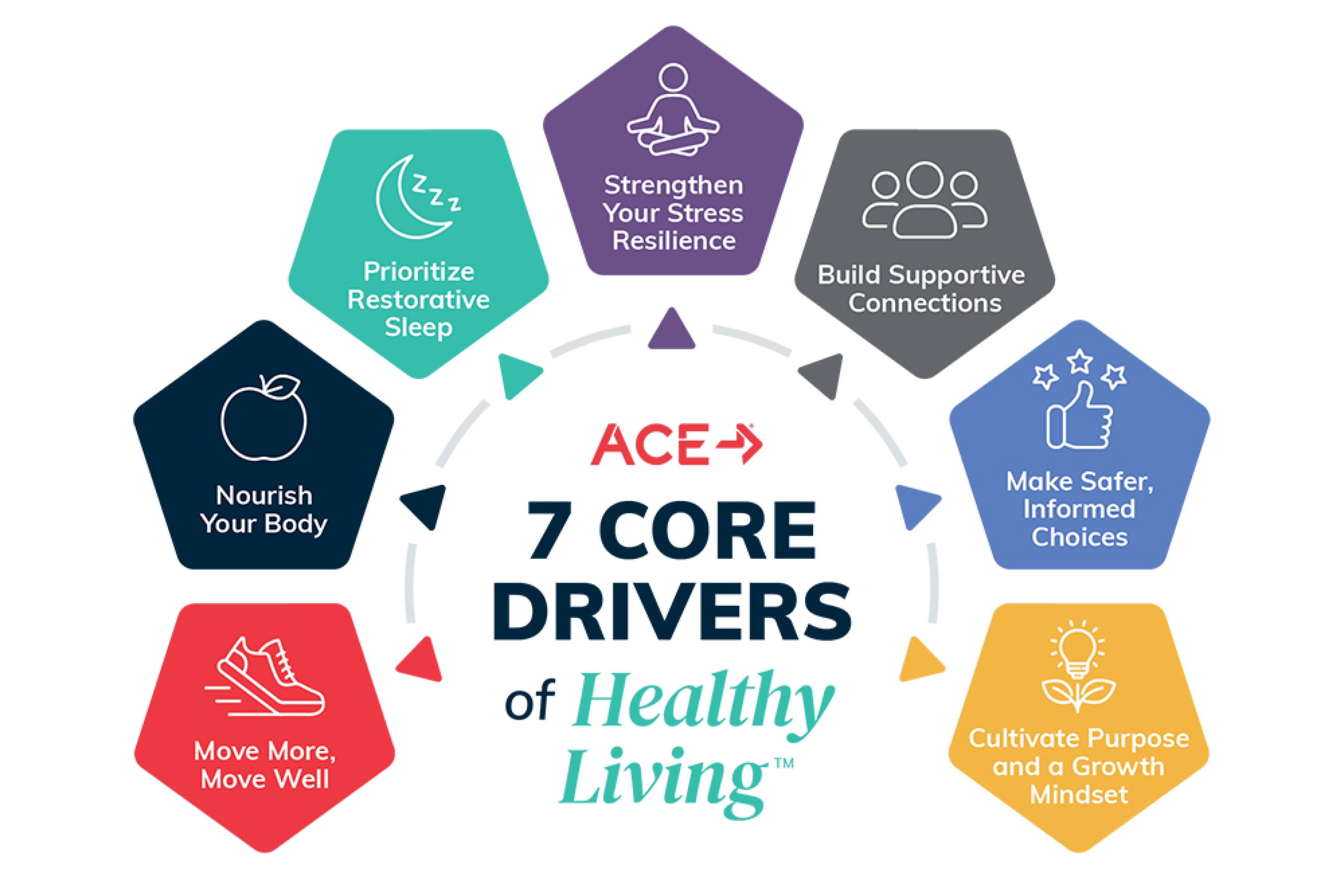
ACE 7 Core Drivers of Healthy Living
1. Move More, Move Well – Engage in regular physical activity and exercise that supports strength, mobility and long-term vitality.
2. Nourish Your Body – Choose balanced, healthy nutrition patterns that fuel daily living and overall well-being.
3. Prioritize Restorative Sleep – Get quality sleep that promotes recovery, cognitive function, emotional balance and immune health.
4. Strengthen Your Stress Resilience – Use effective coping skills and strategies that support emotional well-being and adaptability.
5. Build Supportive Connections – Cultivate positive relationships and a sense of community that enhance motivation and health.
6. Make Safer, Informed Choices – Make decisions that reduce health risks and promote long-term well-being.
7. Cultivate Purpose and a Growth Mindset – Clarify personal purpose and values, and foster a mindset that supports consistency, resilience and lasting behavior change.
Each of the five remaining ACE 7 Core Drivers of Healthy Living will be covered in upcoming issues of CERTIFIED, with prioritizing restorative sleep that promotes recovery, cognitive function, emotional balance and immune health coming up next in March. From there, we will work through the 7 Core Drivers in order, culminating with an article on how to help clients cultivate purpose and a growth mindset. The goal is to provide evidence-based, yet practical strategies that you can use with clients to improve their health and well-being.
Nutrition plays a central role in health and well-being because food provides the energy and building blocks our bodies need for movement, exercise recovery and long-term health. Without proper nutrition, the other core drivers, especially physical activity, are difficult to maintain, as energy, recovery and motivation may decline without adequate fuel.

The Scientific Report of the 2025 Dietary Guidelines Advisory Committee (DGAC) provides a rich evidence base for understanding how eating patterns support health across all ages. When paired with decades of peer-reviewed research, this report helps exercise professionals and health coaches translate nutrition science into practical, effective guidance for their clients within an appropriate scope of practice.
This article explains why nutrition is essential for overall health, how it influences physical activity and exercise, and what you can do to help your clients build healthier eating patterns. Practically speaking, healthy eating is not about restriction—it is about supporting the body so it can perform, adapt and thrive. When clients express a desire to work on nutrition goals, communicating with them about how nourishing the body positively impacts overall health and well-being is a worthwhile endeavor.
The ACE Perspective on Healthy Living
ACE views healthy living as the result of seven core drivers—how we move, eat, sleep, manage stress, connect with others, make informed choices, and cultivate purpose and a growth mindset, all of which interact dynamically to support long-term behavior change.
How Nutrition Supports Overall Health
The DGAC report extensively documents how poor dietary patterns contribute to national health challenges, as many of the most pressing chronic diseases are strongly influenced by nutrition. The DGAC report emphasizes that the typical American diet does not align with recommended healthy patterns, with many people consuming too few nutrient-dense foods and too many foods high in added sugars, sodium and saturated fat.
Diet and Chronic Disease Risk
The 2025 DGAC systematic reviews highlight evidence supporting healthy dietary patterns as protective against:
- Cardiovascular disease, through improved lipid profiles, lower inflammation and better blood pressure management
- Type 2 diabetes, through improved insulin sensitivity and glucose control
- Obesity, by promoting more appropriate energy balance and supporting satiety
- Certain cancers (e.g., colorectal and breast), particularly through higher intakes of fiber, antioxidants and phytochemicals
- Cognitive decline and dementia, as certain dietary patterns support vascular and neurological health
Large-scale studies and meta-analyses support these findings. For example:
- Plant-rich diets lower cardiovascular disease risk by improving lipid profiles and reducing inflammation.
- Higher fiber intake reduces risk of type 2 diabetes and promotes healthier body weight.
- Healthy dietary patterns have been shown to reduce the risk and progression of colorectal and breast cancers, though more research is needed to specify exactly which patterns are most effective.

Diet, Metabolic Health and Body Composition
According to the DGAC report, excessive consumption of added sugars, saturated fats and sodium, which are common in the typical U.S. diet, contribute to:
- Elevated blood pressure
- Insulin resistance
- Increased abdominal fat
- Poor lipid profiles
Diet and Gut Health
What you eat contributes to the function and structure of the gastrointestinal microbiota and a healthy diet supports a well-balanced microbiome. The microbiome refers to the trillions of microorganisms and bacteria contained in the human gastrointestinal tract. It is suggested that highly processed food can disrupt the microbiome, while fruits, vegetables, high-fiber foods, and fermented foods such as miso, kefir, sauerkraut, and kimchi support a diverse microbiome that is beneficial for health. A recent statement from the Academy of Nutrition and Dietetics supports the effort to increase awareness about fiber and microbiome health. The gut microbiota plays a key role in affecting the well-being of its host and alterations of microbiota contribute to the impairment of immune and metabolic functions.
Diet and Mental Health
Emerging research suggests that healthy eating patterns, such as the Mediterranean diet, are associated with better mental health than “unhealthy” eating patterns, such as the Western diet. The DGAC report also examined nutrition’s impact on cognitive decline, finding consistent evidence that dietary patterns emphasizing whole plant foods, seafood and healthy fats support long-term brain health.
How Nutrition Supports Physical Activity
All physical activity, whether it’s walking the dog or completing a vigorous workout, requires energy. That energy comes from carbohydrates, fats and proteins in food, which together support both immediate energy needs and longer-term adaptation. The DGAC report notes that nutrient-dense dietary patterns supply the right balance of macronutrients to support energy needs across different life stages and activity levels.
- Carbohydrates are the body’s most efficient fuel during moderate-to-vigorous activity. Adequate intake maintains muscle glycogen, delays fatigue and supports performance.
- Fats provide energy for lower-intensity activities and acts as a long-lasting fuel reserve.
- Proteins support muscle repair and help maintain lean mass, particularly for active individuals.
When individuals underconsume nutrients, especially carbohydrates and total calories, energy levels decline, making physical activity feel harder and less enjoyable, which can reduce motivation. Over time, this negatively impacts adherence to movement routines.
Poor Nutrition Impairs Physical Function
The DGAC report emphasizes that nutrient shortfalls are common, including underconsumption of calcium, vitamin D, fiber, potassium and iron for many Americans. These nutrients are essential for:
- Muscle contraction (calcium, potassium)
- Oxygen transport (iron)
- Bone growth and remodeling (calcium, vitamin D)
- Digestive function and cardiovascular health (fiber)
Proper muscle function depends on the presence of calcium. Because of this, calcium levels inside the muscle have to be carefully regulated, as they determine how strong a contraction is, how long it lasts and when the muscle can relax again. Potassium is principally involved in nerve and muscle cell function and may be protective against stroke and chronic kidney disease when consumed at recommended levels. Low iron levels can cause fatigue, weakness and reduced aerobic capacity, greatly impairing activity tolerance. Insufficient vitamin D and calcium increase the risk of stress fractures and poor bone mineral density, especially in active individuals. Finally, higher dietary fiber consumption is associated with a lower risk of multiple chronic diseases, including cardiovascular disease and diverticular disease—a group of conditions in which tiny pouches form in the colon that can become inflamed or infected.
Healthy Eating Patterns Support Long-Term Activity
Healthy dietary patterns, such as those rich in vegetables, fruits, whole grains, legumes, lean proteins and healthy fats, are associated with better physical function and longer telomere length as people age, all of which are important for longevity and enhanced quality of life in later years. The DGAC report reinforces this by showing strong evidence connecting dietary patterns with reduced risk of chronic conditions that limit physical activity, such as cardiovascular disease and type 2 diabetes.
How Nutrition Supports Exercise Training and Recovery
Exercise is a specific form of structured physical activity designed to improve fitness. Proper nutrition is essential for:
- Fueling training sessions
- Supporting recovery
- Building strength, endurance and metabolic health
- Reducing injury risk
Carbohydrates Fuel High-Intensity and Endurance Exercise
Carbohydrates are critical for maintaining training quality. Research shows that insufficient carbohydrate intake reduces power output, decreases motivation and increases perceived effort. The DGAC report emphasizes dietary patterns that provide adequate whole grains, legumes, fruits and vegetables—foods that supply high-quality carbohydrates along with fiber and micronutrients.
Protein Builds and Repairs Muscle
Strength training stimulates muscle protein synthesis, but protein intake determines how well muscles repair and grow. Current research has not reached a clear consensus on whether consuming protein before or after exercise provides distinct benefits. Timing isn’t as important as consistent protein intake throughout the day, which helps to fuel muscle building and repair. As recommended across the DGAC analyses, diets that incorporate lean meats, dairy, seafood, soy- and plant-based proteins improve muscle health, especially in older adults who may experience age-related muscle loss.
The recommended dietary allowance (RDA) of protein is 0.8 g/kg of body weight per day, but it’s important to note that protein needs can vary based on a client’s age or the type of exercise they perform. For example, older adults may need to increase their protein intake to 1.0 to 1.2 kg/g because of the increased risk of muscle and strength loss as people age. The recommendations increase further if an older client has, or is at risk for, certain chronic conditions, including malnutrition or frailty. Most exercisers, meanwhile, can aim for a daily intake of 1.4 to 2.0 g/kg, while clients who perform a lot of resistance training may benefit from more. Be sure to consult with a registered dietitian nutritionist if your client has specific nutritional needs.
Micronutrients Support Tissue Repair
The DGAC report highlights common micronutrient inadequacies:
- Calcium and vitamin D: Essential for bone remodeling and muscle function
- Iron: Supports oxygen delivery during aerobic exercise
- Magnesium: Involved in over 300 enzymatic reactions, including muscle and nerve function
- Antioxidants (vitamins C and E): Reduce oxidative stress from intense exercise
Ensuring adequate nutrition is essential for athletes to perform well and adapt effectively to training. Many athletes take vitamin and mineral supplements to address potential deficiencies, bolster immune health, promote recovery or attempt to improve performance. Research on several key micronutrients—iron, vitamins C, E, and D, and calcium—and their influence on physical performance outcomes indicates that supplementing with these micronutrients does not improve performance in athletes who are already meeting their nutritional needs through food. In fact, consuming excessive amounts of supplements may interfere with normal physiological processes that drive training adaptations.
Supplementation may be appropriate in specific circumstances, such as confirmed nutrient deficiencies, restricted energy intake or training at altitude, but should be guided by a qualified medical professional to avoid unintended consequences or interactions. For most athletes and recreational exercisers, a balanced and diverse diet remains the best strategy for meeting micronutrient needs.
Hydration is an Indispensable Part of Nutrition for Exercise
Although not always grouped with food, hydration is a critical nutrition component. Inadequate hydration and dehydration reduce endurance, cognitive performance and thermoregulation, especially in hot environments. Drinking water and consuming water-rich foods like fruits and vegetables that are promoted in the DGAC report help support hydration status.
Evidence-Informed Nutrition Strategies for Health and Exercise Professionals
While exercise professionals and health coaches do not prescribe individualized meal plans unless appropriately credentialed, they are well-positioned to teach general healthy eating patterns and to help clients build realistic, sustainable skills around their food choices. The following strategies are evidence-based, accessible and aligned with an ACE professional’s scope of practice.
Emphasize Dietary Patterns, Not Perfection
The DGAC report reinforces that people benefit most from focusing on overall eating patterns, not single foods. Encourage clients to aim for a diet that emphasizes:
- Vegetables and fruits
- Whole grains
- Lean proteins and plant-based protein sources
- Dairy or fortified alternatives
- Healthy fats (olive oil, nuts, seeds, fatty fish)
Teach Clients to Add Nutrient-Dense Foods to Support Activity
Rather than starting with restriction, guide clients toward adding:
- A serving of whole grains at breakfast
- A fruit or vegetable at every meal
- Lean protein after exercise to support muscle recovery
- Water-rich foods (cucumbers, berries) to support hydration
- Foods high in potassium (bananas, potatoes, beans) to support muscle function
Address Common Nutrient Gaps
Based on the DGAC findings, encourage clients to consider:
- Calcium and vitamin D: Through dairy, fortified soy milk, leafy greens
- Fiber: Through whole grains, vegetables, legumes
- Potassium: Through fruits, vegetables, dairy
- Iron: Through lean meats, beans, fortified cereals (especially important for female athletes)
Encourage Eating to Support Movement
Help clients connect food choices with performance and recovery so they understand the “why” behind their nutrition decisions:
- Pre-exercise: Carbohydrates plus a small amount of protein
- Hydration before, during and after activity
- Regular meals throughout the day with protein for repair plus carbohydrates for replenishment to maintain stable energy
Integrate Social and Behavioral Supports
The DGAC report acknowledges the role of social determinants of health. Professionals can:
- Encourage clients to involve family or friends in meal prep
- Support realistic shopping and budgeting strategies
- Provide culturally relevant suggestions
- Promote small, sustainable changes rather than overhauls
Refer to Qualified Professionals When Appropriate
Encourage collaboration with registered dietitian nutritionists for:
- Medical conditions
- Highly specialized dietary needs
- Advanced performance goals
- Eating disorders or disordered eating concerns
| One more thing: If you’re an ACE Certified Professional, we’ve created a really helpful worksheet for you to use with your clients. Together with your client, you’ll pick an activity from a nutrition menu of options based on how important each activity is to the client, as well as their goals, interests, values and level of confidence. Working together on this should feel like a meaningful conversation between you and your client. You can access this bonus tool by clicking on the bar at the top of this page. |
Conclusion
Nourishing your body through healthy eating patterns is a foundational core driver of healthy living because it powers movement, enhances recovery and supports lifelong health. The Scientific Report of the 2025 Dietary Guidelines Advisory Committee reinforces that healthy eating patterns are essential for reducing chronic disease risk, supporting physical function and promoting overall well-being across all stages of life.
For exercise professionals and health coaches, teaching clients how to build healthier eating patterns within scope of practice is a powerful way to support ACE’s inclusive vision of health and well-being. When individuals combine nutritious eating with the other core drivers, they become more resilient, adaptable and capable of thriving throughout life.



More Articles
- Certified™: February 2026
The ACE Workout Builder for Injury Prevention
- Certified™: February 2026
The Most Common Behavior-Change Traps (and How to Coach Through Them)
Contributor
- Certified™: February 2026
Menopause and Midlife Performance: What Endurance Athletes Want You to Know
Contributor