The American Council on Exercise (ACE) is proud to have collaborated with the Academy of Nutrition and Dietetics (AND) on a position paper entitled, “Nutrition and Physical Activity Interventions for Adults in the General Population.”
Unhealthy diets and physical inactivity lead to chronic disease and premature death and, unfortunately, many adults fail to meet nutrition and physical-activity guidelines. ACE and AND recognized a gap in the scientific literature related to understanding the effectiveness of interventions delivered by qualified nutrition and exercise practitioners. The goal of this research was to assess the effectiveness of these interventions in reducing cardiometabolic risk.
In other words, we wanted to answer the following question: Do health coaches, exercise professionals and registered dietitian nutritionists positively impact the health of their clients in a meaningful way?
To find out, ACE and AND completed a systematic review and meta-analysis on the impact of nutrition and physical activity interventions provided by nutrition and exercise practitioners for the adult general population.
What they found was that individuals who worked with these professionals saw significant improvements in four areas:
- Increased physical activity
- Increased vegetable intake
- Reduced waist circumference
- Increased likelihood of at least 5% weight loss
In combination, these effects can reduce cardiometabolic risk factors before the onset of disease. In addition, this analysis supports a multi-practitioner approach that combines nutrition and physical activity expertise, particularly when caloric reduction is used to pursue weight-loss goals.
ACE and AND believe that working with qualified exercise and nutrition professionals can help adults build healthier habits and lower their risk for health problems like heart disease, diabetes and other conditions related to metabolism.
These programs work best when they are:
- Client-centered: Focused on each person’s needs, goals and background
- Evidence-based: Based on solid scientific research
- Inclusive and flexible: Able to support people from different cultures, abilities and communities
- Team-based: Able to enlist help from other health professionals when needed
The statement also explains that more people should be able to access these science-based nutrition and physical-activity services. Policymakers, healthcare systems and practitioners should work to make this possible, because it can improve public health and help more adults live healthier lives.
“Nutrition and physical activity are the cornerstones of health,” explains Alison Steiber, PhD, RDN, Chief Mission, Impact and Strategy Officer at the Academy of Nutrition and Dietetics. “This project is extremely important because it demonstrates both the coordination between providers of care and the impact on health outcomes of that care.”
Position Stand Summary
It is the position of the Academy of Nutrition and Dietetics and the American Council on Exercise that nutrition and physical activity interventions delivered by qualified nutrition and exercise practitioners, within their scopes of practice, can improve lifestyle behaviors and cardiometabolic risk factors for adults in the general population. Effective interventions require client-centered, evidence-based care provided by skilled practitioners using inclusive, dynamic methods and collaboration with an interprofessional team, as appropriate. Increased access to evidence-based nutrition and physical activity interventions is necessary to improve public health and should be a target for policymakers, healthcare systems and practitioners.
Overcoming Barriers
One of the objectives of the AND/ACE collaboration was to identify ways to overcome common barriers to improved nutrition and increased physical-activity levels. These barriers might include time constraints, lack of motivation and limited access to resources. Another barrier that may be less apparent to professionals (but is actually directly linked to your day-to-day work) centers on misconceptions about the roles of each professional and perceived limitations in what you can do to help your clients.
A better understanding of each professional’s scope of practice and how it complements and supports the work of the others is vital if we are to deliver comprehensive services to clients. The scopes of practice for health coaches, exercise professionals and registered dietitian nutritionists are outlined in the position paper.
All health and exercise professionals can help remove obstacles that make it hard for people to eat well and be physically active. Since healthy eating and regular movement help prevent disease, they should be treated as important parts of healthcare.
The paper suggests nine ways to make these services easier for people to access:
- Create welcoming spaces and easy-to-understand educational materials.
- Lower costs for people who need multiple visits or help from more than one professional.
- Offer programs in workplaces and communities.
- Provide flexible appointment times.
- Adjust pricing to fit a person’s situation.
- Support insurance coverage for prevention services.
- Offer online or group sessions.
- Encourage clients to talk to their insurance companies about coverage.
- Build diverse professional networks so clients can get the support they need.
What This Means to You
Another key takeaway of this position paper is the potential for collaboration among exercise and nutrition professionals to have profound impacts on the health of their clients. The authors write, “The most effective interventions may include programming from separate, credentialed practitioners, to provide individualized counseling or coaching across multiple domains.” This concept is presented in Figure 1. As you can see, offering integrated interventions enhances the work of everyone involved.
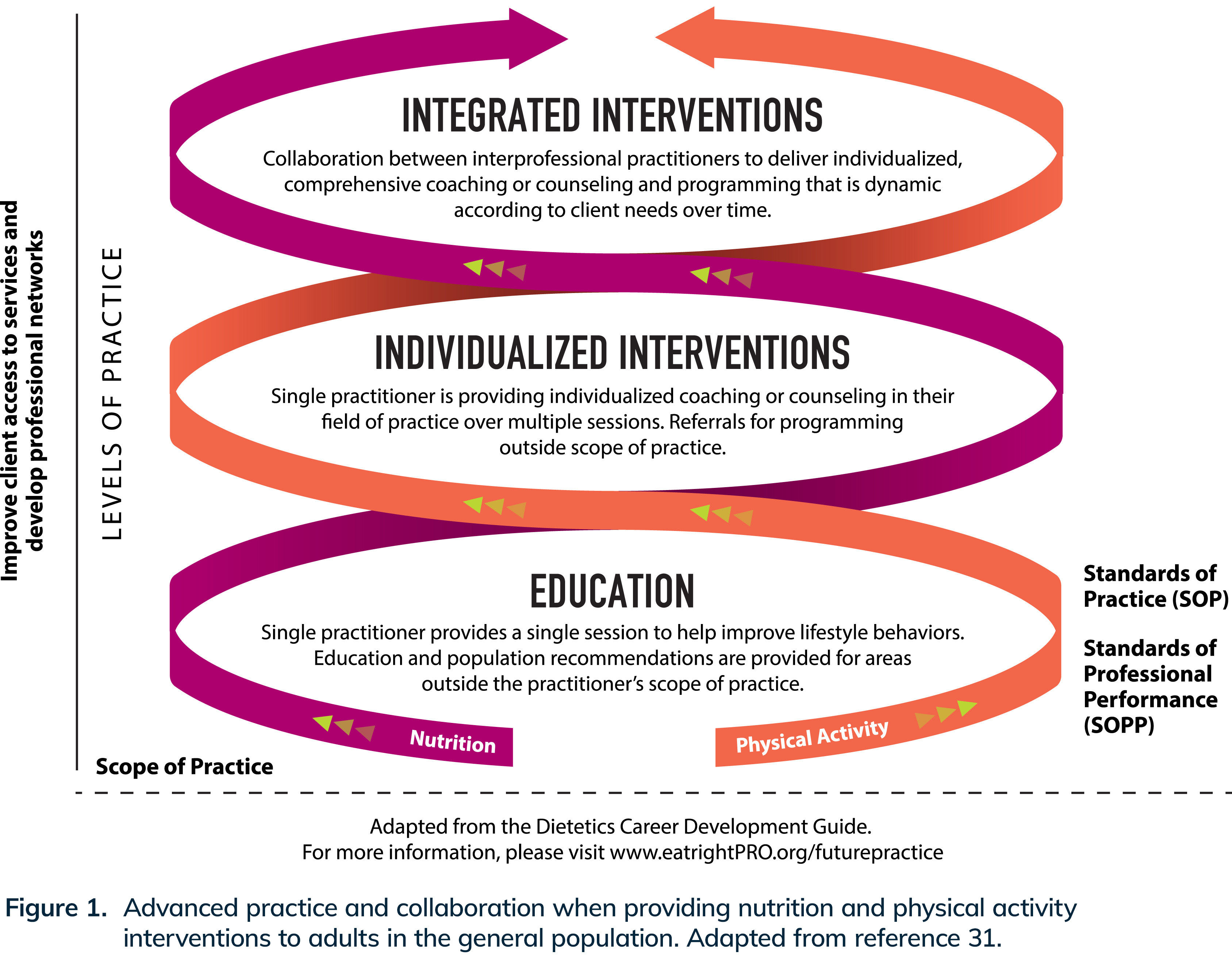
Guidelines and textbooks will often encourage you to refer to other professionals when a client needs services that fall outside your scope of practice, but a more collaborative approach may yield better results. Rather than saying, “I’m sorry, but meal planning is outside my scope of practice. Here is a list of registered dietitian nutritionists in your area,” for example, you can form a team of likeminded professionals to work together to help your clients reach their goals.
“This position stand is great news for exercise and nutrition professionals,” says Sabrena Jo, PhD, ACE Senior Director of Science and Education. “It reinforces what many of us see every day: When qualified practitioners work together, using evidence-based strategies and client-centered care, we can make a real difference in people’s lives. It also sends a clear message to health systems and policymakers that nutrition and physical activity are not ‘extras.’ They are essential parts of preventive care. Expanding access to these services opens the door for more adults to build healthier habits, improve cardiometabolic health and feel empowered in their well-being.”
The findings of this meta-analysis and the resulting position stand are clear: The work that nutrition, health and exercise professionals do every day makes a tremendous impact on the health of their clients. These findings make clear that collaboration across disciplines amplifies the efforts of each individual on the team and will lead to better outcomes for clients—and isn’t that the ultimate goal?






 by
by