
Chronic tension in the neck and shoulders. Rock-hard knots in the muscles of the upper back. Tightness in the jaw with frequent headaches. No doubt you have had clients with one or more of these common complaints (collectively referred to in this article as “neck and shoulder pain.”)
Your clients may find temporary relief from these symptoms through prescription pills or a good massage. Yet for many, a few simple yoga techniques—applied mindfully and with caution—can help alleviate many of the root causes of common neck and shoulder pain.
As a health and exercise professional, you have a unique opportunity to introduce clients to these healing postures at the end of a personal training or group fitness class. Read on to discover ways to use this popular mind-body technique to help rid your clients’ neck pain and, in some cases, dramatically improve their quality of life.
When to Refer
If your client has any of the following “red flag” symptoms, refer them to a medical professional to obtain clearance prior to exercise, advises physical therapist Ginger Garner:
- Numbness, tingling, altered sensations (e.g., feelings of hot or cold), or loss of motor control or sensation in the upper extremities
- Pain that prevents the client from lifting one or both arms away from their sides or overhead
- Pain in the neck or shoulder that awakens the client at night
- Dizziness, blurred vision, persistent headaches or changes in weight or appetite
- Pain that interferes with the completion of activities of daily living
Yoga therapist Carol Krucoff adds the following to the list above: any condition that predisposes your client to neck injury (e.g., previous neck surgery, history of cancer, inflammatory arthritis, or bone loss due to osteoporosis or corticosteroid treatment), swollen glands or a lump in the neck, or difficulty swallowing or breathing.
Common Causes of Neck and Shoulder Tension
Poor posture and stress are the factors that contribute most to the high prevalence of neck and shoulder discomfort in our society. So says Carol Krucoff, a yoga therapist at Duke Integrative Medicine in Durham, N.C., and co-founder, along with her husband, of Healing Moves, which educates people of all ages and abilities about the healing benefits of movement.
However, the causes of neck and shoulder problems are typically multifactorial, Krucoff adds. Here are a few reasons why most of us crave a good shoulder massage.
Improper posture and muscle imbalances: “Many of the activities we do tend to round our bodies forward—computer work, driving, cooking,” says Krucoff, who is also the author of Healing Yoga for Neck and Shoulder Pain. “As a result, many people have a forward-leaning [kyphotic] posture.” (To learn more about postural assessments, click here.)
Mental stress: Psychometric properties (such as perceived stress, concerns with job satisfaction or work/life balance, etc.) can alter biochemical and neuromuscular responses to stress and must be addressed for their contribution to neck or shoulder pain, says Dr. Ginger Garner, PT, DPT, AT-Ret, a N.C.-based clinician, author, and educator, and CEO of the Living Well Institute, which focuses on therapeutic yoga and functional and lifestyle medicine.
Improper breathing: Muscular overdevelopment in the upper torso may stifle proper diaphragmatic (deep belly) breathing patterns, says Michaelle Edwards, a yoga educator and massage therapist in Kauai, Hawaii, and the author of YogAlign: Pain-free Yoga from Your Inner Core. The result? Many people engage secondary breathing muscles in the neck and upper shoulders unintentionally and improperly, she explains.
Non-functional workouts: Many exercises do not simulate how the body is designed to move in real life, says Edwards. “The result oftentimes is overdeveloped muscles that can limit range of motion in the shoulder and neck region,” she says.
Injury: “Although it is not the most common cause of neck pain, trauma, such as an injury from playing sports or whiplash from a car accident, can sometimes be a factor,” adds Krucoff.
How Yoga Helps
Hatha yoga strengthens and lengthens muscles and connective tissues through the regular practice of sustained physical postures. It also helps relieve neck and shoulder pain in other ways:
- It improves alignment. Yoga helps people learn how to sit and stand with good posture, which can relieve pain, notes Krucoff. “But also, importantly, yoga is a practice of awareness. Becoming aware of poor postural habits is the first step to correcting them.”
- It reduces stress. Yoga can be helpful in calming the nervous system (for example, via meditation and breathing exercises) and in helping one to slow down, says Edwards.
- It supports holistic health. Yoga possesses a unique ability to impact multiple body systems (e.g., immune resilience, digestive health, cardiovascular health, neuroendocrine balance, musculoskeletal health, cognitive function, mental acuity and promotion of healthy aging) in a way that may not be achieved with a single mode of other forms of physical activity, notes Garner.
Poses for Neck and Shoulder Pain
Encourage your client to work through their pain-free range of motion using the following exercises. This selection focuses on gentle mobilization of the shoulder girdle and spine, postural awareness and stress release.
Of course, use caution and stay within your scope of practice when dealing with chronic pain, adds Garner. Also, consider referring clients to an experienced teacher or trained yoga therapist for a more individualized exercise program.
Finally, note that part of what makes these poses “yoga” instead of “regular exercise” is the intentional use of specific breath patterns, somatic (bodily) awareness and attention to alignment throughout each movement. Don’t forget to cue clients for each.
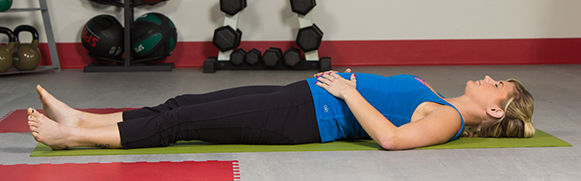
Deep Abdominal Breath
“A person must have mastered abdominal (long, deep) breathing before progressing to any other yoga postures or breath techniques,” Garner asserts.
To begin, lie supine with all muscles relaxed (bend knees to relieve low-back tension, if needed). Place the hands on the lower belly. Inhale and draw air into the lowest part of the lungs. Notice how the belly rounds and the hands rise. (Initiate this movement from the lower rib cage, instead of by forcing the abdominals outward, says Edwards). Exhale and observe how the belly releases and the hands gently fall. Continue to breathe slowly and deeply, for five or six rounds of breath.
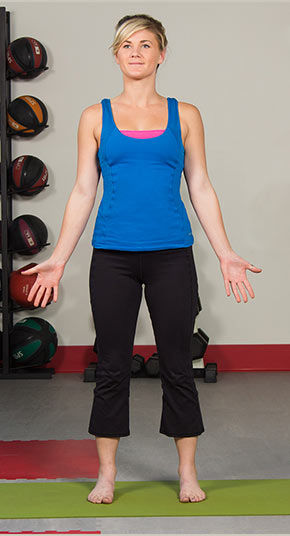
Standing Mountain Pose (Tadasana)
Stand with feet hip-width apart, feeling grounded and stable. Release the tailbone down toward the floor, gently draw the belly in and up, and lift the rib cage up out of the pelvis.
Relax the shoulders away from the ears and extend the top of the head toward the ceiling. Elongate the spine as if someone were pulling the body upward, chin parallel to the floor. Breathe slowly and deeply, relaxing the shoulders, throat and face.
Easier option: Try Seated Mountain Pose (using the same alignment but practiced from a chair.)
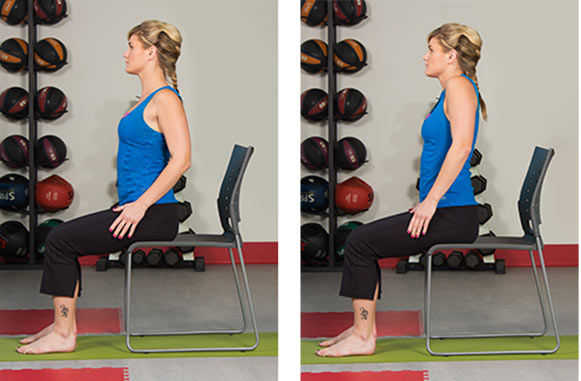
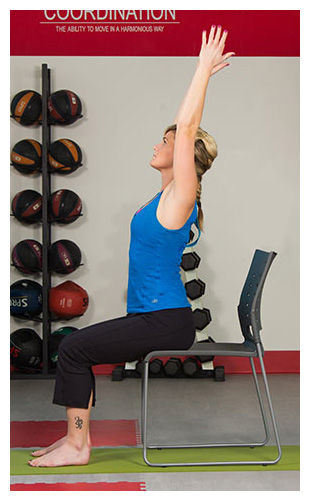
Shoulder Shrugs
Sit or stand tall in Mountain Pose. Inhale as you move the shoulders toward the ears, then drop them down while exhaling. Repeat several times with relaxed arms, synchronizing movements with the breath (inhale up, exhale down).
Extra challenge option: Inhale as you raise the arms overhead, palms facing inward. Inhale and lift the shoulders up to the ears, then exhale and drop the shoulders down (arms stay overhead). Repeat several times.
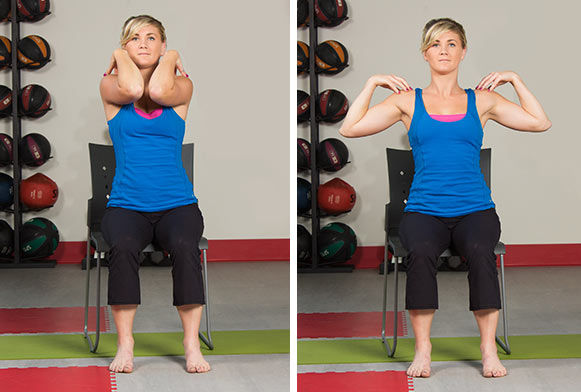
Angel Wings
From seated or standing Mountain Pose, extend the arms forward. Bend the elbows and place fingertips on shoulders. Inhale and open the elbows out to the sides, squeezing shoulder blades together. Exhale and bring elbows forward and together, sliding the shoulder blades apart. Continue for three to six breaths.
These are great as a mini-break when your client is sitting at their desk, notes Krucoff.
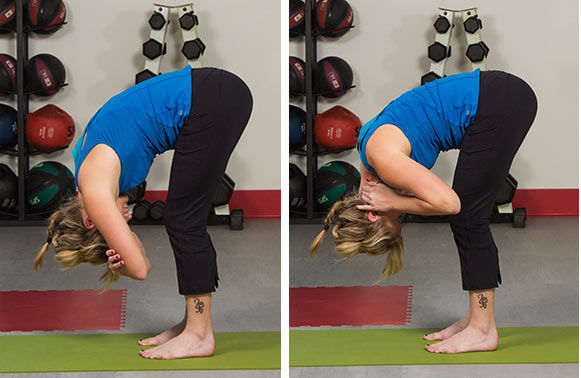
YogAlign Forward Bend With Neck Massage (Modified Uttanasana)
This pose applies traction to the cervical spine and brings blood flow to the neck and shoulder region, says Edwards.
From a standing position, lean forward, keeping knees bent. Flex from the hips (not the spinal column) and focus on lengthening the spine. Keep going until the belly rests on the thighs and the head hangs freely. Breathe deeply and massage the neck muscles and ears with the tips of your fingers, turning the head from side to side.
To come up, inhale and bend the knees deeply. Lead with the breastbone, hands on the thighs and keep a neutral spine all the way.
Easier option: Perform the pose while sitting on the edge of a chair seat.
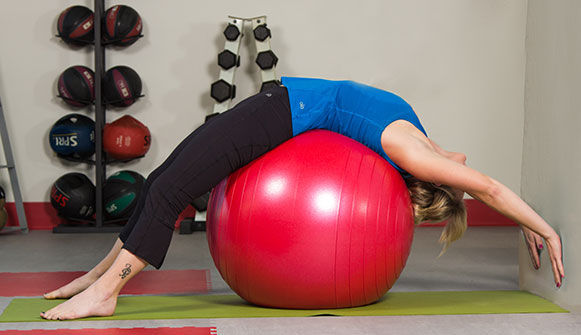
YogAlign Backbend on a Ball (Modified and Supported Wheel; Urdhva Dhanurasana)
This backbend stretches the anterior trunk and chest area, which leads to natural spine alignment, says Edwards.
Sit on a stability ball facing away from a wall. Begin to roll into a backbend, reaching arms back until fingertips touch the wall. Keep the shoulders away from the ears, the back of the neck long and the feet hip-width apart. Use a pillow under the neck if the chin lifts or neck aches. Breathe deeply and contract the shoulder blades downward. Hold the pose as long as it remains comfortable (a couple of minutes at most). To come up, roll forward into a squat position while keeping the head on the ball; then push back to sit upright.
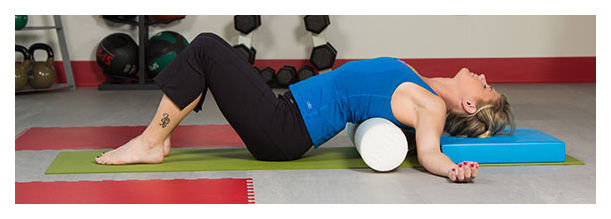
Easier option: Lie supine over a bolster or rolled-up blanket to mobilize the chest muscles and mid-thoracic spine, says Garner.
A New Release
With regular and mindful practice, yoga can offer a long-term solution to both the physical and psychological causes of neck and shoulder pain and discomfort.
“Yoga is not just a workout, but also a comprehensive approach to self-healing,” explains Krucoff. “It asks us to pay attention to the many factors that can influence neck and shoulder pain—including our postural habits, body mechanics, breathing, thoughts and emotions—and move with diligence and compassion in the direction of health.”
Author’s note: Except for YogAlign postures, all exercise instructions have been adapted from extended descriptions in Carol Krucoff’s book, Healing Yoga for Neck and Shoulder Pain.
The 2-Minute Posture Scan
Purpose: Help clients quickly assess and realign their posture before, during or after work or exercise.
Use: As a warm-up check, teaching moment or self-awareness drill.
1. Standing or Seated Setup
- Feet flat (or grounded through sit bones)
- Knees unlocked
- Spine tall—imagine length from tailbone to crown
- Eyes forward, chin level
2. Head–Neck–Shoulder Line
- Ears over shoulders, not in front of them
- Shoulders soft and broad—no pinching
- Jaw relaxed, tongue off the roof of the mouth
3. Ribcage–Pelvis Alignment
- Ribs stacked over pelvis
- Avoid “military chest lift”; instead, breathe into the lower ribs
- Pelvis neutral, with pubic bone and hip bones level
4. Feet–Ground Connection
- Weight even through balls and heels of the feet
- Sense the floor or ground under you; avoid leaning forward or back
Quick Reset Practice (30 seconds)
- Take 3 slow breaths: in through the nose, out through the mouth
- Lengthen through the crown with each inhale
- On each exhale, feel the shoulders drop and the ribs settle over the hips
- Re-check alignment: ear–shoulder–hip in one vertical line
Coaching tip: Have clients repeat these movements at transition points throughout their day, such as between meetings, before driving or before working out. Awareness is more valuable than correction.







 by
by