






 by
Strength training is widely recognized for its role in building muscle, improving physical function and supporting long-term health. However, it also provides benefits related to brain function and cognitive health. For health and exercise professionals, this is an opportunity to expand traditional strength-training approaches by incorporating strategies that challenge both the body and brain.
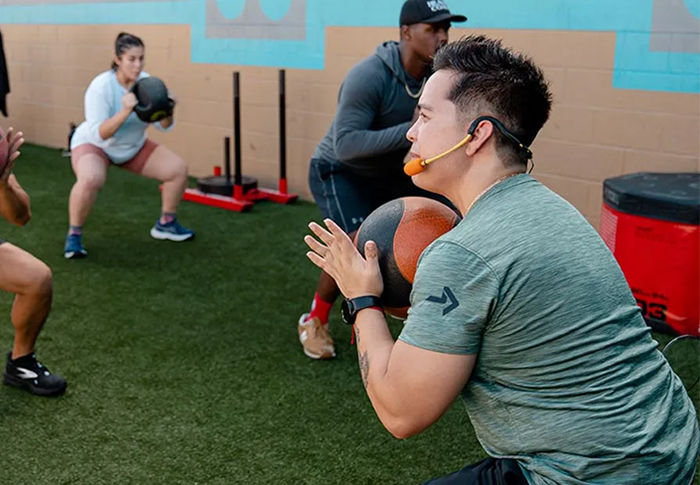
Incorporating brain-focused challenges doesn't require complicated exercises or specialized equipment. Simple tools such as medicine balls can be used to introduce movement patterns that challenge coordination, attention and reaction time alongside muscular strength. In this video, Jonathan Ross coaches medicine ball exercises designed to challenge both physical and cognitive abilities, showing how familiar movements can be adapted to incorporate an additional brain-training component.
These practical examples offer a glimpse into the creative programming strategies explored throughout Ross’s Strength Training for Brain Health course (worth 0.2 ACE CECs). You'll leave with actionable strategies to enhance exercise enjoyment, encourage problem solving and support long-term adherence.
In the two-hour course, you'll also explore how resistance training may support cognitive health through mechanisms such as improved blood sugar regulation and myokines. You'll also learn how different training loads and lower-body power may relate to brain health and how to translate these insights into practical programming decisions that support healthy aging.
 |
If you missed the live event, you can now purchase the full course. Strength Training for Brain Health (worth 0.2 ACE CECs) explores the emerging science behind the connection between strength training and brain health and offers strategies for incorporating simple and effective brain-training techniques into existing strength-training programs. |







 by