



 by
by |
Key Takeaways In this Q&A with the director of an adaptive dance program, we discuss the emotional and social benefits of exercise and the empowerment and social connections that develop around the program.
To learn more about training individuals with special needs, check out this course: Adaptive Fitness Exercise Programming. |
The benefits of an adaptive fitness program include not only the usual health and fitness improvements, but also emotional and social benefits that you might not consider in your daily work as a health and fitness professional. Add to that the empowerment and sense of community that builds in a setting where people learn, move and grow together and you have recipe for a truly life-changing experience for both the participants and their families—not to mention the instructors.
We spoke to Gretchen Vogelzang about the adaptive dance program she leads to learn more about how she runs her program, the sense of community that develops around the participants and the biggest lessons learned that may translate to the world of health and fitness.
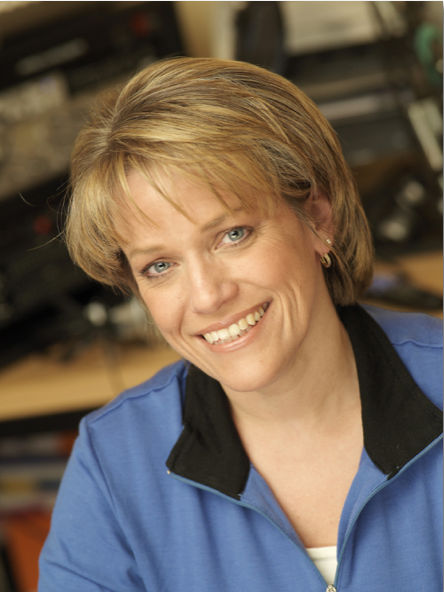 |
Gretchen Vogelzang, MFA, is a seasoned dance instructor, artistic director, choreographer and arts management executive. She has over 45 years of experience as an instructor and coach in ballet (all levels), pointe, repertoire and partnering, as well as contemporary dance forms within universities and highly successful private dance schools. In addition to teaching and directing the Greater Washington Dance Center, Ms. Vogelzang is the founder and Artistic Director of GWDC’s resident dance company, Festival Ballet Virginia. She holds degrees in Kinesiology and Theatre and a Master of Fine Arts degree in Dance Education from the University of California, Irvine. |
Can you tell me a little bit about your adaptive dance program at the Greater Washington Dance Center?and the young people it serves?
The adaptive program began in the Fall 2018 with six young children, all of whom continue to participate actively. The class initially enrolled children with Down syndrome but quickly added students with cerebral palsy and autism. We have children who are in wheelchairs, who need stability standing and who need extra help moving through the class. There are currently two classes, and we hope to expand in the near future.
The syllabus changes to meet the needs of the class, as each group has its own unique challenges and joys. This is important, as our goal is to allow all children to experience the joy of dance.
In addition to the benefits of staying physically active, what other benefits do your participants experience from taking part in your class?
While the physical benefits are important—coordination, strength, balance—the deeper impact is often emotional and social. Many of our dancers experience a profound sense of accomplishment. They begin to see themselves not through the lens of limitation, but through capability. That shift is powerful. It builds confidence, resilience and a willingness to try new things both inside and outside the studio. It has also been amazing to see the friendships and bonds that have developed over the years. In addition to these friendships, children have also been developing strong social/emotional skills. We have been working on perseverance, problem-solving, attentional endurance and emotional regulation. Another benefit has been their physical development skills. Both classes work hard at those fundamental movement skills that we all take for granted. Parents have noted that their individualized education programs have been modified because goals are being reached earlier than expected. This is due to their progress in terms of their physical abilities or being able to focus better in classes.
I understand that the parents of your dancers have formed a tight-knit and supportive community. Was that something you consciously fostered or did it come about naturally? How do you think that sense of community has benefited your dancers and their families?
The parents have definitely formed a strong support bond. Although it was not intentional, it certainly is a benefit to the program. We continue to encourage this bond by making the studio a place where parents feel comfortable hanging out. I feel this has been a selling point for the program, as parents share information and offer support to each other as new challenges arise.
|
Gretchen shared some feedback she has received from parents of her dance class students: “This program means everything to us. Not only does it provide fitness, but it also gives confidence to my little girl. She loves to perform and she really enjoys the weekly classes and the recital. It's teaching her a sense of community. She also enjoys attention given to her by the assistants. They are so patient and kind to our children. It warms my heart. Community is important to us because she can feel like she belongs. Often times, families of special needs children feel isolated and this gives us something to look forward to. We enjoy meeting other families so that we can share ideas and build friendships.” “I don't know what I would do without this group of moms and students. We share all the highs and lows of raising a child with special needs but also all the joys and trials of life with our typical children, jobs and spouses. This is more like a family vs. a community.” “My son has learned to follow directions and have patience, memorizes dances and performs–all with social connection and so much more. This class has created a social network for my son that I will be forever grateful—such a true blessing!” |
Are there any strategies that you could share that might translate to the world of inclusive/adaptive fitness? For example, how do you help build connections among both the dancers and their family members? Are there certain things you do in class to ensure everyone feels seen and empowered to participate?
Each class will be different. It’s the teacher’s job to observe each student and look for their strengths. Once you have an overall assessment of their collective strengths and interests, you can create a syllabus that meets their needs. One year, the class may be ballet-focused and the next, jazz. Having a preassigned syllabus each year doesn’t work. For example, one year, we did a solely ballet syllabus, and toward the end of the school year, it became apparent that the students were losing interest. It was not physical enough for them. We changed to jazz/hip hop, and it became a completely different class. Focus was laser-sharp, and behavioral issues were fewer. By making this change, we had a great end of the year.
The parents are invited in to observe at least once a month, or when the class requests their presence. We also have the class teach their parents the routines we are creating. That’s the best part of every class, and the students love showing off their skills.
We make a point of moving next to every child during class to observe them and acknowledge what they are doing. Saying, “good job” is not enough; you have to acknowledge what they were doing. “I saw you do that step. Can you show me again?”
Having dedicated teaching assistants is a must. Assigning a teaching assistant to a particular child helps the teacher move around the class and gives the child the dedicated support they need to flourish.
Is there anything else about this topic that you’d like to share?
Sometimes teachers make the mistake of treating the class differently from a mainstream class. Don’t. Same rules, same expectations. The class is capable of so much more than you think.
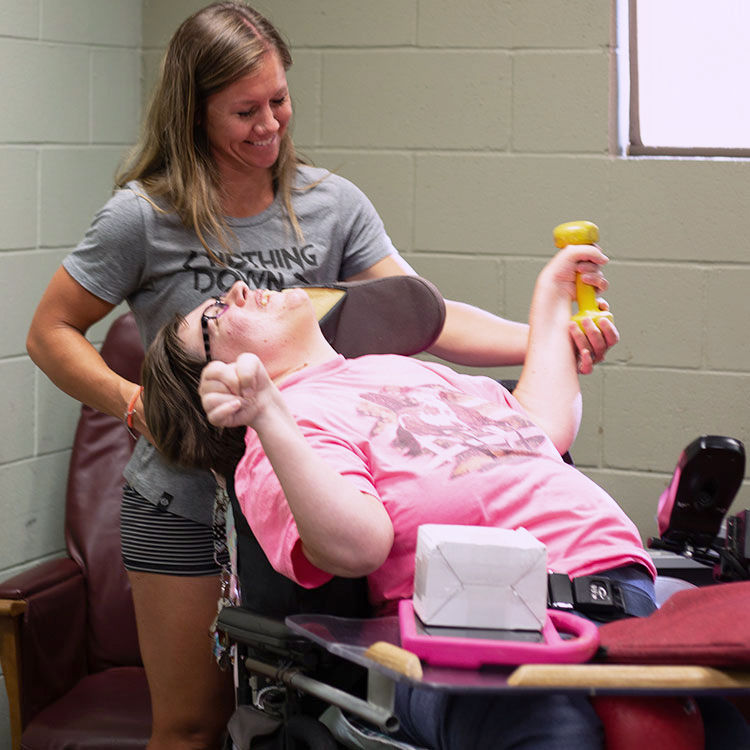 |
Created for a wide audience that includes exercise professionals, coaches, parents, caretakers, and more, Adaptive Finess Exercise Programming (worth 0.4 ACE CECs) will introduce you to strategies for working with special populations—in particular, individuals with Down syndrome or autism spectrum disorder, as well as non-ambulatory individuals who require a wheelchair. |







 by
by