






 by
by |
Key Takeaways
Check out these two Specialist Programs: Corrective Exercise (worth 2.5 ACE CECs) and Pain-Free Movement (worth 1.2 ACE CECs). Read the other blogs in this series: A BACK to School Program, Be a Chest Day Champion, Crunch Time and The Hamstrings Blueprint. |
Biceps exercises are always among the most popular in any gym but there is little research into which are most effective. To address this, ACE-sponsored research evaluated some of the most commonly performed biceps exercises to determine which most effectively target the biceps brachii. They looked at the following eight exercises:
- Cable curl
- Barbell curl
- Concentration curl
- Chin-up
- EZ curl (wide grip)
- EZ curl (narrow grip)
- Incline curl
- Preacher curl
|
Anatomy of the Biceps Brachii The biceps brachii muscles, which are located on the front of the upper arm, are responsible for flexion at the elbow and supination at the forearm (i.e., turning the palm upward).
|

Over the course of two sessions, the study participants performed the eight exercises with electromyography (EMG) electrodes on the biceps brachii, anterior deltoid and brachioradialis to measure total muscle activity during each movement. What the researchers found was that the concentration curl came out on top, eliciting significantly higher muscle activation of the biceps than any of the other exercises tested.
According to the researchers, when training the biceps, other muscles, including the anterior deltoid and brachioradialis, can become involved in the movement, effectively taking a portion of the load away from the biceps and thereby reducing the effectiveness of the exercise. This is why the concentration curl stood out as significantly more effective, as it truly isolates the biceps muscles more so than the other exercises.
The researchers also point out that while the concentration curl most effectively isolated the biceps, that may not always be the best option for clients interested in functional fitness. Unless your client is a bodybuilder with a specific goal of developing larger biceps, variety is important.
As the research team wrote in their original article, “the best way to ensure that you activate other key muscles of the arms is to sprinkle a couple of the other seven biceps exercises into your routine as well.”
Watch this video to hear ACE CEO Cedric X. Bryant, PhD, FACSM, discuss the importance of the study and see the exercises being performed.
Expert Advice
In the interest of providing options and adding variety to workouts, we asked two ACE employees to tell us about their favorite biceps exercises. Here’s what they had to say:
Jacque Crockford, DHSc, ACE Director of Product Development, says her two favorite biceps exercises are the TRX biceps curl and eccentric bent-over row.
The TRX biceps curl is great for any client, she explains, “because of how the suspension trainer angle can be adjusted for different strengths and abilities.” Clients can adjust the body angle by stepping closer or farther away from the anchor point. Another great modification involves keeping one leg straight and the other bent to be used more like a kickstand for support. To see the most benefit, advise clients to keep the elbows elevated.
The eccentric bent-over row, which involves slowing down during the lowering phase of the movement, is more suited for advanced exercisers, as it requires hamstrings flexibility and core strength to stabilize during the movement. “It is primarily a back exercise,” says Crockford, “but the eccentric nature activates the biceps more. Supinate the grip so the palms face forward and be sure to keep the [trapezius muscles] relaxed and elbows in toward the ribs. This exercise can be performed standing or by using an incline bench (facedown) to reduce the effort in the legs and back.”
Anthony Wall, PhD, ACE Senior Director of Global Business Development and Professional Education, chooses barbell curls and close-grip lat pull-downs.
Wall says that he enjoys the pull he feels in the biceps when doing barbell curls and that the fixed arm position challenges him. “I like to use this exercise toward the end of my arm routine,” he says. “It can still be effective using a lower load for someone who isn’t ready to use a heavier weight.”
If a client finds this exercise to be uncomfortable in the forearms, then switch to a dumbbell curl, which allows for more movement of the hand position.
The close-grip lat pull-down is primarily used as a latissimus exercise but, because of the position of the arms and the close-grip hand position, it also effectively recruits the biceps. This exercise is performed with the hands facing the exerciser, positioned approximately shoulder-width apart. When pulling the bar toward the mid-chest, the elbows should pass close to the side of the body.
This exercise may be more appropriate for clients who are a bit more advanced and understand how to perform a multijoint movement.
Final Thoughts
Building stronger biceps isn’t only about looking better in the mirror (though who doesn’t want that?). The biceps are vital for functional movements like lifting objects off a shelf and turning a doorknob, which means that exercises addressing these muscles are essential for any client, not only bodybuilders or athletes.
According to the ACE-sponsored research, concentration curls are the best option for targeting the biceps. Also, consider adding our expert recommendations to your repertoire. Check out these links to learn how to perform each movement or share them with your clients:
- Concentration curl
- TRX biceps curl
- Eccentric bent-over row (slow down during the lowering phase)
- Barbell curl
- Close-grip lat pull-downs with the hands facing the exerciser
| If you are an exercise professional interested in designing safe and effective resistance-training programs for your clients, check out these two Specialist Programs: |
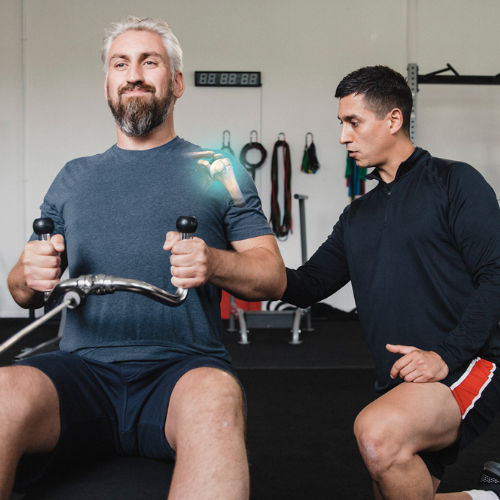 |
Corrective Exercise (worth 2.5 ACE CECs): As an ACE Corrective Exercise Specialist, you will design programs for clients affected by chronic conditions or injuries, empowering them to regain daily function and move with confidence. |
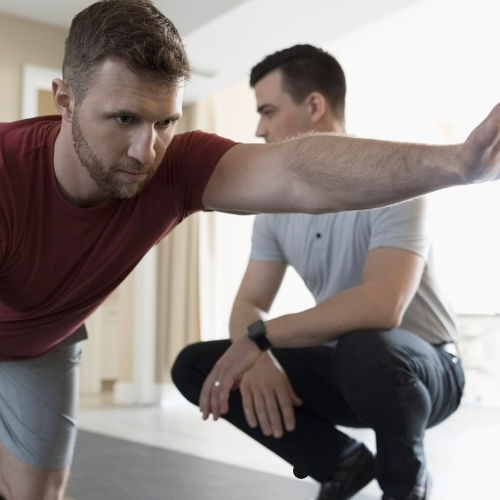 |
Pain-Free Movement (worth 1.2 ACE CECs): As a Pain-Free Movement Specialist, you will better understand how pain affects movement and how to create new strategies to help people move without pain. |





 by
by