





 by
Last updated on November 6, 2026 (originally published on February 23, 2015)
While there is no single right way to train clients who have obesity, using a client-centered and individualized approach can be an effective method to employ. The ACE Integrated Fitness Training® (ACE IFT®) Model promotes Functional Training prior to Movement Training, and movement must be executed properly before integrating load. Moving too quickly to the Load/Speed Training phase may result in joint stress or injury if faulty movement patterns are present under heavy resistance.
Functional resistance training and training for daily activities is an ideal method to ensure clients connect their exercise gains with life movements. It also helps ensure clients develop a positive connection to exercise. The key is to utilize “precursor” exercises, like the ones below, which benefit coordination, stability, mobility and motor control.
When progressing a client to the next exercise, the length of time spent on each exercise depends upon on the individual’s movement abilities. When the client demonstrates excellent movement skills, they can progress to the next exercise. Sets and repetitions should be based on the client’s ability and the length of the training program. Below are exercises for clients with obesity, along with different progressions that you can use.
Bend-and-Lift
The following presents a series of modifications for the bend-and-lift movement, beginning with the hip hinge.
Hip Bridge >
Lie on on your back with knees bent and feet flat on the floor. Lift the hips into the air and keep the arms on the floor.
Squat Up and Down from a Bench >
Sit on a bench with arms held straight in front of the body. Stand into an upright position, then return to the starting position.
TRX Squat Up and Down from a Bench >
Hold TRX straps while sitting on a bench. Lift the body into an upright position while using the TRX for support. Return to the starting position.
TRX Squat >
With elbows tucked against the body, hold the TRX handles and stand upright. Lower the hips into a squat position and extend the elbows. Return to the starting position.
Body-Weight Squat >
Stand with arms at shoulder height in front of the body. Lower the hips into a squat position and return to the starting position.
Squat With Light Load (e.g., Medicine Ball) >
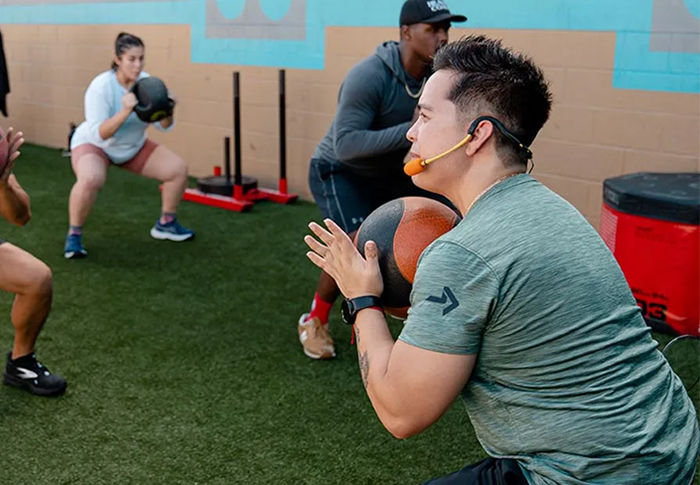
Stand while holding a medicine ball in front of the chest. Lower the hips into a squat position, then return to the starting position.
Directional Change or Split Squat Stance
Perform a squat, lift the left leg off the ground and rotate 45 degrees before placing it back on the floor, then perform another squat. Perform a full rotation, then repeat in the opposite direction.

Single-Leg Movement Patterns – Forward
When people think of single-leg movement patterns, they often envision the lunge. However, in real life, the primary forward movement is gait.
Static Lunge >
Assume a lunge stance. Lower the back knee toward the ground. Return to the starting position and repeat. Complete sets on each side.
Forward Weight Shifts >
From a standing position, step forward, load the front foot with weight and step back to center.
Forward Walking >
Stand and walk forward, concentrating on core activation and posture.
Suitcase Carries >
Place weights on the ground. Squat, pick up the weights and walk to another area.
Forward Alternating Lunges >
Stand with feet hip-distance apart. Lunge one leg forward while maintaining good upper-body posture and then return to the starting position. Alternate legs.
Body-Weight Step-Ups With Both Feet on Platform >
Face a plyo-box and step the right foot on the bench, followed by the left. Step the right foot off the bench, followed by the left. Complete sets on each side.
Steps-Up With Hip Flexion
Stand with one foot on a raised surface. Step up and raise the opposite leg to a 90-degree angle.

Single-Leg Movement Patterns – Backward
Backward movement is essential for daily living and becoming more physically active.
Static Lunge >
Assume a lunge stance and lower the back knee toward the ground. Return to the starting position and repeat. Complete sets with each leg.
Backward Weight Shifts >
Begin standing and step back. Load the back foot with weight and step back to the starting position.
Backward Alternating Touch Backs >
Stand with feet hip-distance apart. Extend the leg back, touching the ball of the foot on the ground. The knees should not bend like a lunge. Return to the starting position.
Backward Alternating Lunges >
Stand with feet hip-distance apart and lunge backward, bending the knees, while maintaining good upper-body posture. Alternate legs.
Backward Lunge With Forward Hip Flexion
This exercise will help you practice one-legged balance.

Upper-Body Pushing
Upper-body pushing is an essential movement pattern for daily activities and during many physical activities and exercises.
Smith Machine Push-Up >
Adjust the Smith rack to desired height. Place the hands wider than the shoulders and perform push-ups.
TRX Chest Press >
Adjust the TRX so that the handles hang about waist high. Start with feet in a split stance. Bend and extend the elbows while maintaining stability in the torso.
Push-Up Against Gravity >
Perform a push-up either on the ground or by incorporating equipment.
Push-Up With Legs on Stability Ball >
Place the stability under the quads (under shins are a progression) and perform push-ups.

Upper-Body Pulling
A pulling exercise is an essential movement pattern used to bring items toward the body. This requires adequate stability in the scapula as well as shoulder mobility.
Upright Body-Weight Rows With Foam Roller Behind Shoulder Blades >
Place a foam roll against the wall and position the roll under the shoulder blades. Perform a row motion with the arms. Progress using a resistance band for a greater challenge.
Smith Machine Rows >
Adjust the Smith rack to desired height. Place the hands wider than the shoulders and perform rows.
TRX Rows >
Adjust the TRX so that the handles hang about waist height. and start with feet in a split stance. Bend and extend the elbows while maintaining stability in the torso.
Bilateral Rows >
With a resistance band or cable, position the body in either a seated or upright position. Perform rows while maintaining good posture.
Unilateral Rows With Bilateral Stance >
With a resistance band or cable machine, stand upright with feet shoulder-distance apart.
Unilateral Rows With Unilateral Stance
Position feet in a unilateral stance, bending the front leg, keeping the back leg straight, and leaning forward slightly. Perform dumbbell row with the arm opposite of the front leg. Repeat on the other side.

Rotational Movement
Rotational movements increase thoracic mobility, hip mobility and strength in the torso region.
Side Lunge With Torso Rotation >
Stand and lunge the left leg into a side lunge. Reach the right hand toward the left calf (rotating the torso slightly). Return to the starting position and repeat on both sides.
Standing Rotation With Resistance Band >
Stand with feet shoulder-distance apart. Hold a band in front of the chest and rotate the torso using core strength. Complete sets on both sides.
Standing Cable Machine Rotation
Stand sideways to a cable machine with your feet hip-width apart. Hold the cable handle relatively close to your body slightly below chest height, positioning your hands at the midline of your body. Engage your core muscles to brace your torso. Keeping your torso vertical to the floor, pull your shoulder blades down your back without arching your low back.






 by