





 by
by |
Key Takeaways “Secret shopping” group fitness classes using the ACE RRAMP Approach™ reveals how instructors can impact participant engagement, confidence and long-term adherence by creating a more welcoming and empowering environment. In this blog, we explore how the ACE RRAMP Approach—Respect, Recognition, Alignment, Mistakes, and Participant—can be used to evaluate the group fitness experience, in this case in HYROX-style circuit training classes. Read on for takeaways that you can apply as a group fitness instructor.
|
After a lifetime as an athlete, I stepped away from competition for several years to allow my body to heal and to reset my relationship with training. Recently, I felt ready to re-enter a competitive space—not necessarily to outperform others, but to challenge myself again. HYROX immediately caught my attention. Its circuit-style format aligns with how I enjoy training, the movement patterns are familiar, and the growing prominence of HYROX within the fitness industry made it an appealing avenue to explore.
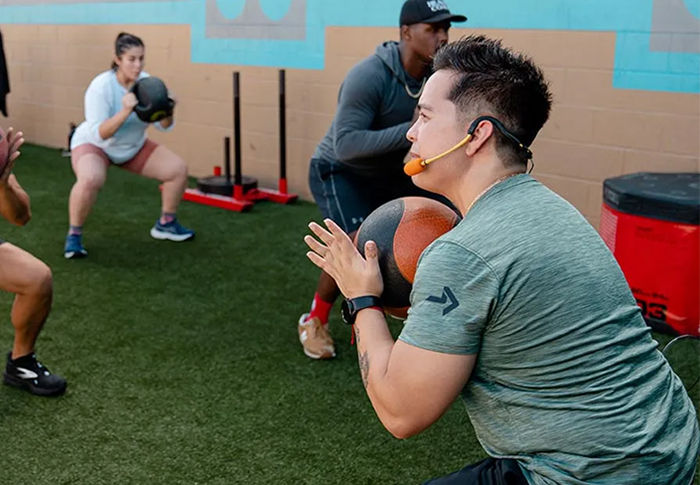
Since the COVID-19 pandemic, I have trained primarily alone in my garage gym. While this approach supported consistency and autonomy, it lacked the social connection and shared motivation that group training can provide (and I needed some additional equipment). As a result, I began “secret shopping” HYROX-style group fitness classes at several facilities, intentionally evaluating not only the programming and facility, but the participant experience as a whole.
To evaluate these experiences, I used the ACE RRAMP Approach—Respect, Recognition, Alignment, Mistakes, and Participant—as a guiding framework. What emerged was a clear illustration of how powerfully this approach can shape the group fitness environment and influence participant engagement, confidence and long-term adherence.
R = Respect: Establishing Psychological Safety from the First Touchpoint
Respect in group fitness is often discussed in terms of interpersonal interactions during class, but my experience demonstrated that respect begins well before the warm-up.
In one facility, registering for class triggered immediate and intentional communication. I received a welcome message, an invitation to ask questions and reassurance that the instructor had been informed of my attendance. When I arrived, I was greeted by someone who expected me, knew my name and ensured I felt oriented within the space. This initial interaction established trust and psychological safety before the workout even began.
In contrast, another facility required a liability waiver but provided no additional communication. Upon arrival, staff were unaware that I would be attending and no effort was made to determine whether I was new or unfamiliar with the class format. This lack of acknowledgment created uncertainty and diminished my sense of belonging.
Respect was also reflected—positively and negatively—in instructor communication. In one class, an instructor made joking remarks suggesting a participant did not belong due to the class difficulty and threatened additional running if weights were dropped. Even if intended humorously, such comments can undermine psychological safety, reinforce shame-based motivation and conflict with the ACE view on inclusive fitness.
Conversely, other coaches fostered respect through encouraging language, high-fives and genuine acknowledgment of effort. These environments communicated that participants were valued as people, not merely performers.
|
Instructor Takeaways: Respect
|
R = Recognition: Valuing Effort, Skill and Presence
Recognition emerged as one of the most influential factors in shaping my overall experience. In its most effective form, recognition was specific, timely and meaningful.
In one positive example, an instructor approached me during class to acknowledge my movement quality during wall balls. Given that HYROX competition standards require specific depth and positioning, this feedback was particularly valuable. The instructor confirmed that my technique aligned with competition expectations, reinforcing both confidence and competence.
Peer recognition also played a critical role. Verbal encouragement, shared effort and supportive partnerships fostered connection and motivation. Being paired with a partner who was enthusiastic and welcoming transformed what could have been an awkward interaction into a collaborative and engaging experience.
In contrast, some classes lacked any form of recognition. Aside from a single participant greeting me, no introductions or acknowledgments were made. The absence of recognition created emotional distance and reduced engagement, despite the physical intensity of the workout.
|
Instructor Takeaways: Recognition
|
A = Alignment: Creating a Shared Experience
Alignment is about creating an environment where participants feel connected to one another and united by a common purpose. While HYROX training can easily become an individual pursuit, the most effective instructors intentionally create opportunities for participants to work together rather than simply work alongside one another.
One of the strongest examples of alignment I experienced occurred in a class where participants consistently encouraged one another throughout the workout. People offered high-fives, cheered for each other's efforts and celebrated successes regardless of ability level. When I arrived without a partner, both the instructor and another participant immediately helped me find one. Rather than feeling like an outsider joining an established group, I felt welcomed into a shared experience.
The instructor further reinforced this atmosphere by using inclusive language and directing participants to support one another during challenging portions of the workout. The message was clear: everyone was working toward the same goal of completing the session successfully.
In contrast, one of the least effective experiences felt highly individualistic despite being conducted in a group setting. Participants completed the workout in the same room but rarely interacted with one another. There was little encouragement, no intentional opportunities for connection and no effort to create a sense of shared purpose. The common experience was not cooperation, but simply enduring the same difficult workout in close proximity.
This distinction highlighted an important lesson: participants do not automatically become a community simply because they occupy the same space. Alignment requires intentional facilitation. When instructors encourage cooperation, shared learning and mutual support, participants begin to view one another as teammates rather than strangers.
|
Instructor Takeaways: Alignment
|
M = Mistakes: Normalizing Learning and Skill Development
One of the most effective aspects of group fitness instruction is helping participants understand that mistakes are not failures—they are a natural and necessary part of learning.
In the most positive HYROX experiences I had, the instructor approached movement correction as an opportunity for growth. When discussing race-specific standards for movements such as wall balls, they provided feedback to me in a way that reinforced learning rather than judgment. Corrections were specific, constructive and focused on helping me improve my technique. As a result, I could refine my skills without feeling self-conscious about making mistakes.
This instructor appeared to understand an important principle of motor learning: movement competency develops through practice, feedback and repetition. Mistakes were viewed as information rather than evidence of failure.
In contrast, some environments provided little support for skill development. In one class, I was expected to understand movement standards and workout processes without much guidance or coaching. While this may create efficiency, it can also leave newer participants uncertain about whether they are performing movements correctly or progressing appropriately.
For individuals exploring a new training modality such as HYROX, the opportunity to make mistakes, receive feedback and improve is essential. When instructors normalize mistakes as part of the learning process, participants are more likely to experiment, ask questions and remain engaged. When mistakes are viewed negatively—or when coaching opportunities are missed—learning and confidence can suffer.
|
Instructor Takeaways: Mistakes
|
P = Participant: Creating Ownership, Agency and Belonging
Ultimately, the most positive experiences occurred in environments where participants were treated as integral contributors to the class experience.
In supportive settings, participants encouraged one another through verbal praise and physical gestures such as high-fives. The instructor modeled enthusiasm, presence and genuine interest in each individual. Despite being new, I felt welcomed and valued.
In the most negative experience, the instructor asked only for my name and did not inquire about my experience level, familiarity with HYROX or potential movement considerations/injuries. Only after class did they ask whether I had previously attended a HYROX session—and expressed surprise when I said no. As a new participant in a large, experienced group, this lack of engagement reinforced a sense of invisibility.
When instructors intentionally engage participants as individuals, group size becomes less relevant. Belonging is created through attention, curiosity and shared purpose.
|
Instructor Takeaways: Participant
|
Final Thoughts: Group Fitness Is Intentionally Built
HYROX-style training is inherently challenging, but challenge alone does not create community. The ACE RRAMP Approach provides a structured and practical framework for fostering environments where participants feel respected, recognized, aligned, supported through mistakes and valued as individuals.
For exercise professionals, particularly those working in competitive or high-intensity formats, the lesson is clear: the participant experience is shaped not only by programming, but also by climate. When ACE RRAMP Approach principles are intentionally layered before, during and after class, group fitness becomes more than a workout—it becomes a place of growth, connection and sustained engagement.
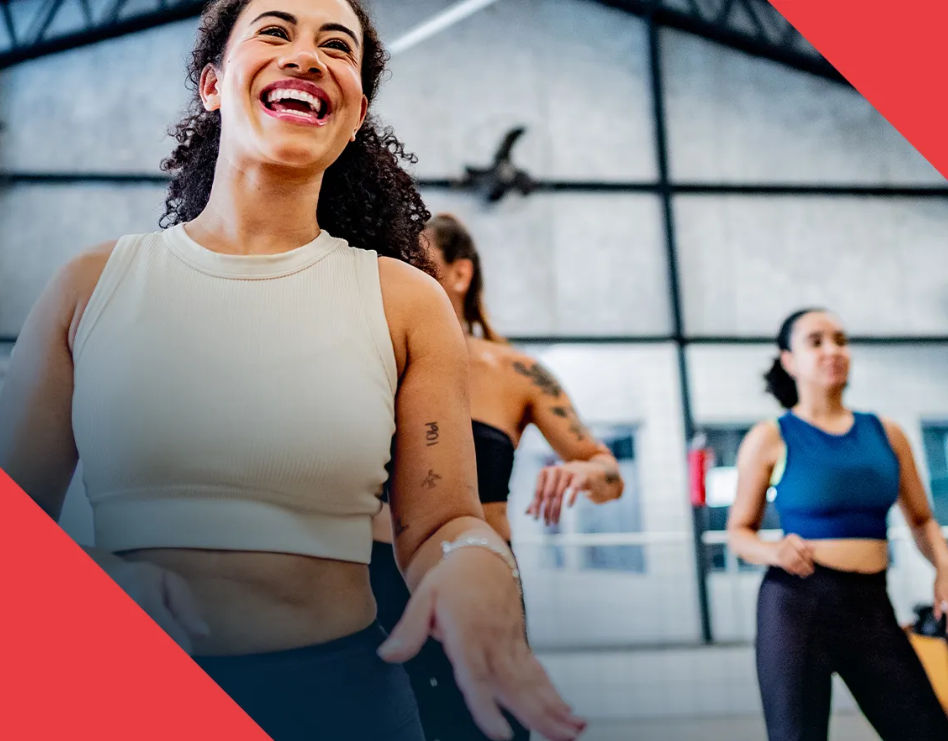 |
Click here to learn more about the ACE RRAMP Approach, which can be used to empower participants to improve health, fitness and motivation by creating a climate that fosters success. When implemented properly, this Approach can help you establish an inclusive environment where every participant feels like a contributing and valuable part of the group. |







 by
by