




 by
Last updated on November 13, 2026 (originally published on June 18, 2018)
Unilateral exercises are single-leg or single-arm movements. The primary benefit of including unilateral exercises in your training programs is that the exerciser is using both sides of the body equally. Doing so helps your clients avoid overtraining or overusing the dominant side, helps to correct muscle imbalances, improves balance, utilizes core muscles, aids in injury prevention and facilitates rehabilitation.
When you train one side of the body, the other side is also stimulated. During rehabilitation, this indirect stimulation of the non-working side of the body improves strength in the injured area. This is called cross-education of muscles and is a neural event. The brain pathways that are used for the primary unilateral exercise stimulate the same muscles on the opposite side of the body. For example, doing a single-leg knee extension with the right leg stimulates the left quadriceps muscle, but not the left hamstrings.
Cross-education is greatest for lower-body muscles and when eccentric (lengthening) actions are used to train the working muscles. However, concentric (shortening) contractions also initiate cross-education, as do isometric (no change in length) contractions, though to a much lesser degree.
To utilize unilateral training during sessions, try the suggested exercises and routines below.
Low-impact, unilateral lower-body exercises include:
- Side lunge
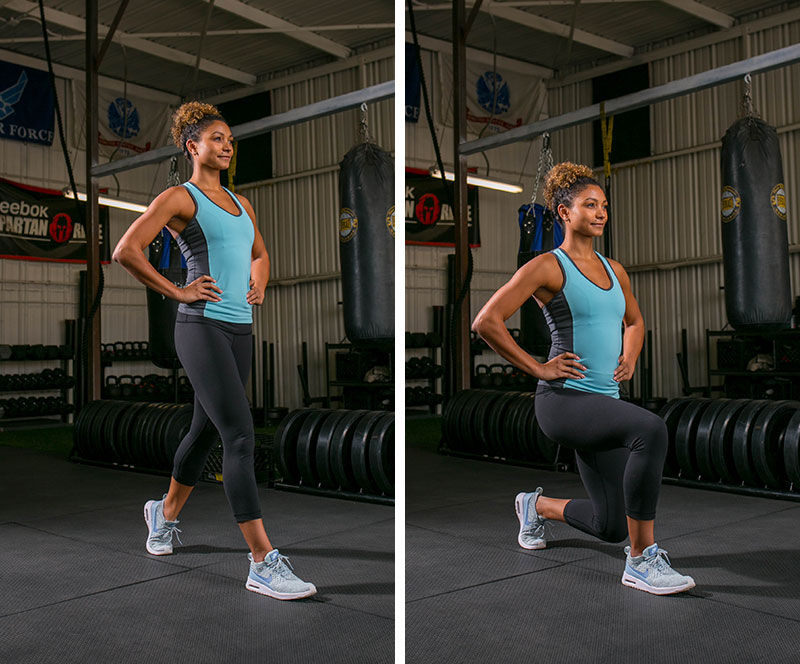
- Forward lunge
- Backward lunge
- Single-leg or "pistol" squat
- Box step-up
Unilateral upper-body exercises include:
- Single-arm dumbbell shoulder presses or lateral raises
- Single-arm rows or chest presses
- Single-arm standing dumbbell rows
- Single-arm triceps extensions and biceps curls
Plyometric exercises, which vary in difficulty, can be used to progress unilateral training routines. Note that the exercises below are ranked by level of difficulty from low to high. Start with low-intensity exercises and add medium- to high-intensity exercises as indicated below later in a program.
Unilateral lower-body plyometric drills include:
- Single-leg push-off (low)
- Lateral push-off (low)
- Lateral box jump (medium)
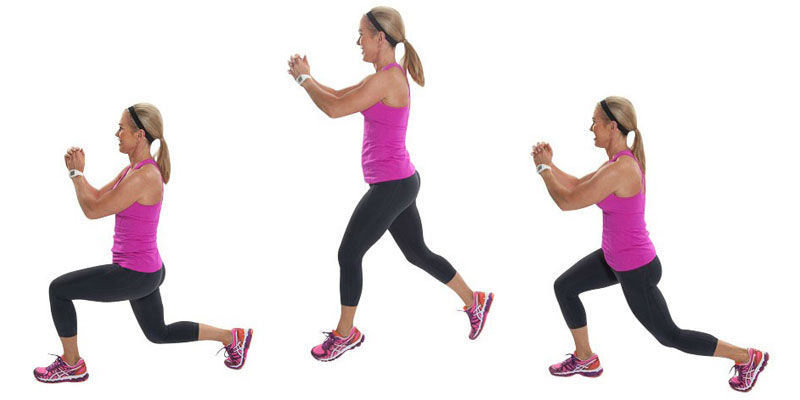
- Jump split squat (medium)
- Single-leg vertical jump (high)
- Single-leg tuck jump (high)
To incorporate unilateral exercises in your client’s workouts, try these sample routines using any combination of the exercises listed above.
Unilateral Lower-Body Superset
Alternate sides of the body: Superset one exercise, such as a forward lunge, and alternate performing sets with the right and left legs. Have the client perform 10 to 15 repetitions per set with 65 to 85% of their one-repetition maximum (1-RM), and rest for 20 to 60 seconds between sets. Rest periods should reflect the volume (repetitions) and intensity of exercise. Increase the length of the rest period if the volume and/or intensity is high.
The same approach can be used with arm exercises, alternating right and left sides of the body.
Right and Left Leg Lunges
Combined Lower-Body Unilateral and Bilateral Superset
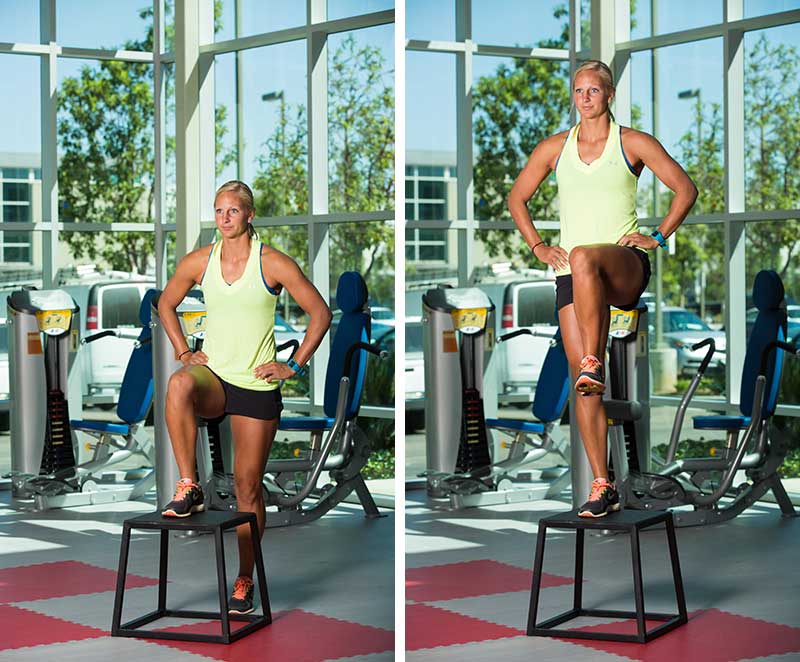
Choose a unilateral exercise such as a box step-up and a bilateral exercise, such as a squat. Alternate sets of the two exercises for three rounds, with 20 to 60 seconds of rest between sets. For both exercises, clients can perform 10 to 15 repetitions per set. For newer exercisers, body weight only is recommended for the box step-up; however, external resistance such as handheld dumbbells can be added for intermediate to advanced clients. For the squats, clients can use 65 to 85% of their 1-RM.
Box Step-Up
Combined Upper-Body Exercise and Plyometric Drill Circuit
For advanced programming and workouts, combine unilateral low-impact lower- or upper-body exercises with unilateral plyometric exercises. Repeat the circuit below two to three times. Note that the suggested rest period begins with 0 seconds. This is applicable when moving directly from one exercise to another to accommodate an advanced client’s higher fitness level.
|
Exercise |
Reps |
Resistance |
Rest Between Sets |
|
Right Arm Standing Dumbbell Row |
10–15 |
65–85% of 1RM |
0–60 seconds |
|
Left Arm Standing Dumbbell Row |
10–15 |
65–85% of 1RM |
0–60 seconds |
|
Right Jump Split Squat |
10–15 |
Bodyweight |
0–60 seconds |
|
Left Jump Split Squat |
10–15 |
Bodyweight |
0–60 seconds |
Single-Arm Standing Dumbbell Row

Jump Split Squat




 by