




 by
Last updated on November 13, 2026 (originally published on September 2, 2014
The anatomical term “posterior” refers to the back of the body and the word “chain” refers to the way that fascia, tendons, muscles, bones, and joints are linked together. Thus, the phrase “posterior chain” refers to the muscles and connective tissue of the backside of the body, specifically the low back, gluteals, hamstrings and calf muscles.
Posterior-chain exercises are important for athletic movements that require strength, flexibility and fluidity to properly jump, rotate, lift or land. While isometric exercises should not be eliminated, training the chain (as opposed to each muscle in isolation) is vital for human movement–inspired workouts.
Training the entire kinetic chain can also help to reduce possible injury caused by weak or improperly functioning muscle groups and this is one of the reasons why establishing postural stability and kinetic chain mobility are a key feature of the ACE Integrated Fitness Training® Model. In addition, a strong posterior chain contributes to a strong core musculature and reduces chronic low-back pain and low-back injury, while also facilitating coordination and strength through the limbs.
This posterior-chain workout incorporates compound exercises, which use two or more muscle groups to execute the exercise. Complete two to three sets of eight to 12 repetitions of each exercise.
Loaded Squats
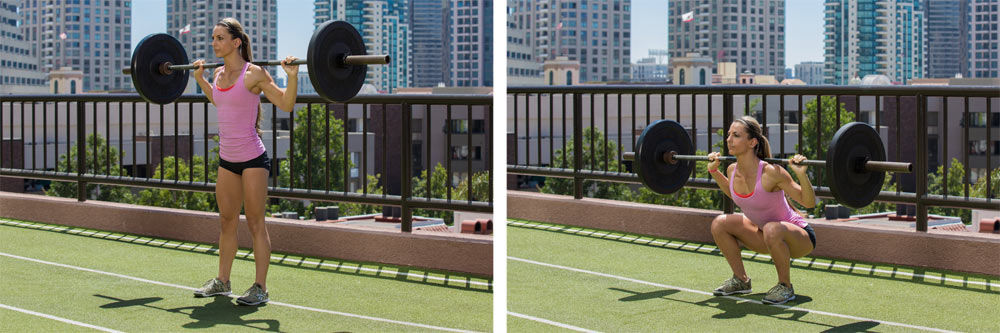
Loaded squats promote the strength of both the posterior chain and the quadriceps. Squats are a fundamental movement pattern and an integral part of a fitness routine. Loaded squats can use any form of weight including dumbbells, body bar, Olympic bar or other loaded devices. Be sure that whatever type of weight is used is positioned correctly across the upper traps and shoulders and not directly on the cervical spine.
How to Perform: Hold onto your weight and keep the upper body tall and engaged. Lower the hips back, similar to sitting into a chair, while trying to keep the torso and shins parallel to each other. Return to the original standing position and repeat the lowering and lifting movement. To modify this exercise, perform squats without the added load.
Forward Diagonal Lunges
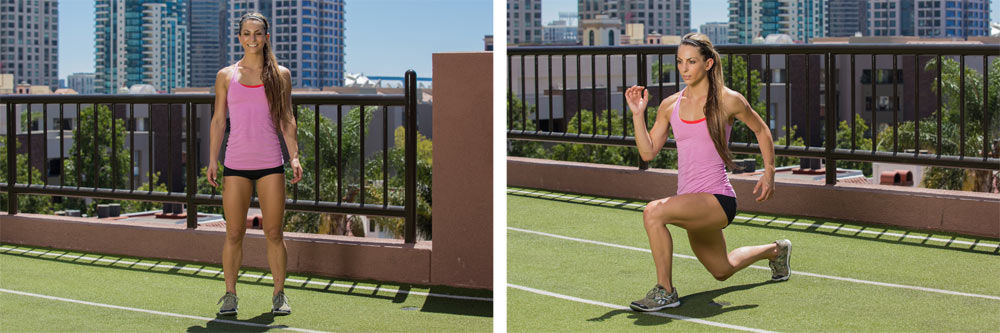
These lunges utilize an athletic-style lunge pattern, which promotes coordination and core stabilization.
How to Perform: Stand tall with feet hip-distance apart. Imagine a clock on the ground and your body is facing 12 o’clock. Step your right foot across toward the 10 o’clock position and lower into a lunge, with the left arm coming forward. Step back to center, feeling the engagement and effort of the hamstrings and glutes to push back to center. Step your left foot toward the 2 o’clock position as the right arm comes forward. Continue to alternate lunges. To modify this exercise, perform forward lunges.
Deadlifts
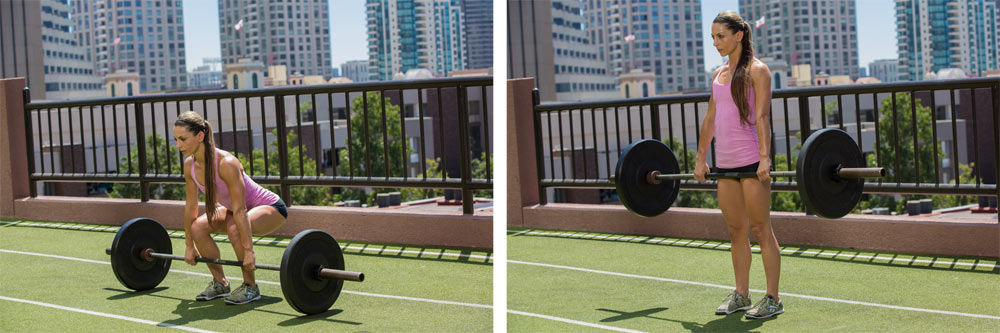
Deadlifts increase posterior-chain strength while promoting the fundamental movement pattern, the hip hinge. You may use dumbbells or a body bar, kettlebell or loaded Olympic bar to perform the exercise.
How to Perform: Begin by squatting behind a weighted Olympic bar and grasp it with hands just outside the legs. Using the legs, and keeping the back straight and core tight, push upward and lift the weight to a standing position. Slowly lower back to starting position by bending the knees and flexing at the hips.
Stability Ball Hamstring Curl
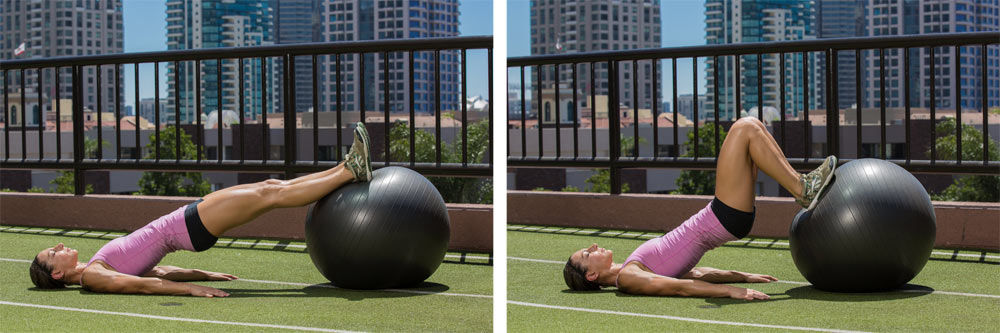
This exercise strengthens the posterior chain while increasing core strength and upper-body balance.
How to Perform: Lie on your back and place the heels and lower calf on top of the stability ball. Keep the legs straight and hands on the floor. Lift the hips into a bridge position and draw the knees toward the hips as the ball rolls from the calves to the heels. Slowly extend the legs and repeat the motion. To modify the exercise, perform glute bridges.
Plank Rows
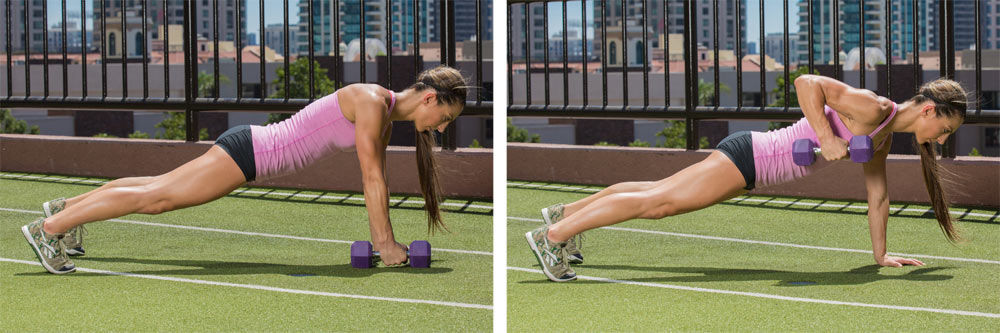
Plank rows stabilize the core musculature while increasing upper-back strength. Dumbbells or a kettlebell are ideal for this exercise.
How to Perform: Position the body into a full plank with feet shoulder-width apart.Hold the weight in one hand and lift the arm off the floor and move the shoulder blade toward the spine. Lower the hand to the floor and repeat. Complete one set on one side and then switch to the other arm. To modify the exercise, perform the rows while standing with a slight hinge at the hips.
Single-Leg Glute Bridge
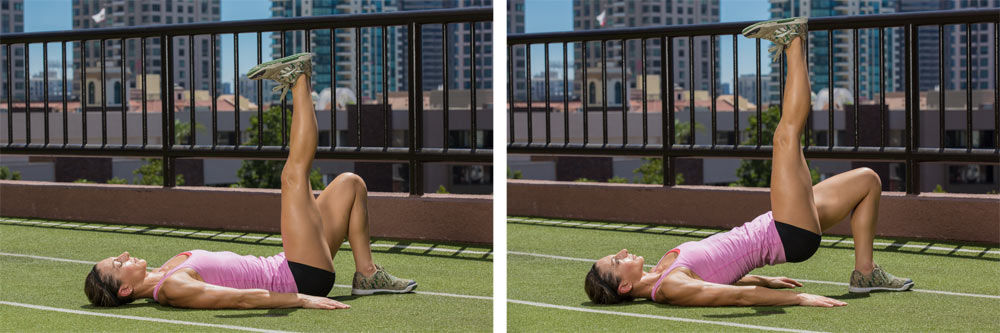
This exercise maximizes lower-body and posterior-chain strength.
How to Perform: Lie on your back and place the feet on the ground. Keep the right leg straight as you lift it into the air. Lift the hips off the ground into a bridge and slowly return the hips back to the ground. Complete a set on the left leg and then switch to the right leg.




 by