





 by
by |
Key Takeaways This expert Q&A covers the symptoms of menopause, as well as the benefits and challenges of exercise during menopause. Learn how your approach to coaching and programming may have to change as a woman moves through the various stages of menopause. Here are a few tips that personal trainers working with women during perimenopause or who are post-menopause can share with their clients:
To learn more, check out this course: Menopause Mentor. |
The time after menopause is a major life stage affecting a rapidly growing segment of both current and future clients that requires a truly tailored approach to coaching and training. To get a better understanding of the complex hormonal, physiological and social changes that occur during perimenopause and post-menopause, and how these might impact your approach when working with clients, we spoke to Irene McCormick, MS, creator of the Menopause Mentor course.
 |
Irene McCormick, MS, is an award-winning fitness professional, subject matter expert and university faculty member with expertise in women’s health, behavior change and midlife wellness. She is the creator of Her’D, a virtual and live platform designed to support women navigating perimenopause. Through education, coaching and evidence-based programming, she empowers women to understand their changing bodies and embrace midlife with strength, vitality and confidence. |
Generally speaking (understanding that all programming should be personalized), how do the training needs of women tend to shift leading up to and then after menopause, considering the hormonal, physiological and social changes that occur?
Women entering perimenopause are transitioning from the stage known as premenopause, a time that extends from first menarche to the beginning of erratically behaving hormones and menstrual cycles called perimenopause. The average age of perimenopause onset can range from the early 30s to mid-50s. Changing hormones signal the need to address fitness differently than a woman may have earlier in her life.
Fluctuations in estrogen levels during this time impact a woman’s physiology, and many women experience seemingly inexplicable changes. And, these changes are not only a result of low estrogen, but also of an interplay among hormones, including progesterone, testosterone, insulin, thyroid hormones and cortisol.
The loss of lean mass and increased fat storage is generally the most distressing issue for women at this stage. If adequate strength training is not taking place, muscle loss will occur, and, as age advances, the process of sarcopenia may begin. These two factors—decreased lean mass and increased fat mass—can be addressed through a combination of strength training (with adequate weight loads, sets and repetitions), and mobility training, which includes flexibility, body-weight movement control, proprioception and balance. This strength and mobility protocol can be practiced three times weekly, along with at least 150 minutes of low-impact aerobic exercise each week. The goals are to maintain aerobic capacity and muscular fitness to support metabolic function and optimal health. Additionally, weight- or load-bearing activities are important for decreasing the risk of developing other diseases and conditions, including osteoporosis and type 2 diabetes.
What role does exercise play in managing common symptoms of menopause, such as hot flashes and sleep disturbances?
Exercise is a major player in maintaining health during any phase of life, but contrary to popular protocols and consumer practices, more exercise is not always better for women with menopausal symptoms!
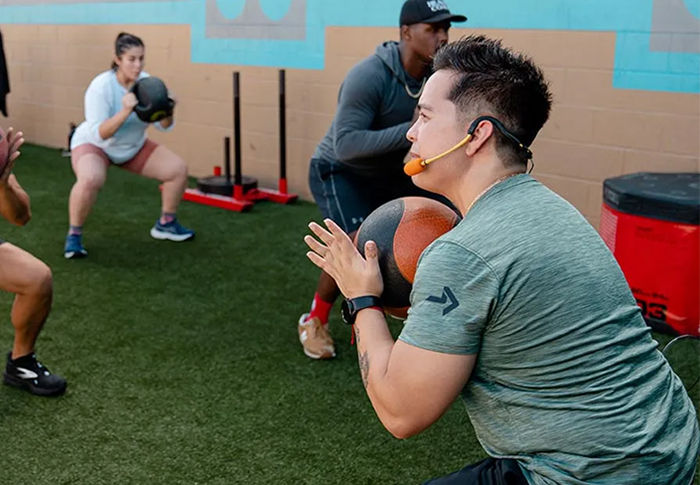
Here’s why—exercise during the menopause transition needs to meet several important goals: build strength and lean mass, improve or maintain health, enhance mobility and be manageable in the client’s weekly schedule. Many of the exercise protocols that are popular today, including boot camps, boxing, high-intensity interval training (HIIT) and certain group programming, typically focus on hard work, competitive environments, breathy intervals and caloric expenditure. These factors may not address a woman’s changing needs. In fact, these programs and protocols generally miss the mark completely. Many women are working as hard as the program requires but still gaining fat!
Because women often lose lean mass and gain fat during this life stage, resistance training can be combined with aerobic activity. The goal is to reduce body fat and improve muscular fitness and lean mass. If the primary focus of exercise is to perform at a high intensity, the result will be a higher reliance on carbohydrates as an energy source. So, high-intensity sessions such as those often seen in HIIT workouts may end up not burning as much fat compared to lower-intensity sessions.
Another reason why more exercise is not always better has to do with scheduling recovery time. Recovery is important for rebuilding and repairing the body after it has been stressed. After menopause, women may need to pay even more attention to recovery.
Hot flashes and night sweats are the result of changes in the hypothalamus gland. The ability to manage internal temperature control declines during this stage of a woman’s life. Research on hot flashes and night sweats in association with regular exercise is mixed, with some studies showing that strength training and aerobic training may decrease the frequency of hot flashes and other studies showing that high levels of vigorous-intensity physical activity may increase the risk of hot flashes.
What is your advice for working with this population?
Here are a few tips for personal trainers working with women during perimenopause and post-menopause.
- Ask your clients to stomp when they walk (if possible and safe). This extra effort places more stress on the bones of the lower body and kicks bone building into high gear.
- Encourage women to make the most of their access to gym time by focusing on resistance training and incorporating aerobic exercise elsewhere. If they have limited time, performing strength training and mobility sessions two or three times a week is emphasized.
- Support clients in adopting and maintaining a balanced dietary pattern that emphasizes healthy proteins, whole grains, vegetables and fruits, dairy or dairy alternatives, and healthy fats.
Can you talk a little bit about the emotional, mental and social changes that women sometimes experience during menopause and what coaches and trainers can do to support their clients?
Menopause symptoms can include increased depression and anxiety. Stress, in general, seems to increase, which can add to emotional strain.
Menopause is regarded by some women as a significant phenomenon, but it is still not often acknowledged publicly. Women and clinicians may have difficulty attributing symptoms to menopause, and neither women nor clinicians can define “normality” at menopause. Many women report getting little to no information and that they do not trust their Ob-Gyn to meet their menopause needs.
One study’s findings on how women make sense of their menopause experience rested on four social constructs. Through qualitative interviews, women reported that, in their view, menopause renders women invisible and unvalued; menopause is an “illness” that changes women; menopause is amenable to treatment with hormone therapy; and menopause is a temporary phase after which there is recovery. These four beliefs were significantly predictive of women’s perceptions of symptom severity such that if they believed it was treatable, there was a higher use of medical treatments (e.g., hormone therapy) and if they believed it was a temporary phase, there was higher use of non-medical treatments (e.g., lifestyle, complementary therapies).
Further analysis revealed that women have inadequate knowledge of menopause and can be surprised and distressed by its onset. Menopause is not talked about enough and is still considered a taboo subject by many. These findings have major implications for how women interpret their symptoms, how to manage the expectations of women in their 40s and 50s and how clinicians should advise women at this stage of their life.
Is there anything else about this topic that you’d like to highlight?
Sleep disruptions can have a negative impact on weight loss and lean mass during any stage of life, but can be especially problematic around the time of menopause.
Waking up during the middle of the night, having trouble falling asleep or waking up early in the morning are related to nighttime stress hormone changes. Shifts in cortisol and norepinephrine may bring about poor sleep and negatively impact recovery. It’s important to note that exercise is a stressor to the body and recovery is where the body rebuilds and comes back stronger for the next workout. So, paying attention to sleep health can be impactful on many levels.
 |
If you’re interested in learning more from this author about how to coach women through every stage of menopause, check out her Menopause Mentor course (worth 0.5 ACE CECs). This course offers evidence-based holistic strategies you can use with clients and covers the complex hormonal, physiological and social changes that occur during and after menopause. Upon completion, you will be able to create safe, personalized fitness programs tailored to the unique needs of your clients in menopause. |






 by
by