






 by
Last updated on November 20, 2026 (originally published on March 25, 2015)
As a female in the exercise science field for the past 20+ years, I have learned a thing or two about the importance of weight training. When the end goal is weight loss (or pretty much any end goal), a weight-training program is a must.
When it comes to weight lifting for weight loss, evidence suggests that supervised resistance training can significantly reduce body-fat percentage and whole-body fat mass in people with overweight and obesity, regardless of sex and age. Supervised muscle strengthening activities are not only the most effective method for increasing lean muscle mass, but are also effective for maintaining lean muscle mass during times of caloric restriction. Both resistance training alone and in combination with cardiorespiratory exercise can be effective at reducing fat mass. However, the combination of resistance training and caloric restriction may be the most effective method for decreasing fat mass in people with overweight or obesity. Increasing lean muscle mass does two things that contribute to weight loss and leading a healthy lifestyle. First, muscle is the largest tissue in the body and it is metabolically active, Each pound of muscle a person has uses about 4.5 to 7 calories per day. If a person were to gain 4.5 pounds of muscle mass through resistance training, this could lead to an increased resting metabolic rate of about 50 calories per day. While this is value may not seem like a lot, it will help to lessen the energy gap between energy intake and energy expenditure. The second way in which increased lean muscle mass contributes to weight loss is that improved muscular fitness can make it easier to not only perform activities of daily living, but can also to maintain and enjoy an active lifestyle.
Here are four key points to keep in mind while working toward your weight- or fat-loss goals. After all, weight is just a number and doesn’t say a whole lot about your body. I’m 5’2” and weigh about 135 pounds, while my mom is 5’2” and weighs around 113 pounds—the biggest difference is the amount of muscle we each have. Keep that in mind as you work toward your goals.
1. Lift heavy weights. I have trained a lot of individuals over the years and I cannot tell you how many have sold themselves short. The process of gradually adding more exercise resistance than the muscles have previously encountered is referred to as overload. While the degree of overload should be individually determined, a general guideline is to increase the resistance in gradations of about 5%. Using a range of about eight to 12 repetitions represents approximately 70 to 80% of maximal resistance, which provides an effective training overload, assuming the exercise is continued to the point of muscle fatigue. Once 12 repetitions can be completed, it is advisable to add about 5% more resistance to provide progressive overload and facilitate further strength development.
2. Focus on Intensity. You don’t have to spend more than 30 to 45 minutes on your weight workouts. In fact, you could cut this down to 20 minutes. I love training with my powerlifting friends, but I do NOT have the focus or the time to lift weights for more than two hours. The key is to work hard throughout the entire workout, minimizing rest and keeping your heart rate elevated.
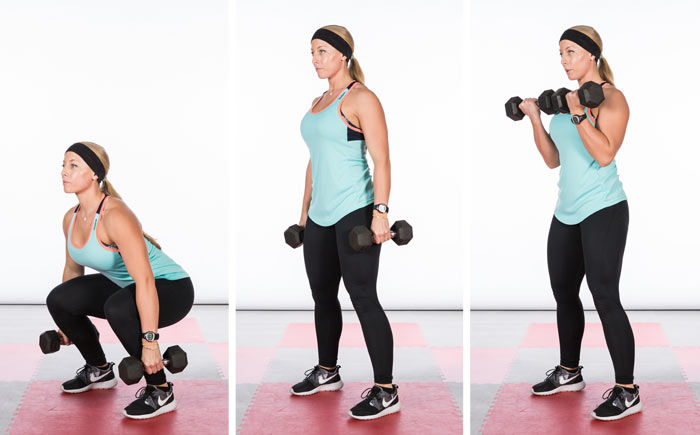
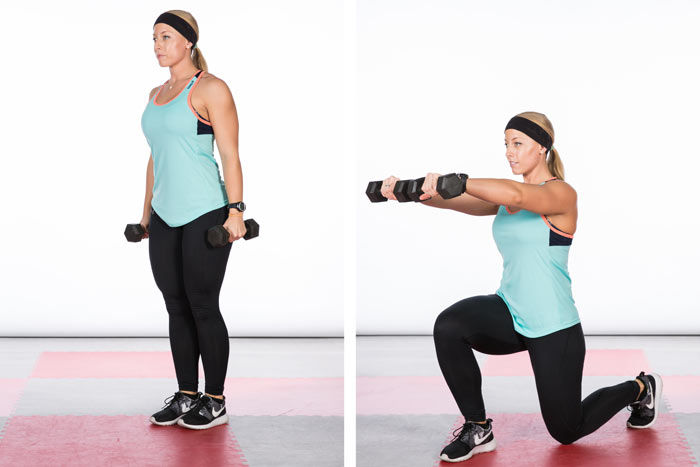
3. Do supersets and hybrids. A superset involves doing two or more exercises that target opposing muscle groups, back to back with minimal rest in between. For example, doing a set of 12 heavy bent-over rows followed by a set of 12 heavy chest presses is a superset. A hybrid involves combining two or more movements into one movement. Combining a squat with a shoulder press or a lunge with a squat followed by a lunge are examples of hybrid exercises. Incorporating these into your weight-training workouts can increase the intensity of your training, which is ideal for losing weight.
4. Perform circuit training. Circuit training is a great way to get in multiple exercises. You can focus on your upper body, lower body, or total body, all while keeping the intensity up. Of course, you still want to focus on using heavy weights. Below is a sample total-body, circuit-training workout. Move quickly from exercise to exercise and rest for a minute at the end of each round. Don’t be afraid to rest during a set, recover quickly, and then get back after it.
| Total-Body Fat-Loss Circuit |
| Circuit—Perform 1–3 Times Through |
| Exercise | Repetitions | Sets | Notes |
|
Squat + Curl |
8–12 | 3 | |
| Push-up | 15 | 3 | Drop to knees when form fails |
| Dumbbell Row + Fly | 8–12 | 3 |
| Circuit—Perform 2–3 Times Through |
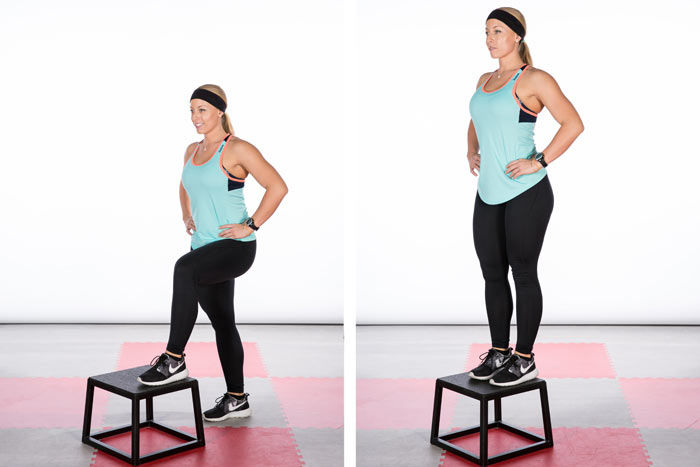
| Bench step-up | 12 each leg | 3 | |
| Lunge + Front raise | 12 each leg | 3 | |
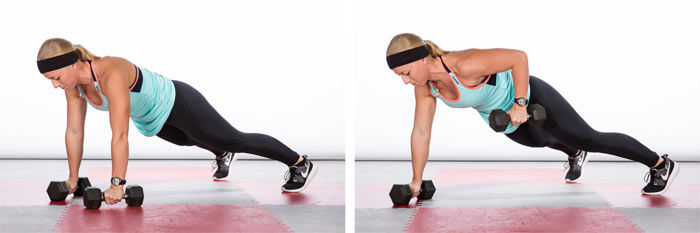
| Renegade row | 12 each arm | 3 | Drop to knees when form fails |
| Circuit—Perform 2–3 Times Through |
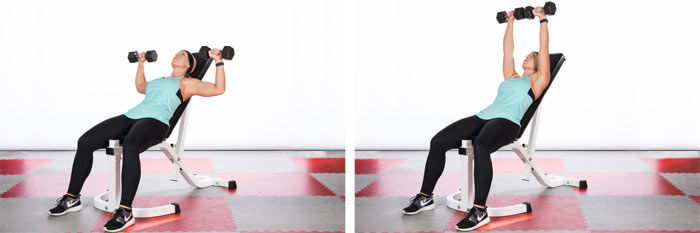
| Incline dumbell press | 8–12 | 3 | |
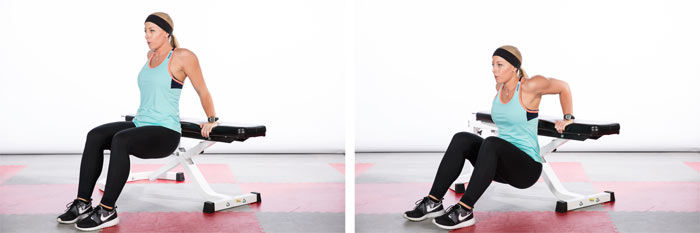
| Bench dip | 15 | 3 | Bend knees to make this easier |
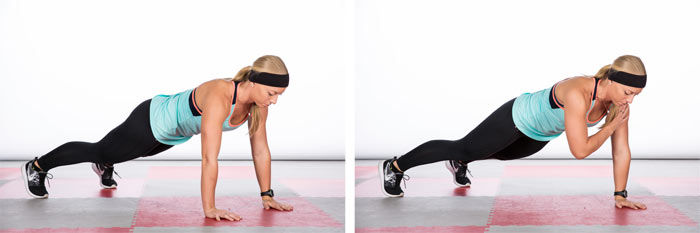
| Plank shoulder touch | 12 each side | 3 | Drop to knees when form fails |
Exercises:
Squat + Curl
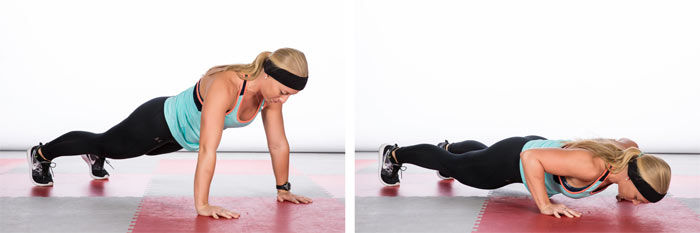
Push-Up
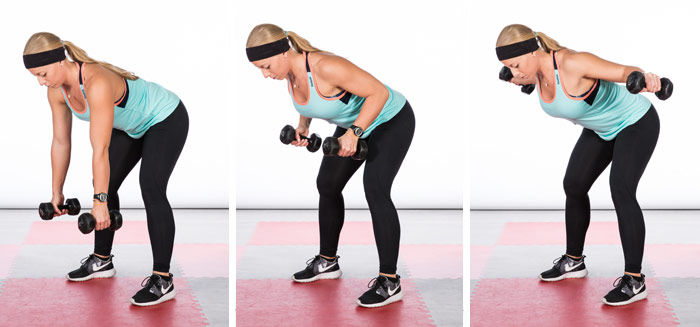
Dumbbell Row + Fly
Bench Step-Up
Lunge + Front Raise
Renegade Rows
Incline Dumbbell Press
Bench Dips
Plank Shoulder Touches
Ultimately, weight-loss occurs due to a combination of factors—sleep, nutrition, mindset and physical activity all play key roles in initiating and maintaining weight-loss. Be sure to check in with a physician before jumping into a weight-training regimen and don’t be afraid of failure. Failure is the point at which growth and change occur. Aim for three total-body, circuit-training workouts a week. If you decide to split your workouts, try to do two workouts focusing on your upper body, two workouts focusing on your lower body and one total-body workout per week. Remember, these workouts can be as little as 20 to 30 minutes—the key is keeping the intensity high.






 by