



| Provider: | ACE |
| Included: |
Book
eBook
Learning Activity
Recorded Video
Online Quiz
|
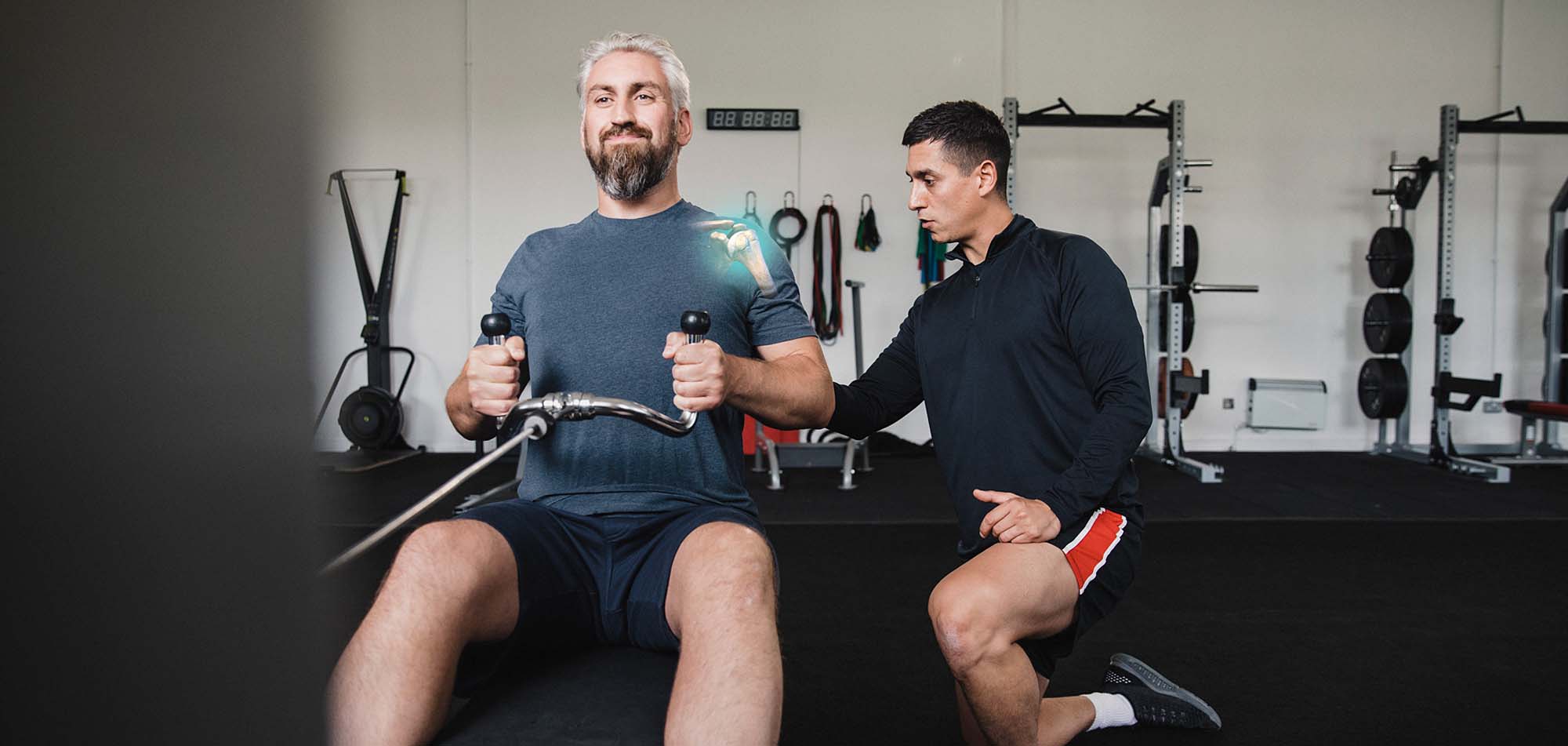
Help clients move beyond pain and resume the activities they love most
The prevalence of people enduring chronic orthopedic conditions or joint or muscle pain is high. Yearly, an estimated 50 million Americans experience chronic pain* and 8.6 million Americans are affected by injury†, often leaving them with decreased mobility, strength or function.
Knowledgeable exercise professionals can make all the difference for these clients by focusing on their unique goals and taking a functional approach to movement. The ACE Corrective Exercise Specialist Program provides a step-by-step method of recognizing client needs and applying appropriate exercise and programming techniques to support client achievement. Through personalized program design, you will help clients restore their confidence in performing activities of daily living and regain an active lifestyle. Furthermore, you will gain an understanding of how to effectively work together with medical professionals to improve your clients' continuity of care and enhance your referral business at the same time.
The ACE Corrective Exercise Specialist Program provides you the critical foundational knowledge of functional anatomy, allowing you to gain a deeper understanding of how anatomy and biomechanics apply to function. You will learn to create safe and effective programs using assessment considerations and identify appropriate exercises that can be immediately put into practice, enabling your clients to confidently resume their daily activities.
Empower clients to move in the ways that they want
Injuries and chronic conditions can have a devastating impact on an individual's lifestyle. As an ACE Corrective Exercise Specialist, you will help clients regain function and return to normal movement. You will coach clients to improved function, mobility, stability and strength, which will lead to less pain, better health and increased all-around quality of life. You will be equipped to work with a wide variety of clients, from those who want to jump back into an exercise regimen quickly to those who are afraid of moving and reinjuring themselves.
What's in the curriculum?
The ACE Corrective Exercise Specialist Program prepares the exercise professional to understand and assess the body as an integrated unit in order to better serve clients with chronic orthopedic conditions or those returning to activity post-injury. You will learn functional anatomy, movement assessments and step-by-step program design techniques. In addition to deepening your knowledge of human movement, you will understand key communication strategies so you can better connect with your clients and medical professionals. Upon completion, you will be equipped with the knowledge and solutions to confidently, safely and effectively help this population.
Meet the Experts
This course kicks off as ACE Senior Product Manager Jacque Crockford, DHSc brings together top experts, including:
- Greg Degnan, MD and Kelly Lynn from Atlantic Coast Athletic Clubs, who share their successful approach to building an orthopedic exercise referral network for personal trainers
- Michol Dalcourt, founder of the Institute of Motion and co-creator of ViPR, who brings his internationally-recognized expertise to understanding functional anatomy in exercise
- Kathryn Fox, DC and Elizabeth Leeds, DPT, who share tips and perspective on cross-referrals and collaboration from their experience working in chiropractic and physical therapy
- Subject matter experts Vickie Samuels, Sam Berry, M.S. and Lauren Shroyer, M.S., ATC, who elucidate the foundational concepts of functional anatomy and the application of movement assessment and exercise for orthopedic conditions
How do I become an ACE Corrective Exercise Specialist?
To become an ACE Corrective Exercise Specialist, you will complete each of the modules listed below, as well as pass the quizzes associated with the material.
Anyone may pursue the Corrective Exercise Specialist Program; there are no pre-requisites. Upon completion, you will be recognized as an ACE Specialist and a corresponding certificate will be available in your My ACE Account. ACE Specialist credentials do not need to be renewed, nor do they expire.
*Centers for Disease Control and Prevention; †U.S. Department of Health and Human Services
Payment Options
Corrective Exercise Specialist Program
2.5 ACE CECs
 Ethics
Course
Most Popular
eBook + Hard Copy
$499
FREE Ground Shipping Save $20!
USA only. Excludes US territories.
eBook only
$399
 CEC Power Pass
*eBook compatible with desktops (Mac & PC), tablets and smartphones (iOS & Android) only. Cannot be printed.
Curriculum
Corrective Exercise Specialist Program
Reviews
outstanding. I feel much more confident in assessments and now able to be even better at communication with clients and other health care professionals.
The videos with people explaining and showing exercises were great for complementing the learning
I am using all of what this course brought to my arsenal! Valuable education to help empower my clients of all ages.
More ACE Specialist Programs
American Council on Exercise reserves the right to discontinue the sale or support of any product at any time, to remove, correct, or update content based on current industry standards, guidelines, or technological advances. Notification will be given to those who have purchased such products six months prior to expiration. No refund will be given for expiring products.