



By ACE on Thursday, May 02, 2013
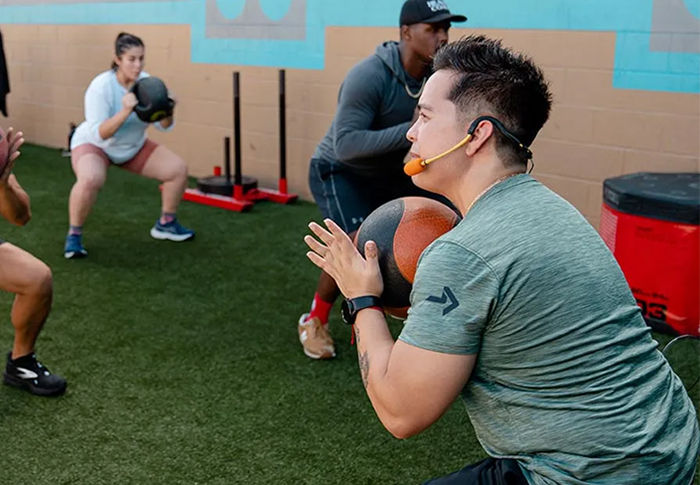
Has traditional strength-training equipment started disappearing from your gym? In the past year and a half or so, many clubs have started to replace fancy weight machines in favor of creating open space for more functional training. Learn how this new trend may be offer huge benefits to both fitness professionals and their clients.
|
Tragic and senseless acts such as the Boston Marathon bombings can leave many people feeling traumatized and stressed, even if they have no personal connections to the incident. If you find your clients are struggling to deal with these recent events, Dr. Michael Mantell explains how you can help them utilize wellness tools to cope with the emotional aftermath of this horrific tragedy.
|
Fitness industry tradeshows are a great place to spot the newest trends and try out the latest equipment that may be coming soon to a gym near you. If you weren’t able to make it to this year’s IHRSA convention last month, you don’t want to miss ACE Exercise Physiologist Pete McCall’s recap of walking the tradeshow, along with his picks for the most promising new equipment and trends.
|
By ACE on Monday, April 01, 2013
Could the words you use with your clients be causing more harm than good? While words like “shredded” or “ripped” are common in the fitness industry, they may not have the same appeal to other, less performance or appearance-driven clients. Learn how to modify your language and better connect with your clients as you help them achieve their health and fitness goals.
|
ACE Exercise Physiologist Pete McCall recently sat down with BOSU Balance Trainer creator David Weck to discuss his exciting new WeckMethod training program. CoreFIST, which is just one component of this new program, focuses on the importance of optimal bone alignment. Here, Weck explains the principles behind this cutting-edge programming.
|
Are you content to be just another trainer, or do you aspire to something greater? Jonathan Ross shares his personal tips for success that he guarantees will not only help your clients find success and stay on track, but also elevate your status as a trusted and effective fitness professional.
|
By ACE on Tuesday, March 12, 2013
In response to the growing urgency to reverse the childhood obesity epidemic and improve the physical-activity behaviors of America’s youth, the American Council on Exercise (ACE) has issued a statement on physical activity in school.
|
Do you find your best intentions to eat healthfully derailed the moment you step inside the grocery store? Here are 9 common mistakes shoppers make when food shopping—and, more importantly, how to avoid them and stay on track with your healthy eating goals.
|
What does it really take to be a successful trainer in the fitness industry? Jonathan Ross’ outlines five keys to being a successful trainer, which will not only help guide you in your career, but make it possible to help clients find true health and happiness, which arguably could be the ultimate measure of lasting success.
|
By ACE on Friday, December 07, 2012
In an industry where word-of-mouth can be the difference between success and failure, it’s your expertise that should do the talking. ACE CEO Scott Goudeseune introduces ACE Specialty Certifications and discusses how they will help you market yourselves and stand out among your peers.
|
The New Year’s rush is almost here—that time of year when healthy resolutions send droves of people to the gym. But by mid-February or so, many of them have already abandoned their efforts. ACE Exercise Physiologist Pete McCall offers some great tips for how you can maximize the New Year’s resolution rush and develop clients who will stay with you for the long haul.
|
Corrective exercise is not only growing in popularity, its potentially very profitable as well. Corrective exercise expert Justin Price explains how you can gain access to this lucrative field and help your clients minimize aches and pains and get back to the activities they love.
|
We’re fast approaching that time of year when all resolve and willpower seem to go out the window. Learn how to motivate your clients to stay on track by helping them make SMARTER health and fitness goals that give them the greatest chances for success.
|
With the dramatic increases in the rates of obesity and overweight, chances are high that you work with clients who are dealing with the unique challenges that come with a larger body size. Learn how to be size sensitive by seeing beyond the fat, anticipating the physical and emotional challenges that often come with being overweight, and designing movement that creates a pleasurable experience.
|
Are women really at a disadvantage when it comes to muscle development and fat reduction? ACE Exercise Physiologist Pete McCall weighs in on a research study that looked at women’s ability to do pull-ups after following an upper-body strength training program.
|
Scientists have developed a test to determine how individuals are genetically programmed to respond to exercise, but knowing the answer could be a two-edged sword. Learn why this DNA test may be useful or harmful, depending on the expectations of the individual, and how fitness professionals can help clients use this information to their best advantage.
|
If you’re a fitness or health professional looking to take the next step in your career, the ACE Health Coach Certification may be right for you. ACE Director of Credentialing Todd Galati discusses the importance of the certification, what topic areas it emphasizes, who it is intended for, and how becoming an ACE Health Coach will allow you make long-term changes in people’s lives.
|
Have you tried the ViPR yet? By enabling users to move and strengthen the body in a whole new way, this revolutionary piece of equipment is transforming the way trainers design exercise programs for their clients. ACE Exercise Physiologist Pete McCall explains why the ViPR is destined to become a vital component of your trainer toolkit.
|
ACE Exercise Physiologist Mark Kelly responds to feedback about a new ACE-sponsored chest exercise study by discussing the reasoning behind the exercise choices used in the study as well as the inclination for individuals to put exercises into a given classification.
|
In part 1 of this series, Jonathan Ross discussed the tendency for fitness professionals to "ride the pendelum" from one extreme to the other in regards to abdominal and cardiorespiratory exercises. In Part 2, he will share more examples of this extreme thinking and consider some effective solutions for avoiding this behavior.
|
The human tendency to think and act in extremes is particularly common in the fitness industry. ACE Fitness Expert Jonathan Ross discusses the tendency for fitness professionals to “ride the pendulum” from one extreme to the other in regards to abdominal and cardiorespiratory exercises, and shares tips on how to avoid this behavior.
|
If you’re looking for a career where your knowledge will impact hundreds of individuals both physically and financially, corporate wellness may be the right path for you. While many fitness professionals tend shy away from this industry, the reality is that it can be a very rewarding place to work. In this article, Dr. Mark Kelly discusses the necessary steps to land a job as a wellness consultant.
|
Knowing how to connect with your clients in a way that caters to their personal styles can build the foundation for a healthy, lifelong relationship. Learn from ACE Senior Fitness Consultant Dr. Michael Mantell as he discusses the importance of rapport and the role it plays in career success.
|
As fitness professionals, we often spend so much time focusing on the physical aspects of health that we often forget the emotional side. Help yourself and your clients reevaluate their core selves by asking a few questions that will help them achieve their goals.
|
Most of us know there’s no absolute to follow in creating individualized exercise programs for our clients. The recipe differs every time due to their abilities, time constraints, attitude and a host of other factors. Despite the constant variables, there is a recipe to follow. Check out some tips from ACE Fitness Expert Chris McGrath on how you can create custom exercise programs for each client.
|
While incorporating yoga into personal training sessions may be daunting for those who do not have formal yoga education, blending these practices benefits the client, but also you, the trainer. ACE Pro Elizabeth Kovar discusses yoga basics, breathing techniques, education for trainers, and how to successfully incorporate it into your personal training sessions.
|
If you grew up in the 80s, then chances are you probably spent most of your teen or early college years trying to look like an old-school action hero. Who didn’t want arms like the Arnold back then? Check out a first-hand perspective from ACE Exercise Physiologist Pete McCall, whose philosophy about attaining all-around fitness has evolved significantly.
|
Millions of Americans struggle with their weight every day, and the old adage of “eat less, move more” isn’t solving anything. Find out what ACE Senior Consultant Natalie Digate Muth, MD, MPH, RD, has to say about how fitness professionals can help and the role they should serve in our battle to eliminate the obesity epidemic.
|
If you didn’t get a chance to attend the 2012 IDEA World Fitness Convention in San Diego last week, you missed a venue full of new equipment and research, and a networking opportunity that drew about 6,000 fitness professionals from across the country. But don’t worry, our own ACE Senior Consultant Michael Mantell, Ph.D., has a recap of the event, as well as a few thoughts on his favorite products introduced there.
|
Hearing a client say they want to “tone up” or “get leaner” is nothing new, but going beyond that to explore any body image issues your client may have could be undiscovered territory. Check out some insight from Dr. Michael Mantell on some signals that your client may be experiencing body image dissatisfaction and how you should handle it.
|
Do you ever feel like continuing education is something you have to do instead of something you want to do? Well, you’re not alone. ACE Exercise Physiologist Pete McCall explains how he once felt the same. Check out how and why Pete’s view of continuing education evolved from a means to earn CECs to a way of helping him expand his business.
|
If you believe your clients follow every piece of advice you give, chances are you’re probably wrong. Struggling with clients who resist changing their behavior – even if it means living a happier, healthier lifestyle – is something most everyone experiences. Check out some key strategies you can help overcome your clients begin to embrace the changes you recommend.
|
Don’t internalize all the fitness knowledge you have – share it. Connecting with potential clients on social media allows you to get your voice out there, and creates business opportunities and earning potential. Check out our 10 Rules for Monetizing Your Fitness Knowledge for insight into how you can grow professionally using the web.
|
Since the late 90s when Les Mills hit the States, pre-choreography has been a source of debate among fitness professionals worldwide. Many thought the pre-choreography idea would never work in the U.S., but boy were we wrong.
|
Due to their versatility and effectiveness, kettlebells are becoming more of a staple for trainers working with clients of all abilities. While they’re a great way to incorporate whole-body movement, trainers who’ve never used them before should make sure they know what they’re doing before they whip them into client programs. Here are a few things to keep in mind before you begin incorporating kettlebells into your workouts.
|
Why would your clients settle for a Model-T when they could have a new Corvette? Don’t use the old model of personal training; be a coach. Explore how going beyond biomechanics and exercise program design can help your clients achieve more, and build your business in the process.
|
The previous two posts addressed how understanding the Functional Movement and Resistance Training components of the ACE Integrated Fitness Training® (ACE IFT®) model can help you market your services when you’re asked about many popular exercise trends. This post will address how to use the cardiorespiratory training progressions of the ACE IFT® to appeal to potential clients when they ask you about popular exercise programs such as Zumba®, indoor cycling or Insanity®.
|
By ACE on Tuesday, May 01, 2012
Mom may not have always been right, but she had one thing down. Keeping your head up and your back straight is sound advice for you and your clients. Unfortunately, it’s not as easy as it sounds, especially when most of your clients spend 8 hours a day at a desk staring at a computer.
|
By ACE on Friday, April 27, 2012
It’s inevitable that clients will ask you about weight loss. After all, it’s one of the most common health and fitness goals. And with the diet industry’s heavy marketing efforts out there, you can be sure you’ll have to answer questions about popular fad diets, too.
|
The weather's warming up, so you and your clients may be wondering how to get chiseled abs. Author of "Abs Revealed" and ACE Senior Consultant Personal Training, Jonathan Ross, knows exactly how to work all your abs — not just the main ones. In this video series, Ross shares six innovative ab exercises, including two never-before seen ones shared exclusively for ACE's readers.
|
Many people falsely assume that anyone can teach an indoor cycling class as long as they are in shape, have a great personality and spend a ton of time on their tunes. Plenty of fitness enthusiasts are diving in because, let’s face it, from the outside it looks like all you have to do is pedal, push and repeat! How hard can it be? Well, that’s just the thing. It’s not hard to teach a cycling class but if you truly want to provide the best experience, there's more than meets the eye.
|
|
|
Working with clients with lower back pain can be an extremely challenging and yet, incredibly rewarding experience. In order to effectively work with a growing population of clients who suffer from low back pain – according to statistics, almost 80% of your clients have – personal trainers need to learn not only HOW to work with these clients, but also how to grow their business from it.
|
If you're ready to take your yoga practice and profession to the next level, follow these key steps. Each practical step will take you closer to realizing your full potential in your own practice, lifestyle and business.
|
Like so many other ACE-certified personal trainers, there’s no doubt you wanted to become a personal trainer because you had a passion for fitness, wanted to stay on top of cutting-edge exercise information and — possibly most importantly — desired to positively transform lives. A passion for business and marketing strategies probably wasn't what got you started in the industry. But having business savvy is important and can help fuel your career. Find out why.
|
In part 1, I discussed how the first two faces of the ACE IFT™ model — Stability and Mobility, and Movement — related to yoga. This time, we’ll take a look at P90X and Crossfit, and how the Load and Performance phases of the ACE IFT Model are related to the popular workout trends.
|
Small group training has been gaining popularity because it’s an affordable, fun way for clients to take advantage of a trainer’s expertise at a lower financial investment — all while keeping the fun and competitiveness of a group dynamic. How does it differ from one-on-one personal training, and how can you effectively design programs? Find out.
|
Are you ready to take your yoga practice and profession to the next level? Do you want to thrive from your practice in every way possible – from managing and growing finances to ensuring your practice supports your lifestyle? Become empowered to grow your yoga business potential with these strategies for success!
|
As fitness professionals, it’s inevitable that people ask for our opinions about popular exercise programs — ranging from programs featured in the most recent late-night infomercials to the centuries-old practice of yoga. Answering these questions by applying the ACE IFT Model to these trends will help market your skills as a personal trainer.
|
Since fewer than two in 10 Americans get the recommended levels of exercise, and more than 25% of U.S. adults do not devote any time to physical activity, there was likely a sudden rush of new members and former recommitted clients at your gym at this new year. Many of these new gym-goers are probably also leaping into levels of exercise intensity that may have a negative impact on adherence. Learn how to ensure you'll be training new and recommitted clients through Valentine's Day.
|
|
|
Trends come and go in our industry, but one recent trend that has some staying power is small group training. If you’re looking for a way to increase your business in the new year, consider adding small group training to your service options. The January rush might be a great time to start a new small group program. Learn more about it.
|
Becoming the most successful group fitness instructor and more importantly, truly helping to lead the wellness revolution one person at a time, requires broad-based appeal. Much like music and television, you can choose to exist on one end of the personality spectrum and gain notoriety, but to reach the top of the charts and win an award, it is usually better to play somewhere in the middle. Learn why this is important for your success as a fitness professional and just how to achieve this.
|
If you find yourself looking for fresh and successful ways to get new clients or are just looking to become a better professional, this post is for you. See why Pete McCall says the business model in the fitness industry is flawed and how personal trainers can have success by offering results-oriented training packages.
|
Fitness professionals interested in intensifying efforts to combat the obesity epidemic just got a major boost from the federal government. Since primary care physicians will now be reimbursed for obesity counseling they provide to Medicare recipients, more physicians will be looking to fitness professionals. Get tips on how to grow your business by maximizing on this opportunity to strengthen relationships with physicians.
|
There are 6 million pregnancies throughout the US every year, with just over 4 million live births and nearly 2 million pregnancy losses, according to the American Pregnancy Association. The likelihood is great that you will be privileged to serve as a fitness coach for a pregnant woman. How can you train them effectively?
|
As personal trainers and group exercise instructors, we are not selling a tangible item that can be replaced if something goes wrong. Instead, we are marketing and selling a service, which author Harry Beckwith defines as, “the delivery of a promise.” Excellent customer service is important for client retention and acquisition. But what exactly is a high level of customer service and how can you deliver it?
|
Some fitness trainers make “safe and effective exercise programming decisions” for their clients while others who have more of a coaching mindset go one layer deeper and unlock their client’s potential, helping them learn how to enhance wellbeing and performance. Find out how you can take your training to the next level.
|
Whether you like it or not, social media is here to stay. So as a fitness professional – a personal trainer, group fitness instructor, manager or owner – it’s time to invest resources in this arena because the results are both local and global. More people in your clubs or programs, as well as more people in general, are leading a fit lifestyle, so social media can be the most effective way to increase your reach. So what are the most effective ways to use it? Find out!
|
“I’d like to grow some more brain cells” may not be a fitness goal of your client's, but the statement is not as outlandish as it sounds. Studies have demonstrated that vigorous exercise fuels neurogenesis — the creation of new brain cells — and slows neurodegenerative diseases like Alzheimer’s and Parkinson’s. Learn more about yet another benefit of exercise.
|
Congratulations! You’ve worked hard, studied, and have finally passed your ACE Personal Trainer certification. Now what? Pete McCall shows what options are available for advancing your career, and shares his experience of going from club management to becoming a full-time personal trainer and group fitness instructor to a fitness educator. Get his tips on securing positions to advance your career as a fitness professional.
|
|
|
The recent article about the fittest athletes has prompted some interesting discussions between some colleagues and me. The discussions have centered on the fact that the article addresses many components of fitness such as cardiorespiratory endurance, strength, power and agility but leaves out an important component critical for athletic success — reactivity.
|
Anyone who reads professional fitness, exercise physiology or strength and conditioning journals, knows that fitness equals longevity. Inactivity doubles the risk of mobility limitations and propels cognitive decline. Being professionally prepared to graciously meet the fitness and health needs of this generation makes good business sense.
|
With nearly 40% of adults not exercising sufficiently, and 50% of those who do begin an exercise program discontinuing within the first six months, obtaining and keeping clients can be a major business hurdle for fitness trainers. Become a fitness professional, however, and that hurdle might not be so challenging. Find out what that entails.
|
Whenever I go into a studio, independent gym or corporate health club, I pay close attention to details such as the equipment, available space for movement, and organization. What are important considerations fitness facilities should take when creating a space that accomodates customers' individual workouts and personal training sessions? See a list of places that do it well.
|
While there are an abundance of asanas (commonly referred to as postures or poses) in yoga, the foundation for a physical practice should focus on practicing postures progressively in order to enhance steadiness, alertness and overall comfort — qualities referred to as sthira and sukha in the Yoga Sutras. Learn important factors to consider when sequencing your next yoga class.
|
It is no secret that today’s youth are more sedentary, overweight, and at risk for lifelong ailments. They need mentors who are going to lead by example and help them to develop positive relationships with physical activity that will make it a habitual part of their lives.
|
Core training is one of the most popular and often misused phrases in the fitness world today. For some people, core training means doing crunches until their abs cramp. For others, core training means doing all sorts of complicated moves on various pieces of equipment that look better suited for a circus than a gym. The big question is “which way is the right way to do effective core training?”
|
After scoping out all of the latest equipment from recent trade shows, here are some of my favorite pieces. The biggest trends I’ve seen are the use of non-traditional strength-training equipment and the use of technology to enhance the exercise experience.
|
When you hear, “to run faster,” “build endurance,” “to lose body fat,” or to “get thinner,” besides thinking about structuring an integrated fitness training program, do you ever wonder if these performance goals are thinly disguised indicators of anorexia athletica? Probably not, given that compulsive exercisers are often erroneously honestly mistaken for people with an enviable, deep commitment to exercise. They are far from that, pushing the threshold of distance, intensity or duration beyo
|
Normal glycogen restoration occurs within between 24 and 36 hours whereas a more aggressive approach can regenerate glycogen stores within 20 hours. Aggressive strategies therefore become an important consideration for those participating in more frequent, vigorous training programs and less important for those participating in moderate-to-vigorous bouts of cardio every 24 – 48 hours who need nothing more than their regular diet.
|
In the fitness world there are two widely different tastes of a 1-on-1 personal trainer and a group fitness instructor. In many health clubs these two worlds very rarely collide yet they are a magical recipe of success for fitness professionals interested in reaching a new audience of potential clients while simultaneously creating a way to provide additional services to existing ones.
|
Dating back to the early 1980s, the practice of static stretching before exercise was widely believed to prevent or reduce the risk of injury, and to promote performance. Thirty years later and after volumes of research, confusion still exists whether it offers potential benefits before exercise. From a logical perspective, tissue stiffness and a lack in range of motion (ROM) both contribute to injury, and static stretching is correlated with both a reduction in tissue stiffness and an improved
|
When I was training and teaching group fitness fulltime I was a big education junkie and would always be reading the latest industry literature to learn strategies and techniques for helping clients to achieve goals or design fun and challenging classes. Rather than spending down time in the gym where it might be perceived that I was slacking off during work (even though I was only paid while training clients) it made more sense to me to would use a local Starbucks as my office to catch up on wh
|
The unfortunate reality for many of us is that the post-exercise period is perhaps the most neglected component of our exercise program, yet possibly the most influential in determining how effectively our body adapts to the exercise stress and recovers. The objective of this blog series therefore is to share various post-exercise refueling and rehydration strategies that will help your clients maximize their training goals and performance.
|
Rapport with clients is necessary for designing effective exercise programs of the ACE IFT model. Understanding the psychological and emotional needs and characteristics of clients forms the base upon which to build this rapport.
|