



Posts found under "Special Groups and Conditions" within Fitnovatives Blog
What does it really take to become a competitive fitness athlete? As is the case with any competitive athlete, there are no shortcuts to success. Instead, there is a lot of sweat and sacrifices. Riana Rohmann shares both her secrets and her daily schedule, giving us a glimpse at a typical day in the intense and driven life of a figure competitor.
|
When it comes to creating a flat stomach while also reducing low-back pain, few exercises are more effective than the plank. Here are 5 great variations on the plank, which not only use the deep abdominal muscles (which helps flatten the stomach), but also recruit the hip, shoulder and upper-back muscles as well.
|
The energetic connection is the piece that is often missing when trainers work with overweight clients. Learn how to create a winning environment that will help your clients move out of a cycle of failure, feel more engaged in a size-friendly environment and develop a deep sense of trust with you and their bodies.
|
Corrective exercise is not only growing in popularity, its potentially very profitable as well. Corrective exercise expert Justin Price explains how you can gain access to this lucrative field and help your clients minimize aches and pains and get back to the activities they love.
|
With the dramatic increases in the rates of obesity and overweight, chances are high that you work with clients who are dealing with the unique challenges that come with a larger body size. Learn how to be size sensitive by seeing beyond the fat, anticipating the physical and emotional challenges that often come with being overweight, and designing movement that creates a pleasurable experience.
|
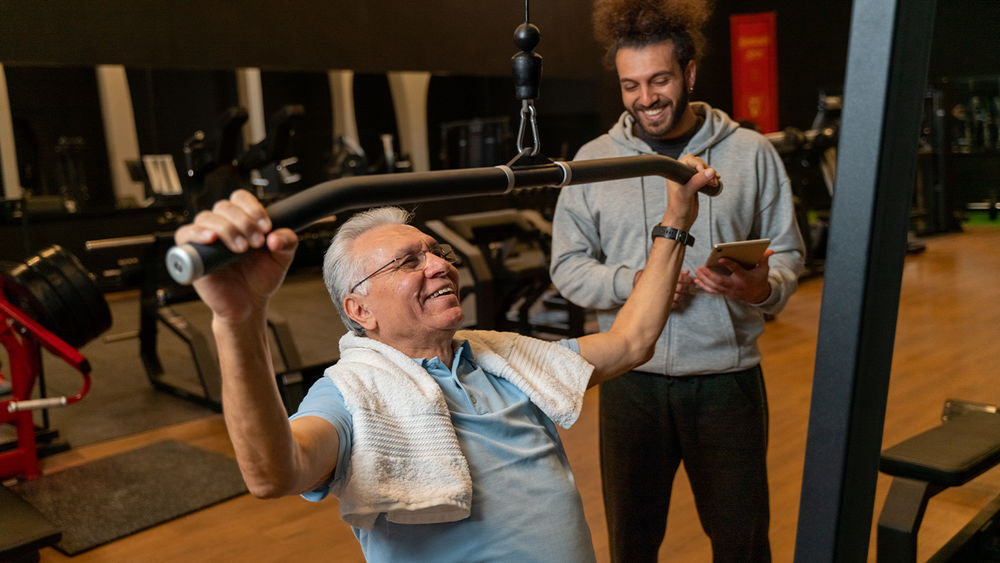
Although the current trend in fitness is to “train your grandmothers like your athletes,” if that idea isn’t approached thoughtfully and carefully, it can potentially be a terrible mistake. Training older adults like you train more competitive athletes is a great concept that I fully support, as long as trainers use proper movement and exercise progressions. The huge problem with putting it into practice is that proper exercise progressions are often thrown out in favor of tire flips.
|
There are 6 million pregnancies throughout the US every year, with just over 4 million live births and nearly 2 million pregnancy losses, according to the American Pregnancy Association. The likelihood is great that you will be privileged to serve as a fitness coach for a pregnant woman. How can you train them effectively?
|
Anyone who reads professional fitness, exercise physiology or strength and conditioning journals, knows that fitness equals longevity. Inactivity doubles the risk of mobility limitations and propels cognitive decline. Being professionally prepared to graciously meet the fitness and health needs of this generation makes good business sense.
|
When you hear, “to run faster,” “build endurance,” “to lose body fat,” or to “get thinner,” besides thinking about structuring an integrated fitness training program, do you ever wonder if these performance goals are thinly disguised indicators of anorexia athletica? Probably not, given that compulsive exercisers are often erroneously honestly mistaken for people with an enviable, deep commitment to exercise. They are far from that, pushing the threshold of distance, intensity or duration beyo
|
|