



• Search ACE
  • Live Help
  • (888) 825-3636

October 7, 2009, 11:47AM PT in Ask the Expert  |  8 Comments

When strength training, is it better to use machines or free weights?

WeightsThe great weight (training) debate

When it comes to strength training, there has been much discussion and debate over which training tool is more effective- strength-training equipment (machine-based exercises) or the use of free weights (dumbbells exercises).  The reality is each has its advantages….and disadvantages. Let’s discuss the pros and cons-

Weight Machines-

Pros:

  • Easier and safer to use- The fact that machines work on a fixed path makes it easier for individuals to learn and execute the movement with correct form, even when fatigue starts to set in. This can be a big safety plus, especially for those who are new to strength training.

  • Less intimidating- With pictures and instructions often posted right on the equipment, it makes the process of knowing what the exercise is designed to do (i.e., what muscles it works) and how to properly execute the movement much less nerve racking.

  • Saves time- With the way machines are set up at most gyms, you can usually move from one machine to the next with relative ease. Also, changing the resistance is as simple as moving a pin.

  • Specific focus- When compared to free-weights, certain machines are more efficient at isolating a specific muscle or muscle group. This is especially important when rehabbing from an injury or when focusing on strengthening a particular body part.

Cons:

  • Limited possibilities- Many machines are designed with only one exercise in mind, which means if you’ll need to use multiple machines to get in a complete total body workout.

  • Size does matter- If you are shorter or taller than average, you may find that certain pieces of equipment are not as accommodating in meeting your unique size needs. The good news? Many machines have adjustable components to accommodate the varied heights of gym goers. The bad news? You may find yourself spending a considerable amount of time adjusting equipment, especially if you are unfamiliar with the equipment and/or are unsure what the appropriate settings for your height are.

  • Predetermined path- While this serves as one of the machines advantages when it comes to ensuring proper form, it also is one of its weaknesses, as the fixed movement of the machine makes it difficult to work the stabilizer muscles  as well as to work the body in different planes of motion.

Free-weights-

Pros:

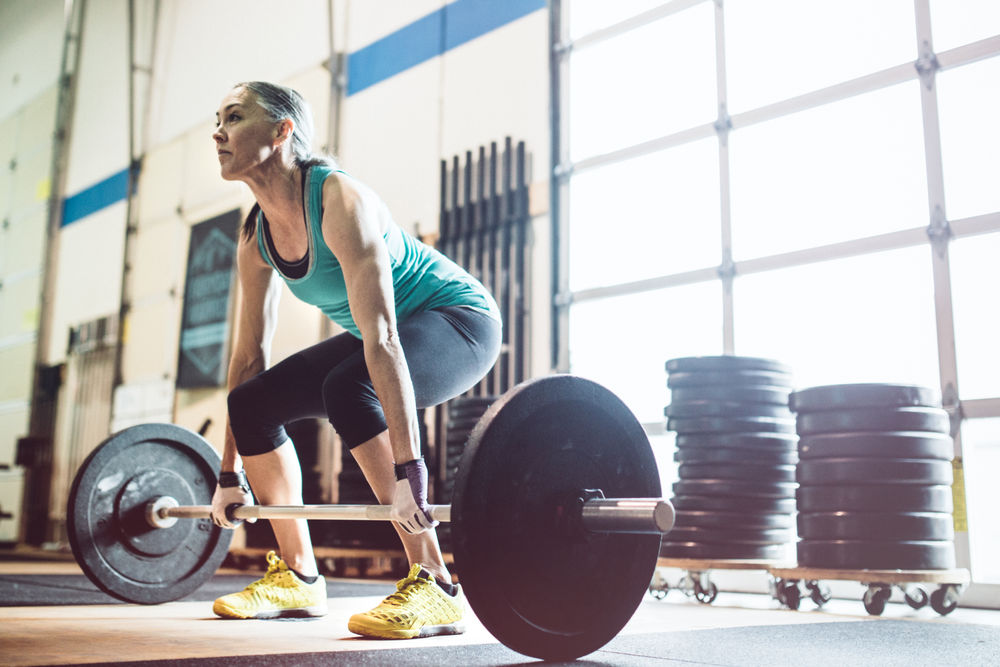
  • More functional- With free weights, you are able to complete movements in different planes of motion, allowing you to more closely mimic movement patterns used in specific sports, as well as movements performed in daily activities.

  • Incorporates stabilizers- In using free-weights, your body is responsible for creating and supporting the range of motion of each exercise, allowing for the involvement of the stabilizing muscles which are often neglected when using machines with a predetermined movement path.

  • Versatile- A total body workout is well within your reach, as free-weights give you the ability to perform a wide variety of exercises that target various muscle groups.

  • Convenient- Free-weights are inexpensive, portable, and take up very little space, which makes them a great option for at-home exercise.

Cons:

  • Lack of support- Since free-weights do not provide the support that machines do, learning how to properly perform an exercise takes more time and skill, and often requires some instruction when using them for the first time.

  • Risk for injury- Training alone with free-weights can lead to injury if you’re not using proper technique. Since free-weights can be easily swung using momentum instead of being lifted slowly and with control as they are intended to, individuals may find themselves using other parts of the body when performing an exercise (i.e. using the back when performing a bicep curl), especially as the muscles begin to fatigue.

  • Difficult to isolate- Free-weights require very precise technique when performing an exercise, which can make targeting and isolating a particular muscle difficult.

How do I know which option is best for me?

Generally speaking, if you are new to strength-training it is a good idea to begin with weight machines until you become more comfortable with the movements. If you are a more experienced exerciser, you may wish to use free-weights, as they offer more versatility in terms of exercise selection.

Overall, when it comes to strength-training the best option is to use a combination of free-weights and machine-based exercises, as together they can add more variety to your program and result in greater training benefits.

Need help with technique? A personal trainer can help you learn proper form and select exercises that are in line with your personal fitness goals.

Free-weights have you confused? Visit our exercise library for pictures and detailed descriptions of an assortment of free-weight exercises that you can do at home or in the gym.


Have an exercise, fitness or healthy living question that you’ve been wanting to ask? Send your questions to AskTheExpert@acefitness.org and it may be featured in our weekly blog post.

By Jessica Matthews, MS, E-RYT

Jessica is an Exercise Physiologist for the American Council on Exercise and a media spokesperson. She is an adjunct professor at Miramar College, teaching courses in the Department of Exercise Science, Health and Nutrition. She holds a bachelor’s degree in physical education teacher education from Coastal Carolina University and a master’s degree in physical education from Canisius College, as well as two ACE certifications (Group Fitness Instructor and Personal Trainer); she is also an experienced registered yoga teacher (E-RYT) through Yoga Alliance. Prior to her role at ACE, Matthews was the aquatics director for Conway Medical Wellness and Fitness Center, a hospital-based wellness center. She has also designed curriculum for health and physical education, grades K-12. As an ACE spokesperson and presenter, Matthews has been featured as a fitness expert on CNN and San Diego 6’s “San Diego Living” show, and has been quoted in various publications including Shape, Self, and Oxygen.

More info on Jessica Matthews »

Comments

Commenting has closed for this post

By David Lyle, Friday, October 23, 2009

That was a very middle of the road but gutless answer. Unless someone is a parapelegic, functional training with free weights is imperative. Study the S.A.I.D. principle. Peoples bodies adapt to the movement (or lack of) they use the most frequently. People already suffer the conseqences of sitting too much and limited movement patterns. Locking them into machines only exacerbates their dysfunctions and gives them limited neural input. Our bodies function in a 3D world, you can't effectively practice/train for it in a 2D machine.

By Michael Wolf, Friday, October 23, 2009

I agree with David.  Unless for a few VERY specific purposes, machines really are inferior. 

Even the "safer" claim seems incorrect to me: they may be safer short-term, but even then, only if proper instruction on how to use free-weights is unavailable.  I believe they're less safe long-term as many machines groove improper motor patterns through flawed biomechanics (2 joint movements with the body = a straight pathway, whereas machines typically use a single pivot, which makes an angular motion through space) and don't mimic real-life activities in any meaningful way.  To stop a fall, push open a jammed door,or shove a lineman out of the way, the bench press, cable press, pushups, etc... are far closer to the target activity. 

Unless you're a bodybuilder going on stage or in certain phases of rehab, I see very little use for machines that couldn't be accomplished better with a cheaper tool.

I think we, as an industry, need to get away from "Oh, but that machine really helps sell memberships!" and more towards educating about what really works.

[+] Replies

By garrett smith, Saturday, October 24, 2009
What an awful blog system you have. Fortunately disabling javascript yeilded a proper textarea. Clueless developers and their clever web 2.0 devices. Probably helps dissuade comments. You're posting generalizations about machines vs freeweights. Alas, no comprehensive generalizations can be made, and we can see evidence that what you've written is actually false. You wrote: | # Risk for injury- Training alone with | free-weights can lead to injury if you’re | not using proper technique. Since | free-weights can be easily swung using | momentum instead of being lifted slowly and | with control as they are intended to, | individuals may find themselves using other | parts of the body when performing an | exercise (i.e. using the back when | performing a bicep curl), especially as the | muscles begin to fatigue. Who told you that? Any references? Nope, as usual, you claim to be the "expert" and free yourself of all need for references. Lets take the Smith Machine. Smith Machine Squats follow a line that can place excessive stress on the lower back. The natural movement of the body is *not*, but depends on the individual and the amount of weight. Free squats allow the lifter to avoid this potential for injury. The pec dec is another potentially dangerous machine. With a pec dec, the upper arm is abducted horizontally. This places tremendous stress on the shoulder joint in one of the least stable positions. The result can be minor inflammation, damage to the shoulder joint, ligaments, and/or rotator cuff. In contrast, correctly-performed bench presses (regardless of load) are safer (best done in a cage, with safety bars). Heavy leg extensions can put excessive stress on the knee joint. In comparison. leg press with heavy weight, injury is avoidable. I could go on with more examples, but I think I've made my point clear enough. The generalizations you've posted are wrong and mislead others.

By Bryan Mannarino, Tuesday, October 27, 2009

I am going to have to agree with the expert here. Even though machines generally do target specific muscles with the lack of core stability, they are still essential and an important part of a well balanced exercise routine. I could not help but notice the first comment that Free weights are essentail for Functional Training? If anything, the use of free weights limits functional movement and increases asymetries. When people use free weights they do not take into consideration previous injury, existing aymetries, and movement liability. Many people who use free weights sacrifice quality of motion and in turn develop compensatory movement patterns in order to overcome funtional deficits. Machines help to avoid these patterns that lead to dysfuntional movement and asymetries. People who demonstrate poor funtional movement pattern need to regain the fundamental building blocks before focusing on other attributes of fitness such as strength, speed, power, and edurance. Many functional movement exercises involve no weight with a cocentration of increasing mobility and stability, which free weights do not.

[+] Replies

By Jill Gola, Wednesday, October 28, 2009

I'm going to agree with the expert. Apparently some individuals did not read the blog in its entirety. First off in her defence, she did not say one mode of strength training was better. She just listed the pros and cons of each.  She also stated in her blog that free weights are more functional then machines but the use of free weights might be less safe then machines for an individual just begininng an exercise regimen. (please note the Easier and Safe to use section).  After listing the Pros and Cons the expert even developed a(How do I know which Option Is best for me Section) Clearly stating that if you are a more experienced exercisor, free weights may offer more "versatality" then machines. The expert definately backed up the pros and cons for each modality of strength training and there is no current known valid reaseach that states one mode is better then the other. This blog was clearly differentiating the strengths and weakness of both free weights and machines, and would be great for the novice "confused" exercisor just beginning a new program at the gym.

By David Lyle, Thursday, October 29, 2009

Let me use another analogy. Choosing between free wts. and machines is a little like choosing between food and vitamin pills. The body is designed to work in movement patterns not isolated muscles. The body is designed to pull, push, squat, lunge, bend, rotate(twist) and locomote(walk, run, sprint). Machines are designed around muscles and isolated movement. Training to develop bi's, tri's, quads, glutes, ham's, etc. is by it's very nature dysfunctional. Starting a new exerciser on a dysfuntional path is counter productive. In my mind free weights include body weight. Starting someone with basic movement patterns makes their body smarter. Machines usually allow part of the body to take a snooze while another part works. Walking on a treadmill is not the same as walking on a floor or the ground. What's really being programmed is the nervous system. GI/GO. If you want a functional body train functionally.

ACE USE ONLY:  | 
Close
  • Please login to submit feedback!
Close